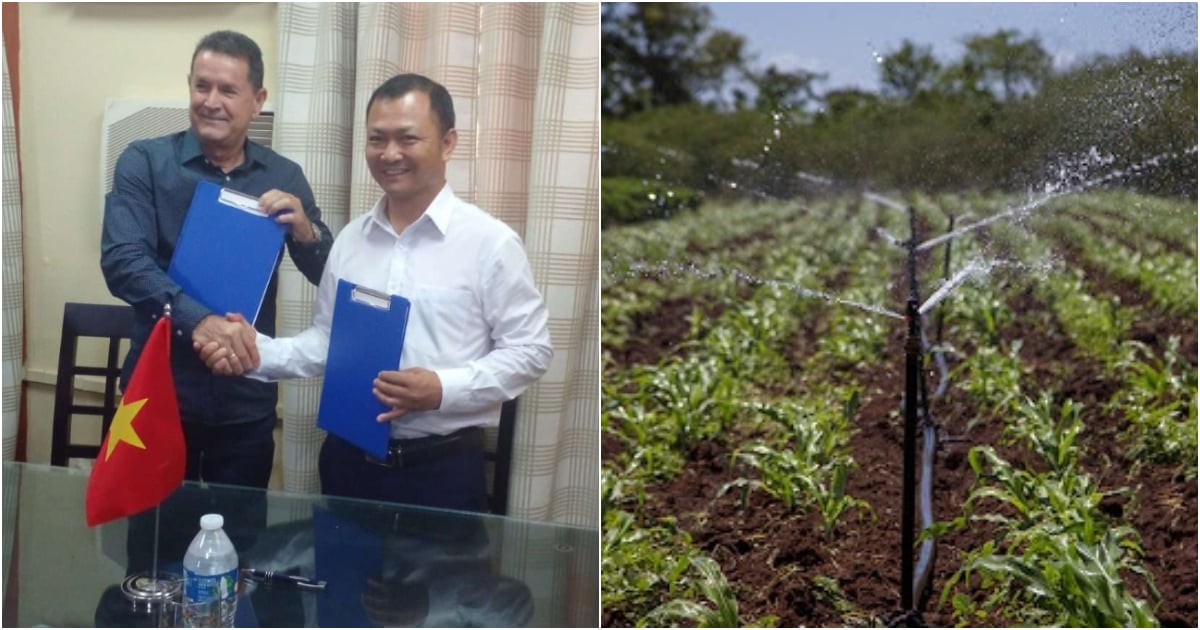
A recent agreement between Artemisa's Agroforestry Business Group (GEAF) and the Vietnamese company Viet Royal aims to cultivate idle lands in Alquízar, San Antonio de los Baños, and San Cristóbal with crops such as soybeans, green beans, peanuts, taro, potatoes, and cashews, primarily for international markets. The initiative, titled the Cultivation of Industrial Plants for Consumption, Processing, and Export in Artemisa, includes multiple development phases, starting with the activation of approximately 2,000 hectares of unused land, according to the official newspaper El Artemiseño.
The plan specifies that soybeans and peanuts will be used for oil and feed production, while green beans and cashews are earmarked for export, raising concerns about the tangible benefits for local families who struggle with access to basic foodstuffs. Under the agreement, Viet Royal will supply machinery, seeds, fertilizers, technical expertise, and working capital, while GEAF will provide land, factories, warehouses, fuel for machinery, and agricultural labor.
International Ventures and Local Impacts
Local officials have lauded the partnership as a "symbol of brotherhood" between Cuba and Vietnam, adding it to a portfolio of 17 ongoing international cooperation projects and 68 others poised for investment, many focusing on agriculture. Among these are efforts to develop pig farming and a collaboration with China for rice cultivation; however, their effects on improving the population's access to quality, varied, and affordable food remain unseen.
Artemisa is deeply engaged in foreign trade, foreign investment, and international cooperation, with a strong focus on agricultural development, as highlighted by the media. The province prides itself on exports like tobacco, honey, avocados, mangoes, habanero peppers, ginger, and turmeric, along with new initiatives for cultivating hibiscus, the latter valued at about $2,000 per ton on the international market. Yet, most of these products scarcely make it to the average citizen's plate.
Domestic Struggles Amidst Export Ambitions
While agreements are celebrated and exports are planned to earn foreign currency, Cuban consumers continue to face empty markets, exorbitant prices, and an insufficient basic food basket, illustrating that agricultural growth is primarily outward-looking, neglecting the island's urgent internal needs. Cuba is enduring one of its most severe food crises in decades, characterized by chronic shortages, declining domestic agricultural production, and a near-total reliance on imports that the country can no longer afford.
In this context, a joint agricultural project between Cuba and Vietnam is underway in Los Palacios, Pinar del Río, aiming to plant 1,000 hectares of rice. According to the official paper Guerrillero, the project, led by the Vietnamese company Agri VMA, seeks to transform the area into a high-tech rice-growing zone, representing yet another attempt by the regime to boost food production. However, as reported by the independent newspaper 14ymedio, Agri VMA had previously sent a letter to three Cuban ministers seeking access to its frozen funds in an account at the Banco Financiero Internacional to transfer $300,000 back to its headquarters in Vietnam.
Additionally, Vietnam's Foreign Minister Bui Thanh Son urged Cuba to continue efforts to remove barriers, fostering favorable conditions for Vietnamese companies' investment and business on the island. In May, the Cuban government announced the formation of a new biopharmaceutical joint venture with Vietnam, involving BCF S.A. from the state-run BioCubaFarma and Vietnamese firm Genfarma Holdings. "The alliance will allow us to export products manufactured in our country, aiming to generate revenue for the development and production of medicines for the Cuban population," stated Mayda Mauri Pérez, president of BioCubaFarma.
Understanding Cuba's Agricultural Export Strategy
What is the main objective of the agreement between GEAF and Viet Royal?
The primary goal of the agreement is to utilize idle lands in Artemisa for cultivating crops aimed at the international market, thereby generating foreign currency through exports.
How does the agreement benefit local Cuban families?
The agreement has raised concerns as it primarily focuses on export crops, leaving questions about the direct benefits to local Cuban families who face food shortages.
What are some of Artemisa's current export products?
Artemisa exports products like tobacco, honey, avocados, mangoes, habanero peppers, ginger, turmeric, and has new programs for hibiscus cultivation.
How is Vietnam involved in Cuba's agricultural projects?
Vietnam is involved through companies like Viet Royal and Agri VMA, engaging in projects that focus on cultivating various crops and transforming regions into high-tech agricultural zones.