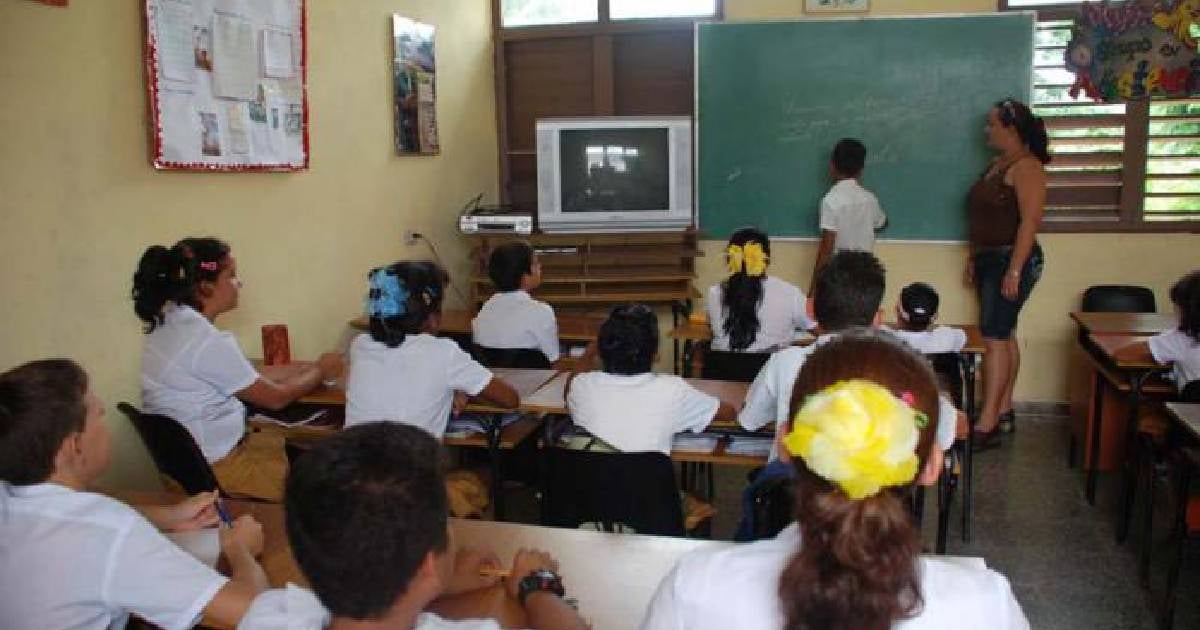
A letter signed by a teacher on behalf of 10 other educators from the mixed center Alberto Fernández Montes de Oca in Jagüey Grande, Matanzas, has brought to light the dissatisfaction among faculty members regarding the non-payment for their increased workload. This payment is a right established by official regulations, which was previously fulfilled without issue.
The affected teachers report that the school's administrative specialists promised that the overdue payments, pending since December, would be processed in February. However, this payment never materialized. The Municipal Education Directorate has promised to meet with the teachers on three occasions but has failed to do so, as highlighted by the official newspaper Girón's section Apartado 1433.
The issue has been escalated to the Municipal Party Committee, the Office of Public Opinion, and the municipal sector union, but these entities have yet to provide a resolution or the funds owed. Meanwhile, the school continues to rely heavily on the additional work from the few available teachers, as staffing remains insufficient.
Amid this situation, the Provincial Directorate of Education reiterates that Resolution 10/2024 from the Ministry of Education (Mined) ties additional payments to municipal budget constraints and prioritizes certain educational levels, while not recognizing any retroactive payment. This bureaucratic interpretation leaves educators in uncertainty as they struggle to maintain the basic secondary school.
This situation reveals a glaring contradiction: the system demands more working hours from teachers to fill vacancies but denies the compensation that the same regulations mandate, while responsible institutions choose evasion and silence.
Cuba commenced the 2024-2025 school year with a shortage of 24,000 teachers, amid high migration rates, rampant inflation, and low wages and pensions, all part of the island's multifaceted crisis. The teacher deficit is most pronounced in secondary education and pre-university science courses, both in Havana and other western and central provinces.
In 2014, the government approved the Labor Code, allowing for multiple employment to supposedly mitigate the effects of an aging population, encourage work, and enable people to earn more. In recent years, hundreds of Cuban educators who had left teaching have returned to classrooms, alongside retired professionals who, while continuing to receive pensions, take advantage of new payment methods.
Months ago, Cuban content creator Sheyla Reyes (@sheyreyes03) showcased in a TikTok video what a teacher in Cuba can purchase with their monthly salary. Reyes explained that a teacher's average salary ranges from 2,500 to 3,000 Cuban pesos, a figure severely impacted by inflation and the devaluation of the CUP in recent years.
In April, Cuba's Ministry of Labor and Social Security announced a salary increase to enhance the stability and retention of staff in educational institutions and the National Health System. However, in recent years, the education system has deteriorated due to the teacher shortage, declining quality of instruction, and the physical decay of infrastructure.
Addressing the Teacher Payment Crisis in Cuba
What is causing the delay in teacher payments in Matanzas?
The delay in teacher payments in Matanzas is attributed to bureaucratic hurdles and municipal budget constraints, as per the interpretation of Ministry guidelines.
How has the teacher shortage affected Cuban education?
The teacher shortage has led to an increased workload for existing teachers, reduced quality of education, and a reliance on retired professionals returning to classrooms.
What steps has the Cuban government taken to address education sector issues?
The Cuban government has implemented policies like allowing multiple employment and announced salary increases to attract and retain educators, although challenges persist.