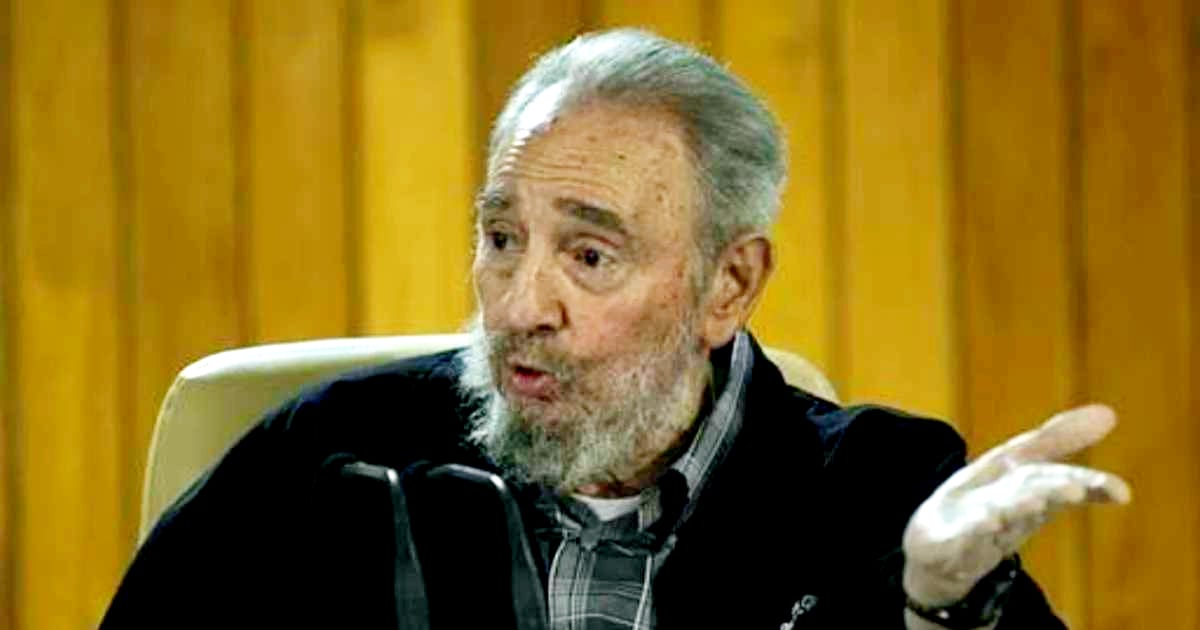
The Camagüey-based priest, Alberto Reyes, delivered a poignant critique this Saturday on Fidel Castro’s political legacy, holding him accountable for transforming Cuba into a nation under the tight grip of a single party, a singular ideology, and the irrefutable voice of a leader. In a post on Facebook, Reyes emphasized that "truth can be ignored, attacked, or replaced with lies, but eventually, it always prevails," citing Saint Teresa of Jesus to highlight that despite the glorification of Castro, the facts depict a history more damning than exonerating.
Reyes pointed out that under Castro’s rule, absolute state centralization was enforced: every private business was seized without compensation, labor unions were diminished to surveillance tools, and both education and healthcare fell under government monopoly, stifling any independent initiative.
The priest also condemned the official control over the press, radio, television, and cultural expressions, noting that artists, writers, and critical thinkers were persecuted. "The free press ceased to exist," Reyes stated in this second analysis aimed at dismantling the myth surrounding Castro, one of the continent's most notorious dictators.
Reyes asserted that Castro ruled surrounded exclusively by unwavering loyalists, incapable of dissent or questioning, leading to the gradual decline of agriculture, livestock, and the sugar, tobacco, coffee, mining, and fishing industries. According to Reyes, nothing and no one could oppose the "Commander" because he never had genuine collaborators, only followers.
In his reflection, the priest depicted Cuba as a once prosperous and diverse nation, now reduced under the control of a state aligned with a single party. "A State and a Party with only one reference point, one leader, one owner, one unquestionable voice: his own," he expressed.
This text is part of the series "I've Been Thinking," where Reyes has repeatedly examined the consequences of the model imposed on the island, with a critical focus on Fidel Castro and his policies, as well as the ills resulting from the authoritarian system prevailing in the country.
Understanding Fidel Castro's Impact on Cuba
How did Fidel Castro centralize power in Cuba?
Fidel Castro centralized power by nationalizing private businesses without compensation, reducing labor unions to mere oversight bodies, and monopolizing education and healthcare under state control.
What impact did Castro's policies have on Cuba's industries?
Castro's policies led to the decline of various industries, including agriculture, livestock, and the sugar, tobacco, coffee, mining, and fishing sectors, due to a lack of genuine collaboration and innovation.
Why does Alberto Reyes criticize Fidel Castro's legacy?
Alberto Reyes criticizes Fidel Castro's legacy for imposing a regime lacking soul, truth, and freedom, which stifled independent thought and reduced Cuba to a state-controlled entity.