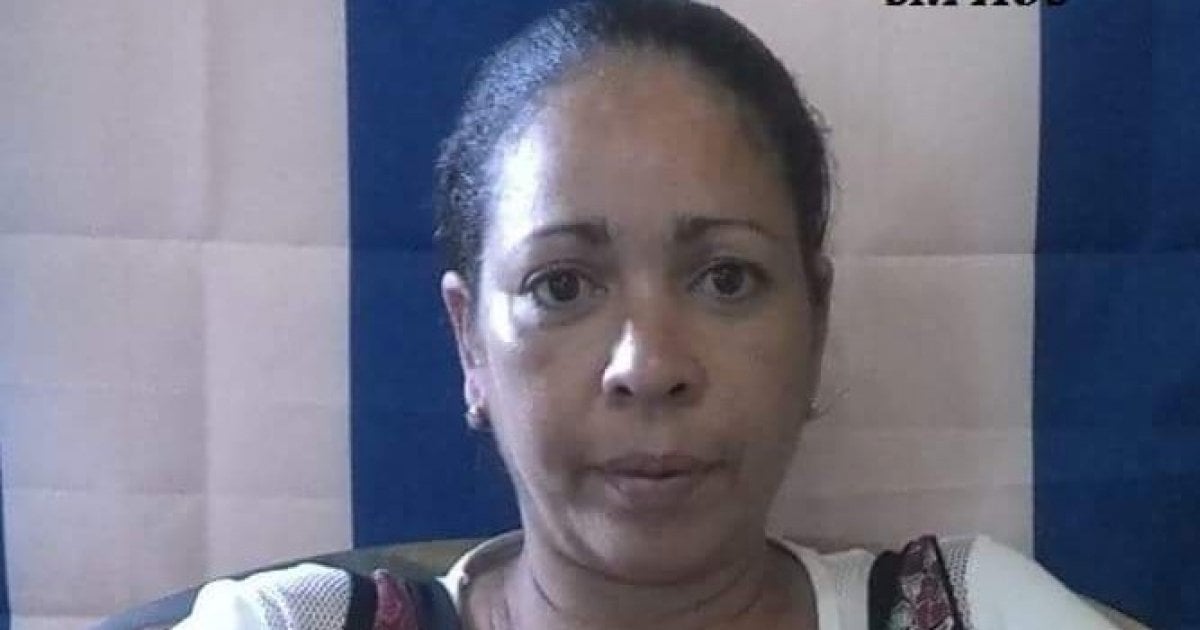
Cuban dissident and member of the Damas de Blanco, Aymara Nieto Muñoz, remains committed to advocating for the freedom of political prisoners while living in exile in the Dominican Republic. Forced out by the Cuban regime after more than eight years behind bars, she expressed her resolve in a phone interview with EFE, saying, "The best I can do is settle in this country and continue fighting for my brothers, the political prisoners, because I know what it means to be one." Her husband, also a former political prisoner, Ismael Boris Reñí, and their two young daughters accompanied her to Santo Domingo.
Adjusting to her newfound freedom has been an ongoing process for Nieto. "I'm enjoying freedom immensely... bit by bit, I'm recovering from all the hardships I faced in Cuba," she shared. However, uncertainty looms over her future. Without any official document confirming the end of her sentence, she fears a potential return to Cuba could lead to re-imprisonment, as she still had over a year remaining on her official sentence. "It's a risk," she noted.
Her departure wasn't voluntary; State Security agents escorted the Dama de Blanco to Havana's airport, preventing her from saying goodbye to her entire family, before putting her on a plane to exile. Years of pressure to leave the island culminated during a temporary release when she witnessed the dire conditions her loved ones were enduring. "I realized I had to accept leaving the country," she recalled.
Years of Oppression and Punishment
Nieto's ordeal began with arrests in 2016 and again in 2018, leading to seven years of imprisonment. She endured punishment cells, solitary confinement, and transfers over 600 kilometers away from her family, which kept her from seeing her younger daughters for years. She also suffered from depression, high blood pressure, and dengue amid accusations of inadequate medical care.
Her latest sentence, handed down in 2022, was for five years and four months, allegedly for inciting a prison riot—a charge she has consistently denied. Previously, she had served a four-year sentence for "assault" and "damage" following a violent arrest during a peaceful protest.
Resilience and a New Beginning
The pain of separation persists, with her eldest daughter remaining in Cuba, a goodbye left unspoken. Despite this, Nieto has found support within the Cuban community and solidarity organizations in Santo Domingo. Holding a one-year humanitarian visa, she is hopeful about rebuilding her life and that of her family. "I believe we're going to move forward," she asserted.
According to the NGO Cubalex, Nieto's case highlights the Cuban regime's use of forced exile as a repressive tactic aimed at neutralizing leadership and silencing dissent. Meanwhile, Prisoners Defenders reported that as of July's end, there were 1,176 political prisoners in Cuba, the highest number recorded by the organization.
Aymara Nieto's journey from imprisonment and isolation to compelled exile reflects the oppressive measures employed by the Cuban government. Yet, she has chosen to turn this chapter into a new battleground. "I will continue to fight for my brothers, the political prisoners," she affirmed.
Understanding Aymara Nieto's Exile and Fight for Freedom
What motivates Aymara Nieto to continue her activism from exile?
Aymara Nieto's personal experience as a political prisoner in Cuba fuels her determination to fight for the freedom of others in similar situations, using her newfound position in the Dominican Republic to advocate for change.
Why was Aymara Nieto forced into exile?
Nieto was exiled by the Cuban regime as part of a broader strategy to suppress dissent and neutralize opposition leaders. Her forced departure was accompanied by state security pressure, preventing her from farewells with her family.