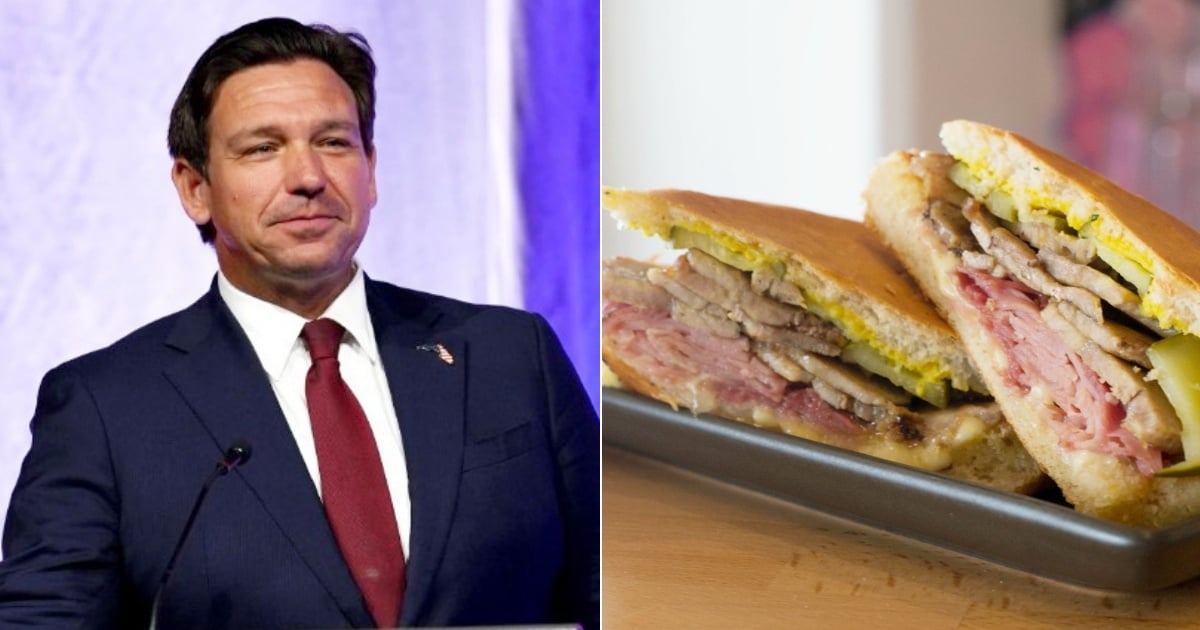
In Florida, few dishes inspire as much passion and debate as the Cuban sandwich. This culinary icon is not only a staple in cafes and restaurants across the state but has also fueled a longstanding rivalry between two of its most notable cities: Miami and Tampa. On Wednesday, Governor Ron DeSantis reignited this age-old dispute by sharing on social media that he tried a version of the sandwich in Tampa containing salami—an ingredient many in Miami find unacceptable in the original recipe.
Aware of the historical contention, DeSantis turned the debate into a digital referendum. On August 13, the Republican leader posted a poll on X with a single question: Should a Cuban sandwich include salami? The results were as follows: Yes, Tampa does it right – 34.2%; No, Miami sets the standard – 65.8%. With over 20,000 votes cast and more than 250,000 views, the poll's outcome currently favors Miami's salami-free version with 65.8% support, against Tampa's 34.2%, where Genoa salami symbolizes the Italian influence in Ybor City.
The Cuban Sandwich: A Tale of Two Cities
In Tampa, the Cuban sandwich is deeply intertwined with the city's labor and immigration history. It emerged in the late 19th century in Ybor City, a bustling hub of the cigar industry where Cuban, Spanish, and Italian immigrants worked side by side. This cultural melting pot is reflected in the recipe: alongside roast pork, ham, Swiss cheese, pickles, and mustard, Genoa salami—introduced by the Italian community—became a staple. The bread, often baked with palmetto leaves to retain its moisture and aroma, is another unique feature. This heritage is so significant that since 2012, the city officially recognizes its salami-inclusive version as part of its culinary legacy.
Conversely, the arrival of Cuban exiles in Miami post-1959 solidified another version, deemed by many as the most faithful to the island's pre-revolutionary tradition. Here, the Cuban sandwich is made with flauta-style water bread, ham, roast pork, Swiss cheese, and pickles; mustard is optional, and ingredients like salami, mayonnaise, lettuce, or tomato are never included. Before serving, the sandwich is buttered and pressed until golden and crispy outside, with a perfectly melted interior. This unadulterated recipe has become a cultural emblem of the exile community, standing as a symbol of identity for Cubans in South Florida.
While there is consensus that the recipe has Cuban roots, on the island, it was known simply as a "sandwich" and only adopted the name "Cuban sandwich" upon reaching the United States with immigrants. Both Miami and Tampa have embraced it as a local emblem. Since 2016, August 23 has been celebrated as Cuban Sandwich Day in Florida. Beyond gastronomy, it is a cultural symbol. Tampa's version represents a mixed and century-old Cuban identity; Miami's, a tradition tied to exile and the preservation of pre-1959 Cuba.
Reactions to DeSantis's Survey: Street Opinions
What began as a lighthearted question in the comments section of the post turned into a debate loaded with symbolism, identity, and cultural memory.
Against Salami: "It's not a Cuban sandwich if you add salami, that's an invention"; "Salami on a Cuban is like putting pineapple on pizza: it might work, but it's heresy"; "Tampa can do what it wants, but it can't call it Cuban if it has salami," were some comments.
In Favor of Salami or Tampa's Version: "The Cuban was born in Tampa, they have the right to modify it"; "Salami gives it a robust flavor that works"; "I like Tampa's version with crunchier bread and that Italian touch," said others.
Neutral Stance: "If it's well-made, I'll eat it"; "We should enjoy both versions"; "There are more serious issues in Florida to worry about, but I still love this debate," opined a third group among dozens of comments.
Between Humor and Political Critique
DeSantis's poll did more than just revive a culinary rivalry; it also highlighted contrasting visions of identity. The timing has drawn criticism: while detentions and deportations of migrants continue and debates about migration policies in Florida intensify, some internet users questioned why the governor was dedicating time to a culinary dispute. For them, it was a distraction in a context where the Cuban and Latin American community is facing more pressing issues. Although the discussion was marked by humor, wit, and creative suggestions—such as organizing a festival to pit both recipes against each other—for several users, the poll reflects a disconnect between the governor and the state's real priorities.
Frequently Asked Questions About the Cuban Sandwich Debate
Why is the Cuban sandwich a source of debate in Florida?
The Cuban sandwich is a source of debate in Florida due to its cultural significance and different versions in Miami and Tampa, each reflecting unique historical and immigrant influences.
What are the main differences between the Miami and Tampa versions of the Cuban sandwich?
The Miami version excludes salami and stays true to a pre-revolutionary Cuban tradition, while the Tampa version includes Genoa salami, reflecting the city's Italian influence.
How did Governor DeSantis stir up the Cuban sandwich debate?
Governor DeSantis reignited the debate by posting a poll on social media asking whether a Cuban sandwich should include salami, drawing significant attention and engagement.
What cultural significance does the Cuban sandwich hold in Florida?
The Cuban sandwich is a cultural emblem in Florida, representing different aspects of Cuban identity and immigrant history in Miami and Tampa.