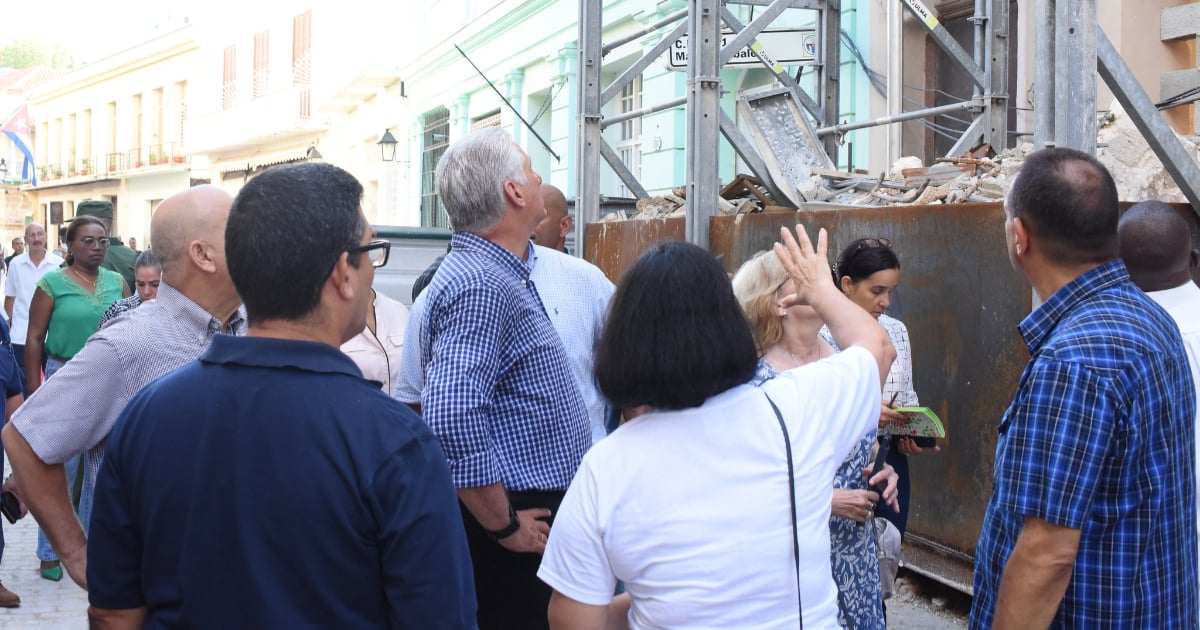
As Havana grapples with the aftermath of several recent building collapses, including the tragic death of an infant, Cuban leader Miguel Díaz-Canel embarked on a tour of the Historic Center's heritage sites this Thursday. Accompanied by top Communist Party officials, the visit was described by authorities as a "working tour."
According to the state-run newspaper Tribuna de La Habana, Díaz-Canel's itinerary included stops at recreational facilities and ongoing projects like the redesign of the Anti-Imperialist Platform and the renovation of the "Ernesto Che Guevara" Pioneers’ Palace, originally established by Fidel Castro in 1979. Meanwhile, Cuba’s Presidency highlighted on social media that Díaz-Canel was briefed on "substantial investments" in housing projects and emphasized that the "dreams of Fidel and Eusebio for Old Havana" are still alive, despite the country's severe economic challenges.
For many Cubans, however, the stark contrast between these official visits and their daily reality has been both shocking and infuriating. While the cameras follow the president, countless stories of suffering unfold in the city’s most disadvantaged neighborhoods.
Tragically, a five-month-old baby recently drowned in El Cerro after a wall collapsed due to heavy rains, allowing water to flood the family's home. The child's mother, caught off guard by the storm, was unable to prevent the torrent from snatching her baby from her arms. The infant was found alive but did not survive, passing on what would have been the child's fifth-month birthday.
“Who will answer for this death?” questioned activist Lara Crofs, condemning the negligence and abandonment that continue to claim innocent lives in Cuba.
In Regla, another child became trapped under debris after a dilapidated house collapsed, leaving her mother severely injured. Entire families remain in limbo, awaiting adequate housing solutions, while authorities offer them barely habitable shelters lacking electricity, windows, or basic living conditions.
In Central Havana, a separate collapse trapped an elderly man and his 10-year-old son, leaving them unable to seek food. Local officials instructed them to demolish the walls themselves, despite the evident danger.
Official Narrative and Public Outcry
During his visit, Díaz-Canel praised the partial restoration of the Pioneers’ Palace, claiming that the "deterioration has been halted," though he acknowledged more work is needed. Notably absent from his remarks were any references to the recent victims or the dire state of urban infrastructure impacting thousands of Havana residents.
The president also stressed that the Anti-Imperialist Platform should serve as a "frequent venue for denouncing the blockade," while calling for incentives for workers involved in its restoration. Havana’s Governor Yanet Hernández announced that the site would host cultural events and political gatherings.
Nevertheless, images circulating on social media depict a city battered not just by the weather, but by decades of institutional neglect. Each rainy season brings new casualties, and while the government continues to dream of anti-imperialist plazas, Cubans live in fear of being buried in their own homes amid official indifference.
Once again, presidential visits and state media reports seem to overlook the question on everyone’s mind: when will the government stop glossing over ruins as the country falls apart?
Frequently Asked Questions About Havana's Building Collapses
What caused the recent building collapses in Havana?
The recent building collapses in Havana have been primarily attributed to heavy rainfall and the deteriorating state of the city's infrastructure, which has suffered from years of neglect.
How has the Cuban government responded to the collapses?
The government has highlighted ongoing restoration projects in historic areas, but many citizens feel that the response is inadequate and fails to address the urgent needs of those affected.
What are the living conditions for those affected by the collapses?
Many affected families have been offered temporary shelters that lack basic amenities such as electricity and windows, leaving them in precarious conditions.