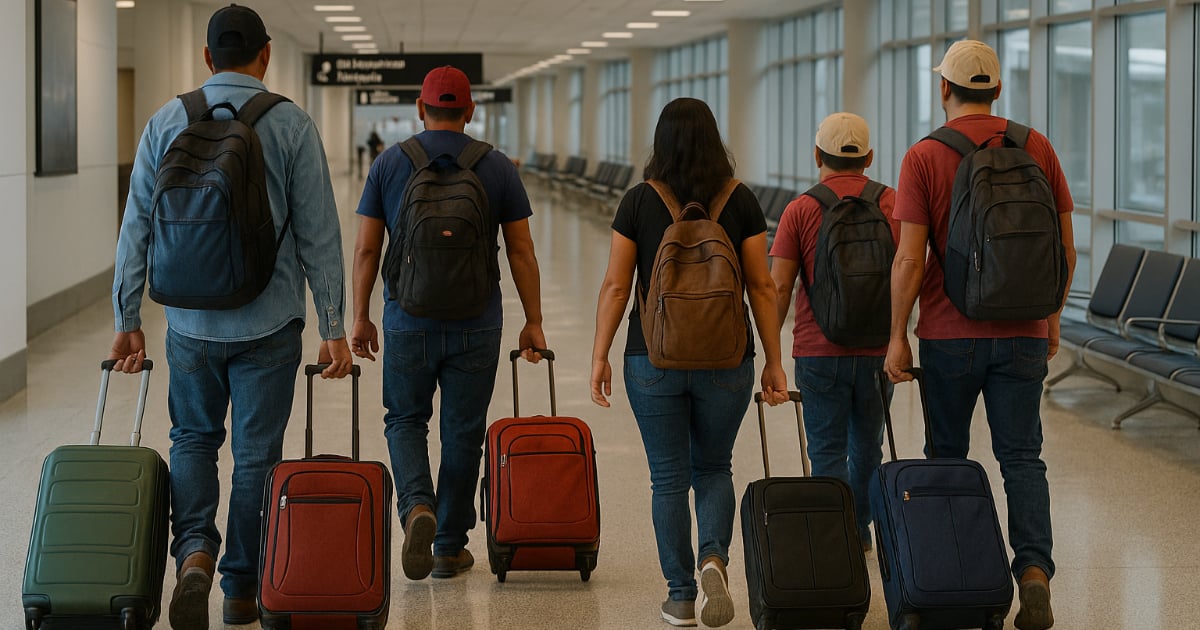
Since Donald Trump took office for his second term and Kristi Noem assumed the role of Secretary of Homeland Security, the United States has witnessed an unprecedented drop in its immigrant population, particularly among non-citizens and those without legal status. "In less than 200 days, 1.6 million illegal immigrants have departed the U.S. This translates to safer streets, savings for taxpayers, reduced pressure on schools and hospitals, and better job prospects for Americans," Noem shared on her official X account.
The Secretary of Homeland Security also expressed gratitude towards President Trump, highlighting this as a significant achievement of his new administration. The Department of Homeland Security (DHS) supported her statement with a firm declaration: "Data indicates that 1.6 million illegals have exited our country in the past 200 days since Secretary Noem took office and President Trump returned to the presidency. Promises made, promises kept!"
This assertion is backed by a recent analysis from the Current Population Survey (CPS) conducted by the Center for Immigration Studies, which revealed a decline of 2.2 million in the total foreign-born population in the U.S. between January and July 2025. The report emphasizes this as the largest drop recorded in a six-month period since systematic data collection began in 1994.
The Impact on U.S. Workforce and Economy
The reduction of 1.6 million illegal immigrants equates to a 10% decrease in this demographic, now estimated at 14.2 million. Most of those leaving are non-U.S. citizens from Latin America who entered the country post-1980, a group traditionally comprising a high percentage of undocumented immigrants. Some analysts suggest that Trump's stringent immigration policies might be reducing migrants' willingness to participate in official surveys, potentially inflating exit figures. However, preliminary data indicate a strong correlation between new border control measures and this drastic reduction.
The report also notes a rise in employment among U.S.-born citizens by 2.5 million during the same period, while employment among immigrants fell by 1 million, a change President Trump celebrated as "incredible numbers." The impact of Trump's immigration policies has been interpreted by conservative sectors as validation of the argument that the departure of immigrants creates more job opportunities for citizens, though it notably affects sectors like agriculture and tourism services.
New Destinations for Latin American Migrants
In contrast to the rising anti-illegal immigration rhetoric in the United States, a growing number of Cuban-Americans and Latinos residing in Miami are considering Spain as a migration destination. With digital nomad visas and tax incentives like the Beckham Law, the European country has become an appealing option for those seeking a better quality of life and greater economic stability.
Frequently Asked Questions on U.S. Immigration Trends
What are the primary reasons for the decline in immigrant numbers under Trump's leadership?
The decline is largely attributed to stricter immigration policies and border control measures implemented by the Trump administration, which have discouraged illegal immigration and prompted many undocumented immigrants to leave the U.S.
How has the reduction in immigrant numbers affected the U.S. workforce?
The reduction has led to an increase in job opportunities for U.S.-born citizens, with employment for this group rising by 2.5 million. However, it has also negatively impacted sectors reliant on immigrant labor, such as agriculture and tourism services.
Why are some Cuban-Americans and Latinos in Miami considering moving to Spain?
Spain offers appealing options like digital nomad visas and tax benefits under the Beckham Law, attracting those seeking improved quality of life and economic stability.