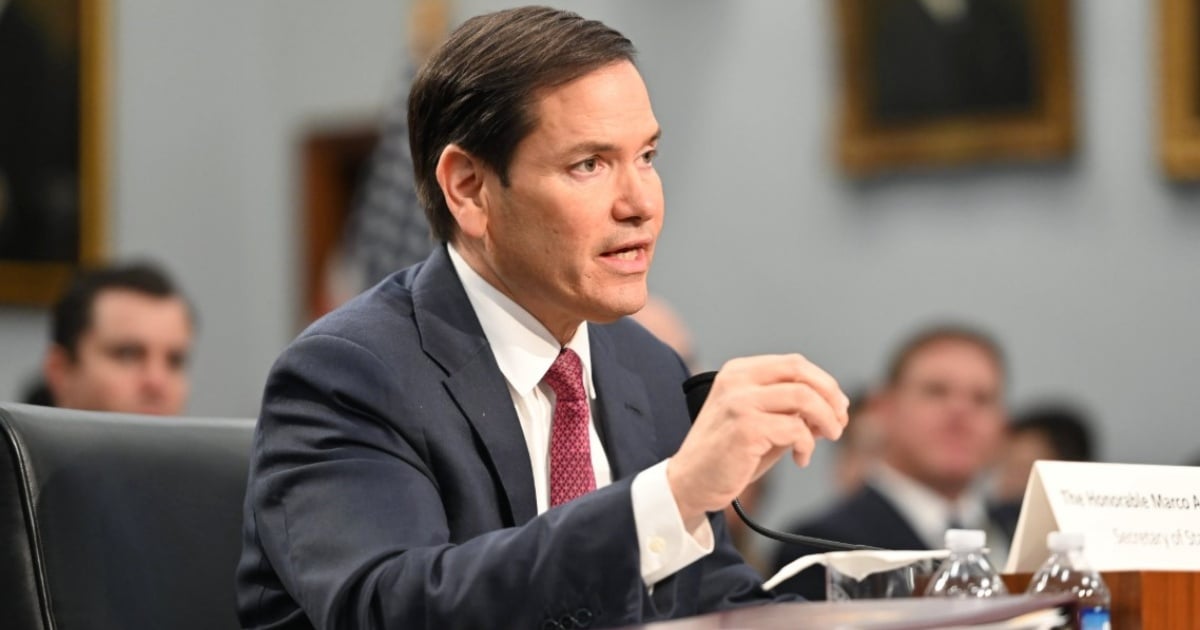
On Wednesday, U.S. Secretary of State Marco Rubio announced that Washington will enforce visa restrictions on several government officials from Cuba, as well as from African countries and Grenada. This decision comes as a response to their involvement in what the U.S. describes as a forced labor scheme tied to the exportation of Cuban medical services.
In a statement shared on social media platform X, Rubio emphasized that the State Department is cracking down on “various officials complicit with the Cuban regime” who are responsible for organizing and sustaining these missions. These missions, according to international organizations, impose coercive working conditions on healthcare professionals.
Rubio reiterated the U.S. government's commitment to ending this practice, warning that “countries complicit in this exploitation should think twice” before continuing such agreements. Both Washington and human rights organizations have consistently accused Havana of using medical professionals as political tools and sources of revenue under conditions that violate international labor standards.
The Cuban regime, however, has dismissed these accusations, defending their medical teams as “solidarity missions.” The announced sanctions are part of a broader U.S. strategy to pressure the Cuban government and its international allies, aiming to dismantle what is seen as a large-scale labor exploitation network.
Rubio accompanied the announcement with a post on X dated February 25, shortly after assuming his role as Secretary of State, stating that the U.S. is expanding its visa restriction policies related to Cuba. He noted that the State Department has taken steps to limit visa issuance to Cuban officials and complicit third-party countries, as well as individuals responsible for Cuba's “exploitative labor export program.” He pledged to hold the regime accountable for “oppressing its people and profiting from forced labor.”
In June, the U.S. government announced similar visa restrictions on several Central American government officials accused of participating in programs to hire Cuban doctors, which Washington claims fall under forced labor schemes orchestrated by Havana's regime.
The Secretary of State stated that these sanctions aim to hold accountable those who “exploit Cuban medical professionals under coercive practices.” He added, “Visiting the United States with a visa is a privilege, not a right. We are committed to combating human trafficking, including forced labor.”
Recently, the Cuban government confirmed that more than 24,000 healthcare workers are currently serving abroad as part of what critics label a system of modern slavery, masked as international cooperation policy. This figure emerged during a parliamentary debate on foreign policy guidelines for 2025-2028, held at the National Assembly of People's Power, as reported by state-run Cubadebate.
During that session, Foreign Minister Bruno Rodríguez Parrilla defended the regime’s foreign policy as a “revolutionary and popular” diplomacy, asserting that it is guided by the foundational principles of the fight for independence and directed by the political elite, led by the first secretary of the Communist Party and the country's president.
Understanding U.S. Visa Restrictions Related to Cuban Medical Missions
What prompted the U.S. to impose visa restrictions on Cuban officials?
The U.S. imposed visa restrictions on Cuban officials due to their involvement in a forced labor scheme associated with the exportation of Cuban medical services.
How has the Cuban government responded to these accusations?
The Cuban government has rejected the accusations, defending its medical missions as acts of solidarity.
What is the U.S. government's stance on forced labor related to Cuban medical missions?
The U.S. government is committed to ending what it considers a practice of forced labor involving Cuban medical professionals and is applying pressure on complicit nations through visa restrictions.