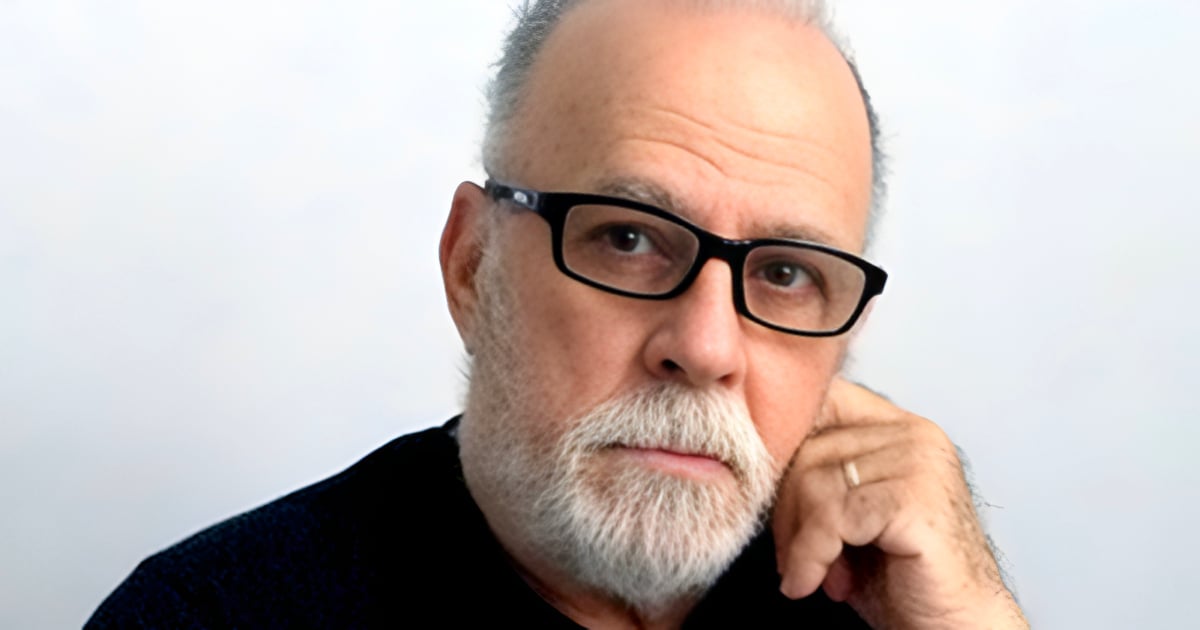
Rafael del Pino Díaz, a former general of the Cuban Air Force, has labeled GAESA as the heart of a "mafia state" that dominates the country's main financial resources. He has called upon officers and troops of the Revolutionary Armed Forces (FAR) to rise against the leadership, which he claims has hijacked the nation's institutions. In an article published by the think tank Cuba Siglo 21, the retired Brigadier General from Pinar del Río (born 1938) reiterated the call from the Cuban Military Objectors of Conscience movement to commence a rebellion aimed at ending the regime.
This renewed appeal follows the recent leak of internal financial documents, exposing that the Grupo de Administración Empresarial S.A. (GAESA)—a conglomerate managed by the Cuban elite—holds over $18 billion in liquid assets, surpassing the international reserves of several Latin American nations. For Del Pino, a combat pilot who made his mark in the Bay of Pigs and Angola and defected to the United States in 1987, these revelations counter the official narrative that blames the crisis solely on the U.S. embargo or external factors.
Oligarchic Control and "State Within a State"
Del Pino argues that a "kleptocratic oligarchy" comprised of a select group of military personnel and technocrats aligned with the Castro family has established a state within a state, seizing control of political appointments, military commands, and the most profitable sectors of the economy. He asserts that the FAR has been used as a "cloak" to disguise the private nature of GAESA, with companies registered in Panama and accounts in tax havens.
Contrary to popular belief, Del Pino claims that the FAR does not truly control GAESA; instead, it has been discredited by its adherence to a chain of command that implicates it in repression. As evidence, he cites the case of General Leopoldo Cintras Frías, former FAR minister, who, according to Del Pino, lost his positions after uncovering the corporation's true structure, hidden within the Ministry of the Revolutionary Armed Forces (MINFAR).
Calls to Nationalize and Dissolve GAESA
The ex-general advocates for GAESA to be nationalized, intervened, audited, and dissolved as an oligopolistic corporation because it symbolizes the economic power of the new ruling class. Del Pino believes this elite uses the FAR and the Ministry of the Interior (MININT) as private armies to bolster the regime, while Miguel Díaz-Canel's government serves as a political front.
Furthermore, he condemns the oligarchy for plunging 89% of the population into poverty, suffering from power outages, depreciated wages and pensions, food and medicine shortages, and a Penal Code that punishes even peaceful protests on social media.
Military Rebellion and Opposition Coalition
Del Pino also urges FAR officers and soldiers to exercise "the sacred right of insubordination" to protect the people from repression. He calls for the creation of a coalition of civil and military forces to lead a democratic transition based on free elections, the rule of law, and economic freedoms.
He warns that change will only be legitimate if it involves a genuine national reconstruction process, not a "fraudulent change" controlled by regime factions. According to him, the leaks about GAESA might be orchestrated by the corporation itself or a military intelligence group seeking a controlled transition, akin to Vladimir Putin's model in Russia.
Skepticism Toward Regime-led "Openings"
Lastly, the former general cautions that a "fraudulent change" strategy would clash with a population distrustful of deals brokered by their oppressors. He reminds that the Helms-Burton Act in the U.S. sets precise conditions for acknowledging political change in Cuba, leaving no room for cosmetic operations.
For Del Pino, the only certainty is that "among individuals and groups associated with the power elite, the belief that the system has collapsed is spreading," and that factions within the regime are trying to preempt democratic forces to control the future. He concludes by emphasizing that the responsibility for changing the regime lies with the Cuban people, "primarily with those in uniform who still claim to protect national sovereignty," urging them to "turn their weapons against the oligarchy" and return the wealth "stolen from the national patrimony" to the people.
FAQs on GAESA and Cuban Political Dynamics
What is GAESA and why is it significant in Cuba?
GAESA, or Grupo de Administración Empresarial S.A., is a conglomerate of companies controlled by the Cuban military elite, holding significant economic power in Cuba. It plays a crucial role in the country's financial landscape, managing substantial assets and influencing various sectors.
What does Rafael del Pino propose for GAESA?
Rafael del Pino advocates for the nationalization, intervention, auditing, and dissolution of GAESA to dismantle its oligopolistic control and return economic power to the Cuban population.
How does Del Pino view the role of the FAR in the Cuban regime?
Del Pino views the FAR as complicit in supporting the regime through a chain of command that enforces repression, despite being used as a cover for GAESA's private interests. He calls for FAR members to exercise their right to insubordination against the regime.