In the wake of a groundbreaking investigation by the Miami Herald, which unveiled leaked financial documents from GAESA—a military-run conglomerate—revealing control over more than $18 billion in liquid assets, the Cuban Foreign Ministry remains silent. This staggering amount surpasses the international reserves of countries such as Uruguay, Panama, and Costa Rica, and is reportedly beyond the reach of state auditors, controlled by the Revolutionary Armed Forces (FAR) rather than addressing Cuba's pressing public needs.
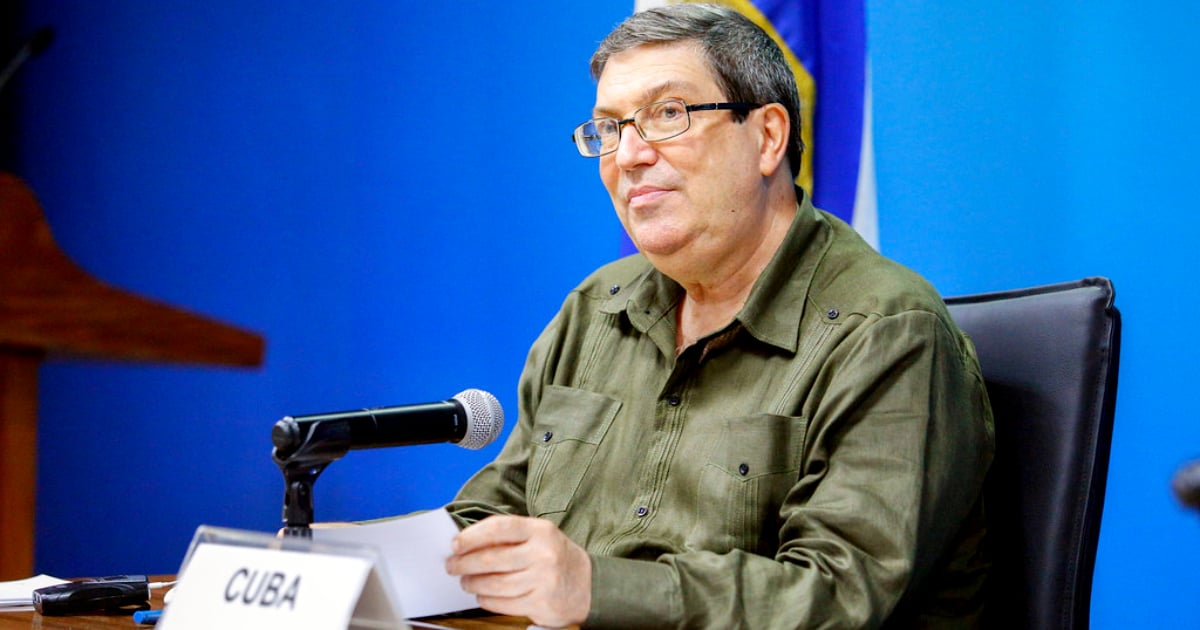
Despite the gravity of these allegations and the global attention they have garnered, the Ministry of Foreign Affairs (MINREX) has been notably mute. Neither Bruno Rodríguez Parrilla, the Foreign Minister, nor any official statements or interviews have surfaced in state media to address these claims. The official press continues to sidestep the issue, maintaining its typical propaganda narrative.
Redirection and Personal Attacks
The sole reaction linked to the Foreign Ministry has been indirect and personal. Rodney González Maestrey, the Director of Legal Affairs and Analysis for the U.S. Division at MINREX, took to Facebook not to address the Herald's revelations but to launch a verbal attack on independent journalist Mario J. Pentón. Residing in the United States and contributing to independent media, Pentón had highlighted the investigation, questioning why visible figures in Cuban diplomacy, such as Vice Minister Carlos Fernández de Cossío and Deputy Director Johana Tablada de la Torre, remained silent about GAESA's $18 billion.
Rather than clarifying or countering the report, González Maestrey chose to discredit Pentón, labeling him as an "instrument of the Cuban-origin extreme right" and accusing him of legitimizing US policies against Cuba. González Maestrey's post veered off-topic, weaving in references to US sanctions on fuel, transportation issues, and a defense of military-controlled tourism, framing criticism as attacks on the nation's interests.
Shifting the Narrative
This diversion tactic effectively sidestepped the central issue: the existence of GAESA's massive reserves and their opaque management. Instead, González Maestrey's message leaned on two familiar official discourse themes: the embargo as the all-encompassing excuse for Cuba's shortages, and the portrayal of tourism under military control as a crucial income source. Such narratives are typical of state propaganda, deflecting from concrete data to a simplistic storyline where all criticism aligns with "extreme right" or "external enemies."
Personalizing the Debate
González Maestrey further diverted the discussion to personal matters, citing that Fernández de Cossío's "sin" was having family in the US, and Tablada de la Torre's was officially traveling there. By this logic, he ironically suggested that figures like Senator Marco Rubio should refrain from commenting due to corruption in their own country. This tactic of personalizing the conflict is another common regime strategy to avoid addressing structural critiques.
The Unspoken Truths
Notably absent from González Maestrey's text was any explicit denial of the Miami Herald's figures. There was no explanation of the source, use, or intended purpose of GAESA's funds, nor was it clarified if GAESA is required to contribute any portion of its reserves to the national budget to alleviate the crisis. This silence starkly contrasts with MINREX's usual prompt responses to other critical reports or topics where their propaganda machinery is well-prepared, such as US sanctions and the "blockade."
Silence as a Statement
The official silence from MINREX regarding GAESA's $18 billion, combined with attempts to shift the conversation to personal attacks and embargo narratives, represents a calculated strategy of discourse control: neither confirming nor denying the report, simply steering public focus away from it. Meanwhile, living conditions in Cuba continue to decline, and the regime maintains its reserves under military control, away from public scrutiny or use to mitigate the crisis.
This case illustrates how, in Cuban politics, official silence is not the absence of a response; it is a deliberate, consistent response aligned with the opaque management of economic power.
Understanding GAESA's Financial Influence
What is GAESA?
GAESA, or Grupo de Administración Empresarial S.A., is a conglomerate controlled by the Cuban military, managing a significant portion of the country's economy, particularly in tourism, retail, and other key sectors.
Why is the $18 billion figure significant?
The $18 billion represents a substantial amount of liquid assets controlled by GAESA, surpassing the international reserves of several countries. This figure highlights the conglomerate's financial power and raises questions about transparency and accountability.
How has the Cuban government responded to these allegations?
The Cuban government, particularly the Ministry of Foreign Affairs, has not issued any official response to the allegations. Instead, an indirect personal attack was made against journalist Mario J. Pentón, who reported on the issue.