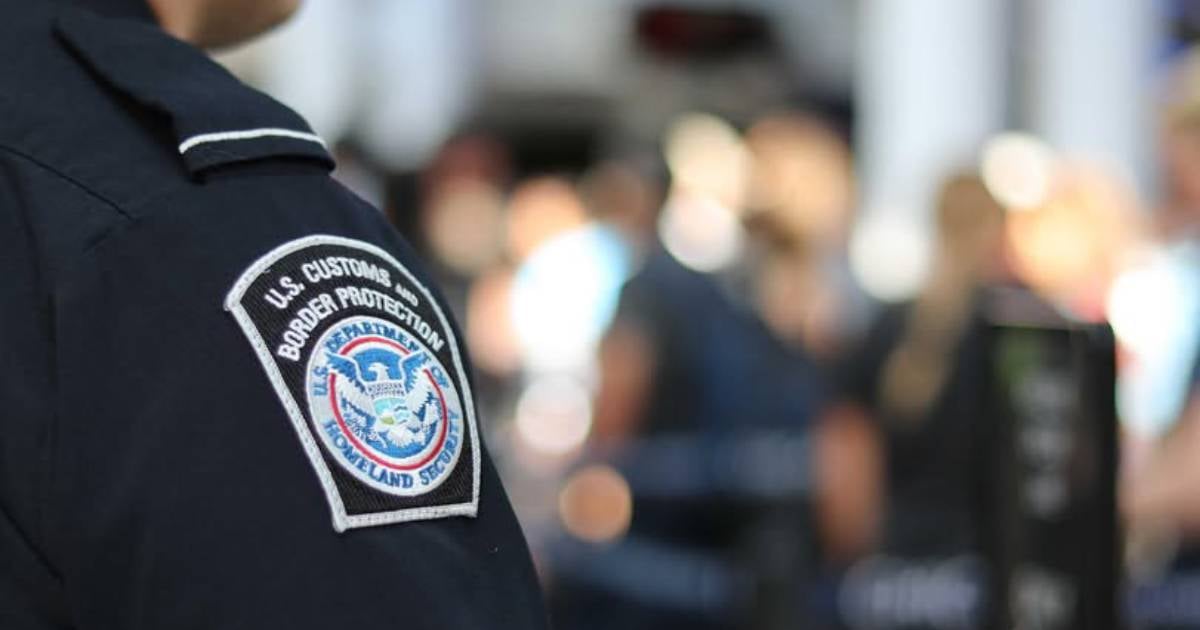
A traveler arriving at Houston's George Bush Intercontinental Airport from Cuba encountered an unexpected situation when U.S. Customs and Border Protection (CBP) officers confiscated a bottle containing scorpion venom. This substance is under strict import regulations. The incident, disclosed last Wednesday by the federal agency via social media and reported by the Miami Herald, led to a firm warning to travelers attempting to enter the country with undeclared biological materials. CBP emphasized the importance of leaving "home remedies at home."
CBP reiterated that all biological materials entering the United States must adhere to international, federal, and state regulations. They must be properly documented, labeled, packaged, and declared. Failure to meet these requirements can result in delays, fines, legal consequences, and confiscations.
The agency also highlighted that declaring such materials can be done verbally, through mobile applications like Mobile Passport Control, at self-service kiosks like Global Entry, or via form 6059B. This warning aims to protect public health, agriculture, and the country's natural resources from potential risks.
According to Jud Murdock, CBP’s Houston Director of Field Operations, the traveler claimed the scorpion venom was intended for medical use. However, without the necessary import documentation, the substance was seized after an agricultural specialist review.
In Cuba, scientists have long advocated using blue scorpion venom (Rhopalurus junceus)—an endemic species—as an alternative treatment for pain and inflammation, and even as a complementary therapy for cancer. Since 2011, the state-run pharmaceutical company Labiofam has marketed it under the name Vidatox. Nonetheless, its effectiveness against tumors remains questioned by the global scientific community, according to a Reuters report.
Understanding U.S. Import Regulations for Biological Materials
What are the consequences of not declaring biological materials?
Failing to declare biological materials can lead to delays, fines, legal actions, and potential confiscation of the items by U.S. Customs.
How can travelers declare biological substances?
Travelers can declare biological substances verbally, through mobile apps like Mobile Passport Control, at self-service kiosks like Global Entry, or using form 6059B.
Why is the import of scorpion venom regulated?
Scorpion venom import is regulated to ensure that it complies with safety standards and to prevent potential risks to public health, agriculture, and natural resources.