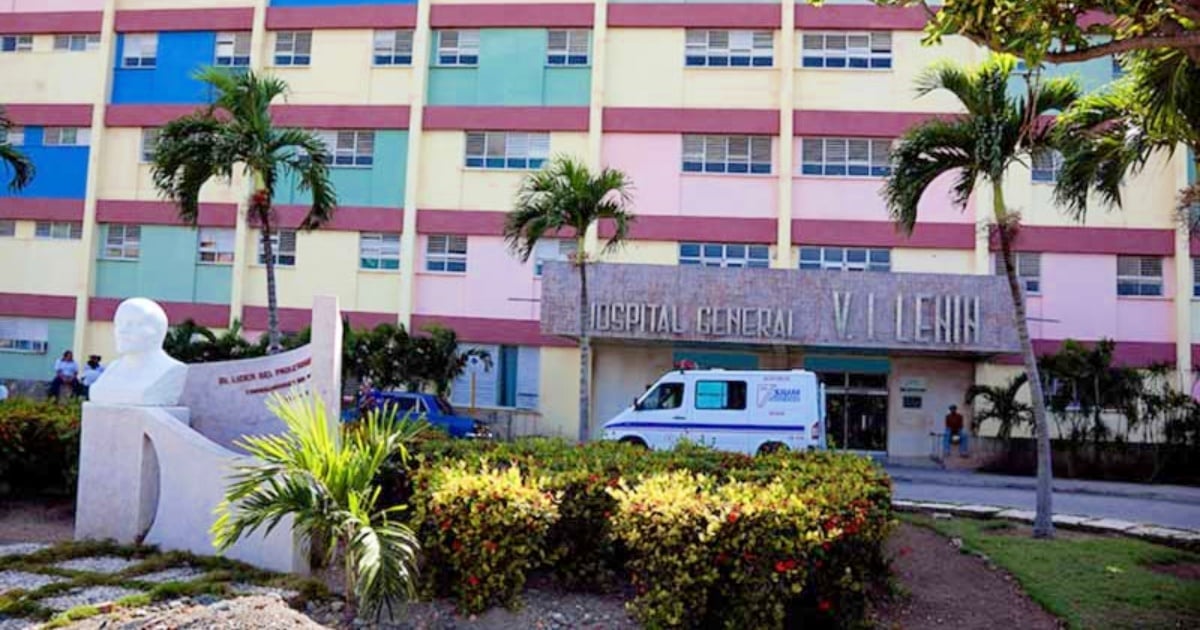
In an incident that combines the shocking with the tragic, highlighting the severe moral and regulatory crisis in Cuba, a woman was caught pretending to be a nurse at the Vladimir Ilich Lenin Hospital in Holguín. Her astonishing and outrageous scheme involved renting out maternity beds. The case, revealed by the pro-government profile Cazador Cazado, sparked an outpouring of reactions—not only due to the boldness of the individual involved, identified as Belkis Bauzá, but also because of the numerous questions left unanswered by the official account.
According to the report, Bauzá had no formal training or connection to the healthcare system. Yet she roamed the hospital as though she were a staff member, pinpointing available beds and "selling" them to desperate families eager to secure a place for childbirth. Her actions reveal a clandestine market operating within a healthcare facility, where—as confirmed by many citizens—resources meant to be free are secretly traded.
“Beds have been sold there for a long time, and we all know it,” commented one user, while another noted, “It’s not just the bed being sold... everything is for sale, even cesarean sections and ligatures.”
The Outrage and Doubts: Could She Have Acted Alone?
The official narrative raised more questions than it answered. Many people agreed that it seemed improbable for an outsider to sustain such a business without the complicity of hospital staff. “There’s no way someone without accomplices inside the institution could do that,” one internet user declared, while another added, “Of course there are officials involved in this business; investigate thoroughly and you’ll find more culprits.”
Similar comments were widespread:
- “I don’t believe she was doing it on her own... there have to be more involved because I doubt she managed everything alone.”
- “She couldn’t have done it alone; someone had to help her access the delivery room information.”
- “This is a whole team at work. I hope to see their faces here.”
For many, the omission of these possible accomplices in the official statement reflects how uncomfortable cases are handled: the weakest link is exposed, while others remain in the shadows.
Lack of Clarity and a “Poorly Told” Story
A significant portion of the reactions questioned how the news was presented. “Please explain clearly what this woman was doing... I don’t quite understand,” requested one reader. Others were more direct: “That story is poorly told, it lacks arguments to be believable” or “The story was told halfway, there’s more to it.” The general feeling is that the official post was neither transparent nor detailed.
Some suggested that details were omitted because acknowledging them would expose serious failures in the hospital’s internal controls and implicate senior officials.
The Context: Corruption and the Normalization of Paying in Hospitals
Beyond this specific case, the comments depict a reality many take for granted: paying for medical services, even in public hospitals, is commonplace. “If you want a bed, you have to pay or have a friend,” stated one user. Another added, “At the Holguín clinic, they sell everything, even IV drips for critically ill patients... nobody goes willingly, and this decay is intolerable.”
Several individuals reported that cesareans, surgeries, and even wheelchair transportation are charged under the table. This practice, they say, is not new: “For years, beds have been sold to new mothers at the Lenin, it’s nothing new.”
While many understand that in today’s Cuba people "invent" ways to survive, the majority agreed that involving people’s health—especially pregnant women—crosses an unacceptable ethical line. “Any other illegal business might be understandable to put food on the table... but not in that sacred place; we’ll never accept that,” wrote a Holguín resident.
Others called for exemplary punishment: “She should pay dearly for what she did,” “Prison time, not less than five years,” or “The full weight of the law on her shoulders.”
The case has exposed the deterioration of a system that for decades was touted as a global example. For many, it’s evidence that the so-called "medical power" is now more of a slogan than a reality. “There’s no longer free public health,” lamented one commenter.
Distrust is growing, not only towards those who commit these frauds but also towards the institutions that allow them to happen. As one user summarized: “She didn’t do this alone... dig deeper and you’ll see the chain extend.”
Understanding the Healthcare Crisis in Cuba
What was the fake nurse's scheme in Holguín?
The fake nurse, identified as Belkis Bauzá, was caught posing as a nurse at Vladimir Ilich Lenin Hospital in Holguín, renting out maternity beds to desperate families.
How did the public react to the incident?
The public was outraged, questioning whether Bauzá could have acted alone and suspecting institutional complicity. Many comments highlighted the broader issue of corruption within the healthcare system.
What does this incident reveal about the healthcare system in Cuba?
The incident exposes a clandestine market within the healthcare system, where services meant to be free are secretly sold, reflecting a larger issue of corruption and mismanagement.