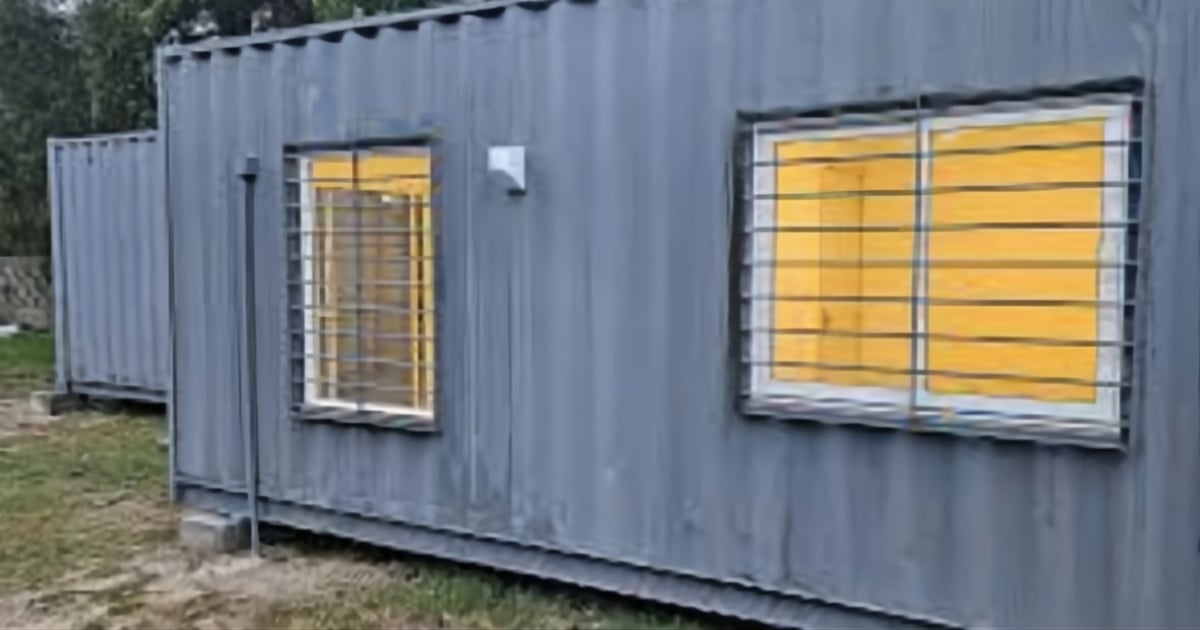
The Cuban government has unveiled a plan to use shipping containers as a means to address the housing crisis in Las Tunas, touting this as an "innovative solution" to the region's severe housing shortage. This initiative comes after decades of unmet housing construction goals, with over 10,659 families in Las Tunas residing in makeshift wooden homes with dirt floors.
According to a report by Granma, the first of these container homes, classified as typology 3, will be set up in micro-localized areas within the municipalities of Manatí, Puerto Padre, Jesús Menéndez, Majibacoa, and the provincial capital. Héctor Rodríguez Espinosa, the provincial housing director, explained that 46 containers will be utilized: 18 for housing employees of the Electric Company and 28 distributed through Popular Councils.
The authorities claim that the heat will not pose a problem due to the use of thermal-insulating materials on the interior walls, coupled with an additional roof to enhance ventilation. Furthermore, the containers will be mounted on concrete pilings to prevent moisture from rusting the metal.
The Challenge of Insulation and Heat
Each home will range from 32 to 70 square meters, featuring a kitchen, bathroom, dining area, and bedrooms according to the number of inhabitants, along with a 150-square-meter plot for potential expansions. However, in a country where the average temperature hovers around 30°C and can exceed 35°C, an uninsulated metal container can become unbearably hot. Without adequate ventilation and air conditioning, interior temperatures can soar, posing health risks such as heat stroke, particularly for children and the elderly.
While thermal coatings and separate roofs might alleviate some heat issues, international experience shows that these types of homes require significant investment in insulation, which can drive up costs. If the goal is to "cut expenses"—as it appears to be in this case—the residents' quality of life may be compromised.
An Unresolved Obligation to the Citizens
The regime has consistently failed to meet its housing construction plans for decades, with no repercussions for these shortcomings. The same Minister of Construction has held office for over twenty years, focusing efforts on building hotels while countless residential buildings crumble in Havana.
The regime frequently attributes the housing crisis to the U.S. embargo, rising construction material costs, and more recently, issues at the Cienfuegos cement factory. Meanwhile, the nation's housing stock continues to deteriorate, forcing thousands of families to live in dilapidated structures, makeshift shelters, or cramped conditions.
In June, CiberCuba reported that the government is promoting similar projects in Holguín and other provinces, employing containers, prefabricated modules, and colonial-inspired constructions devoid of steel or cement. These ventures are marketed as creative and sustainable, yet in practice, they are low-cost fixes that sidestep the core problem: the absence of a comprehensive housing policy and adequate resources to build lasting structures.
In countries like Spain, container homes have gained popularity as sustainable alternatives, but they adhere to strict insulation standards, habitability permits, and structural guarantees. In Cuba, the scenario is starkly different. Chronic material shortages, inflation, and meager wages render even these "affordable solutions" out of reach for most citizens.
FAQs on Shipping Container Housing in Cuba
Why is Cuba using shipping containers for housing?
Cuba is utilizing shipping containers for housing as a quick and supposedly cost-effective solution to its extensive housing deficit. The government promotes this approach as innovative despite the significant challenges posed by Cuba's climate and infrastructure.
What are the main challenges of living in a container home in Cuba?
The primary challenges include extreme heat due to insufficient insulation, lack of proper ventilation, and potential health risks like heat stroke, especially in a tropical climate. Additionally, the quality of life could be compromised if cost-cutting measures affect essential living conditions.
How does Cuba's container housing initiative compare to other countries?
In countries like Spain, container homes are part of sustainable living solutions with strict insulation standards and structural guarantees. In contrast, Cuba's approach lacks such standards due to material shortages and economic constraints, making the homes less viable for long-term habitation.