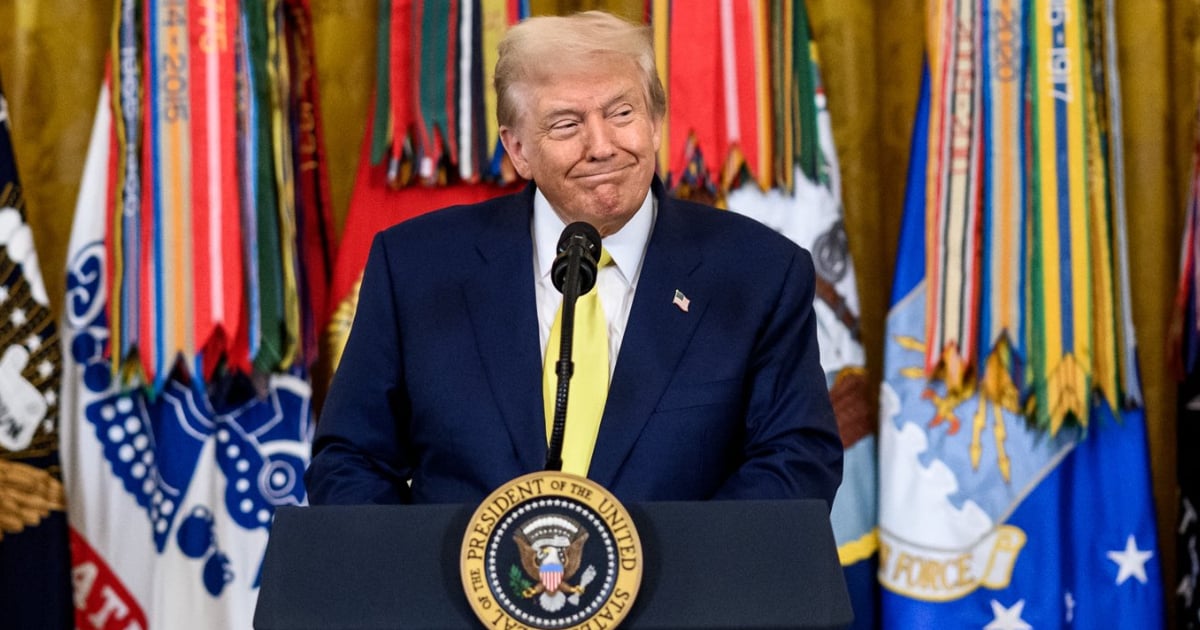
On Thursday, former President Donald Trump issued a stark warning that the United States might be on the brink of an economic disaster akin to the Great Depression of 1929 if a federal appeals court rules against him in a pivotal case concerning the legality of his tariffs.
In a statement shared on his social platform, Truth Social, Trump claimed that the tariffs he imposed have been “extremely beneficial,” boosting both the economy and the stock market, and generating “hundreds of billions of dollars” for the nation’s treasury. However, he cautioned that an adverse decision “at this late stage” could render it “impossible to recover or return those vast sums of money,” potentially plunging the country into an unprecedented recession.
The Legal Battle Over Tariffs
Trump’s comments come amid an ongoing appeal against a ruling issued in May by the International Trade Court. This court determined that the former president overstepped his authority when he invoked the International Emergency Economic Powers Act (IEEPA) to impose broad tariffs. A group of five small business owners and 12 Democratic states argue that this law does not grant him the power to enforce such widespread import tariffs.
Currently, the case is under review by the Court of Appeals for the Federal Circuit, which has allowed the tariffs to remain in effect during the legal proceedings. This decision process may take several weeks or even months and could eventually escalate to the Supreme Court.
Potential Economic Implications
Under the IEEPA, Trump has implemented a universal 10% tariff on most imports, along with specific tariffs targeting nations such as China, Mexico, Canada, and more recently, Brazil. These measures have been justified as efforts to curb fentanyl imports and illegal immigration. However, existing trade agreements with entities like the European Union and Japan might be jeopardized if the court restricts his ability to utilize the IEEPA.
Despite the legal obstacles, experts suggest that Trump might resort to other legislative tools, such as Section 232 of the Trade Expansion Act of 1962 or Section 301 of the Trade Act of 1974, to sustain his tariff strategy, albeit with more limited scope.
Understanding the Impact of Trump's Tariff Policies
How could a court ruling against Trump's tariffs affect the U.S. economy?
A court ruling against Trump's tariffs could lead to the removal of these taxes, potentially reducing revenues and impacting certain sectors that relied on these protections, thereby risking economic instability.
What alternatives does Trump have if the court limits his tariff authority?
If the court limits his authority under the IEEPA, Trump could potentially use Section 232 or Section 301 of different trade acts to impose tariffs, although these options would offer a narrower range of action.
What is the International Emergency Economic Powers Act (IEEPA)?
The IEEPA is a federal law granting the president authority to regulate international commerce after declaring a national emergency in response to any unusual and extraordinary threat to the country.