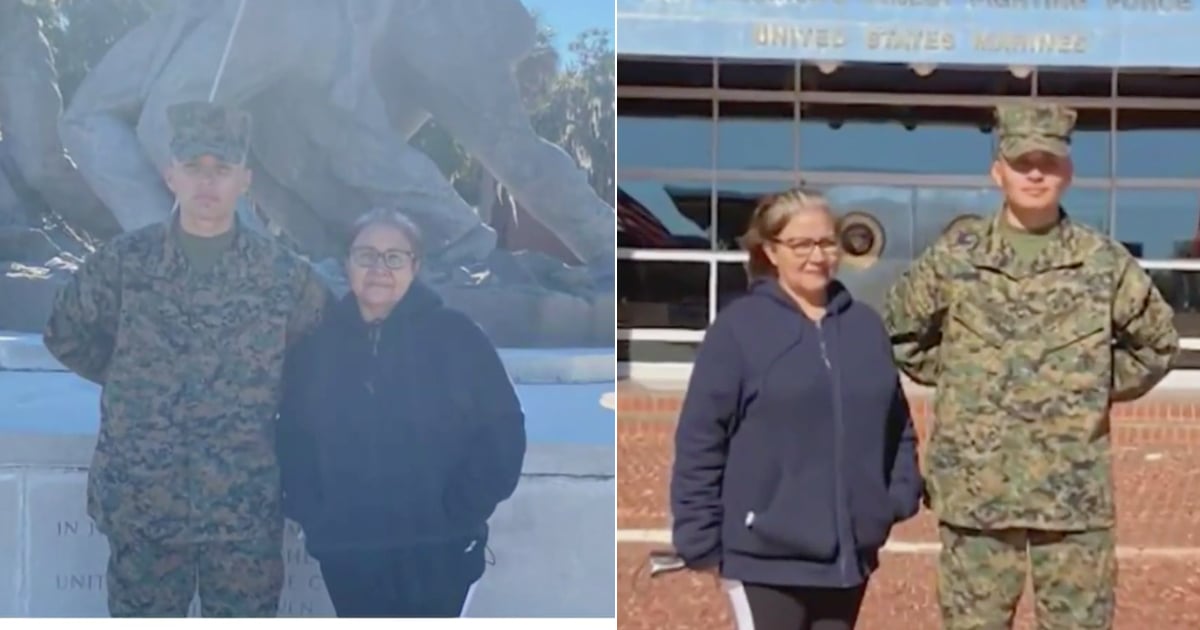
Maria Ursula Valle, a 54-year-old Mexican immigrant, was taken into custody by the U.S. Immigration and Customs Enforcement (ICE) on Monday while attending a scheduled immigration appointment, as reported by Telemundo 51. Her three children are U.S. citizens, including Jose Manuel Vilchis, a U.S. Marine.
"She had a court date to secure her parole in place, but ICE detained her and did not allow her to leave," recounted Vilchis, expressing his disappointment. "I gave four years of my life to this country. I feel honored to be here, that this is my country, but knowing that this country doesn't want my mother makes me feel terrible. It hurts me and my sisters because she is the only parent we have here."
Mia Vilchis, the youngest daughter studying nursing, described her mother as "a very kind lady." She also raised concerns about Maria Ursula's health, noting that she "needs her medication since she suffered a stroke in 2021," she shared in an exclusive conversation with the media outlet.
The Complexity of Parole in Place
Parole in place is a discretionary measure that the U.S. government can extend to immediate family members of active or veteran armed forces personnel, allowing them to remain temporarily in the country despite an irregular entry. These decisions are made "on a case-by-case basis" for humanitarian reasons or significant public interest.
Immigration attorney John De La Vega, who is not directly involved in the case, explained to Telemundo that "military parole in place is a benefit for those in the armed forces to rectify the irregular entry of a relative and provide them with parole. Historically, the U.S. government has not prioritized deportation in such cases."
Family's Hopes and Broader Implications
Maria Ursula's family believed the appointment was to advance her immigration process. They now hope to reach out to congress members to prevent a potential deportation. "They are hopeful that their congressman can assist in the case and stop Maria Ursula's deportation," reported the channel.
This incident arises amid a notable increase in ICE detentions, even of individuals without criminal backgrounds. In June, 36% of immigrants arrested in Florida had no criminal records, according to data from the University of California, Berkeley's Deportation Data Project. An executive order from May set a daily arrest quota of 3,000, intensifying operations in neighborhoods, workplaces, and immigration appointments.
So far this year, ICE has conducted over 149,000 detentions, driven by the hardline immigration policy reintroduced after Donald Trump's return to the White House.
On June 23, Cuban national Rogelio Gonzalez Moya, 26, was detained in Miami after attending an ICE appointment, despite having no criminal record and being under immigration supervision.
Additionally, young Cuban Laritza Lopez Rodriguez reported being violently arrested by ICE despite being in recovery from medical treatment. Another young Cuban woman in Phoenix, Arizona, was arrested despite having a valid work permit and having applied for residency two years ago. She was released after a month, on bond and with an ankle monitor.
Understanding ICE Detentions and Parole in Place
What is parole in place for military families?
Parole in place is a discretionary measure that allows immediate family members of active or veteran military personnel to stay temporarily in the U.S., despite having entered the country irregularly. It is considered on a case-by-case basis for humanitarian or public interest reasons.
Why was Maria Ursula Valle detained by ICE?
Maria Ursula Valle was detained by ICE during a scheduled immigration appointment, where she intended to secure her parole in place. ICE decided to detain her, which has raised concerns and disappointment among her family.
How has the recent ICE policy affected detentions?
The recent ICE policy, set by an executive order in May, established a quota of 3,000 daily arrests, leading to increased detentions, even of individuals without criminal records. This has intensified operations in various locations, including neighborhoods, workplaces, and immigration appointments.