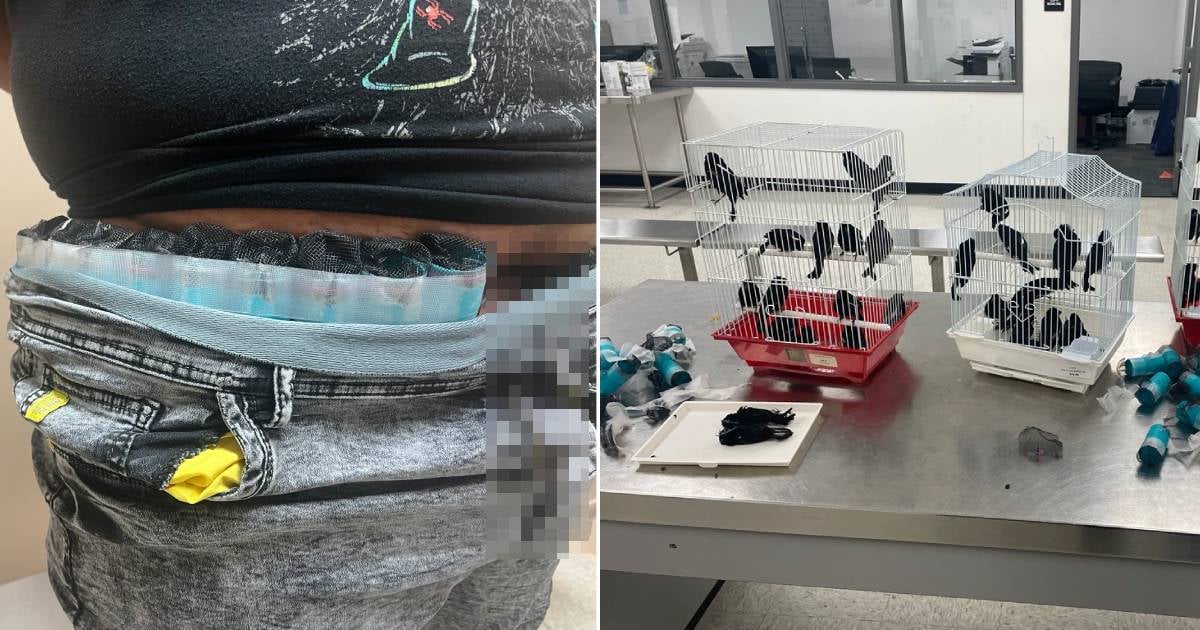
A 22-year-old Cuban national was taken into custody on Thursday at Miami International Airport, Florida, after he attempted to smuggle 40 live birds hidden on his body. Diane J. Sabatino, from the U.S. Customs and Border Protection's (CBP) Field Operations Office, shared the incident on the social media platform X. She stated, "A colossal failure! Such smuggling activities strain border security, endanger public health, and spread diseases that pose threats to both animals and humans."
The illicit operation was thwarted before the suspect could board his flight, preventing what could have been a significant risk to both border security and public health.
Recurring Smuggling Incidents
In May 2025, the General Customs of the Republic authorities stopped an attempt to illegally export a bird and several eggs hidden in luggage bound for the United States from Havana's José Martí International Airport. In another instance, Spanish Civil Guard officials in 2021 intercepted 161 wild birds at Manises Airport in Valencia, transported by a passenger arriving from Havana. These birds, concealed in luggage and lacking legal documentation, highlighted successful passage through both Cuban and Spanish customs, raising alarms about the efficacy of detecting such trafficking.
Back in April 2019, another "wildlife smuggling" case was uncovered in Havana when customs authorities seized luggage containing 277 live birds intended for illegal exportation.
Why Is This Smuggling Alarming?
Exotic birds are potential carriers of zoonotic diseases (those that can be transmitted between animals and humans), such as avian influenza or psittacosis, which endanger both human populations and other animal species. Additionally, illegal transport often involves extreme conditions of overcrowding, lack of food, water, or ventilation, representing severe animal cruelty.
Moreover, if these birds were to escape or be released into another country, they could become invasive species, disrupting local ecosystems and displacing native wildlife.
Common Questions About Bird Smuggling Risks
What are the health risks associated with smuggling live birds?
Smuggling live birds can introduce zoonotic diseases like avian influenza and psittacosis, posing significant health threats to humans and animals alike.
How does smuggling affect local ecosystems?
If smuggled birds are released into non-native environments, they can become invasive species, disrupting local ecosystems and outcompeting indigenous wildlife.
What measures are in place to prevent bird smuggling?
Customs and border protection agencies employ various detection methods and collaborate internationally to prevent smuggling, but challenges remain in consistently identifying and intercepting these activities.