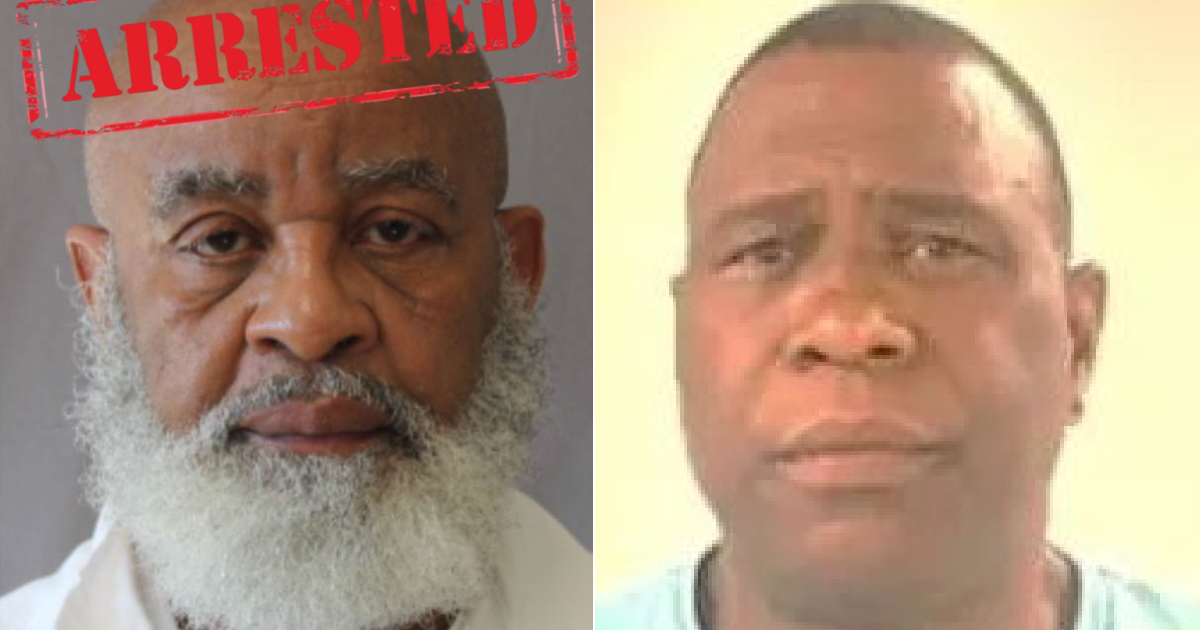
This past Wednesday, U.S. Immigration and Customs Enforcement (ICE) apprehended two Cuban nationals in Texas and Florida. These individuals, classified as illegal immigrants, have prior convictions for serious crimes such as assault and drug trafficking, and now face imminent deportation. According to the Department of Homeland Security (DHS), Osvaldo Rabiero Álvarez, aged 72, was detained by ICE's Houston office. He has been convicted of forgery, cocaine and heroin trafficking, theft, and aggravated assault in Jefferson County, Texas.
Among those detained on August 6th was Andrés Guilarte, who has a criminal history involving cocaine trafficking and motor vehicle theft in Naples, Florida. The DHS statement identified the Cubans among a list of violent offenders, drug traffickers, and pedophiles arrested as part of ongoing law enforcement efforts targeting "the worst of the worst" criminal illegal immigrants. This list also included individuals from China, Jamaica, and El Salvador.
Kristi Noem, the Secretary of Homeland Security, emphasized that ICE will continue enforcing the law by arresting depraved criminals, including pedophiles, terrorists, murderers, gang members, and sexual predators, despite facing a "1000% increase in assaults" against them.
On Tuesday, another ICE-led operation resulted in the arrest of 42 undocumented immigrants in southeast Houston. This operation aimed at locating and apprehending migrants who pose a "significant risk" to public and national security, according to the agency. These raids are part of the Trump administration's strategy to reinforce immigration control in urban areas with high immigrant populations.
Mass arrests of undocumented migrants, carried out by ICE in collaboration with other federal and state law enforcement agencies, have surpassed 149,000 in just seven months. Although the agency warned last week in a post on X that "arrests and deportations of criminal illegal immigrants will continue," they did not differentiate between criminals and individuals with irregular status in the country.
ICE maintains that arrests focus on individuals with criminal backgrounds, yet human rights activists express concern over the impact on working communities and raids in residential areas. In recent weeks, DHS has increased detentions in immigration courts and public places, causing fear and frustration among immigrants who came to the U.S. seeking opportunities and freedom.
Cubans with irregular status, many under the I-220A and B programs but without criminal records or final deportation orders, have been detained and held at the controversial Alligator Alcatraz detention center, awaiting expulsion. Recent arrests have also included island nationals with serious criminal records or pending charges in the U.S., deemed by authorities as "the worst of the worst" and "a threat to public safety." Some of these individuals have deportation orders.
According to DHS statistics, over 42,000 deportable Cubans remain in the U.S. under supervised release or detained in centers. The Trump administration has deported Cuban nationals to third countries due to the Cuban regime's reluctance to accept individuals with criminal records in the U.S. or those who have remained outside Cuba since before the January 2017 migration agreements.
Meanwhile, last week, the current federal administration executed the seventh deportation flight to Cuba this year, returning 118 people.
Key Questions Surrounding ICE Operations and Cuban Deportations
What are the main reasons behind ICE's recent arrests of Cuban nationals?
ICE's recent arrests of Cuban nationals are primarily focused on individuals with serious criminal records, such as drug trafficking and assault, as part of ongoing efforts to remove dangerous illegal immigrants from the U.S.
How does ICE determine who poses a significant risk to public safety?
ICE assesses individuals based on their criminal history, involvement in activities such as drug trafficking, gang affiliation, or other offenses that pose a significant threat to public and national security.
What impact have these operations had on immigrant communities?
These operations have instilled fear and uncertainty among immigrant communities, particularly affecting those who lack criminal records but fear being caught in ICE raids due to their irregular status.