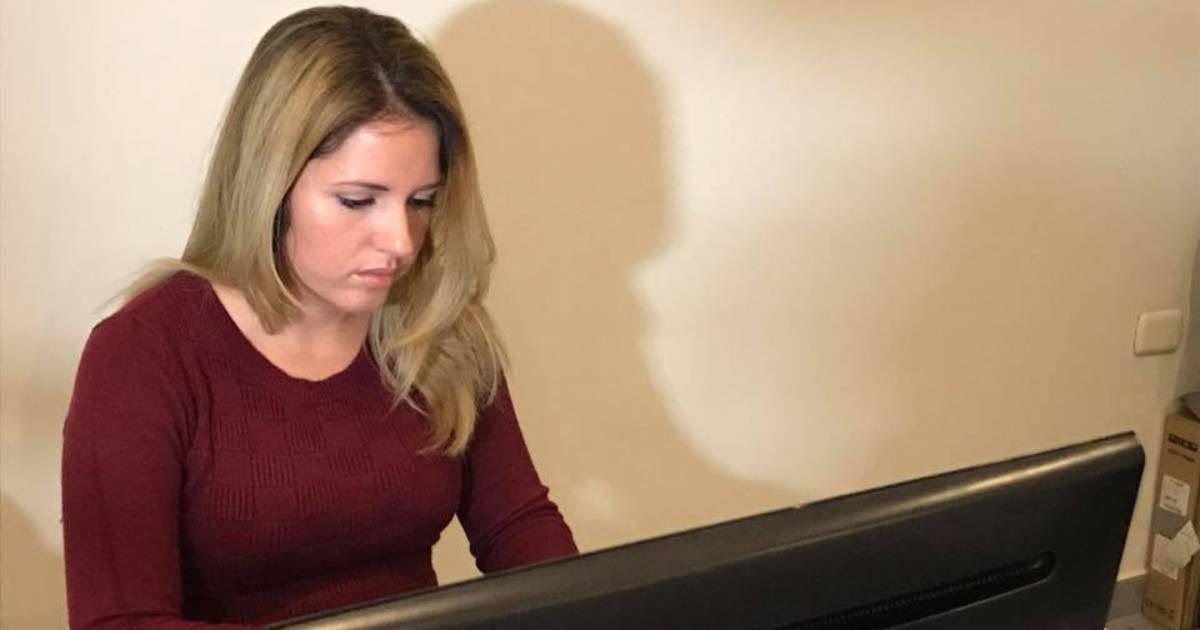
Journalist Cristina Escobar sparked surprise on social media with her unusually harsh critique of Cuban state media, highlighting its inability to fulfill its social role and provide truthful, in-depth reporting on the country's realities. Her remarks, shared on Facebook in response to a post by fellow journalist and Vice President of the Cuban Journalists Union (UPEC), Francisco Rodríguez Cruz, emerged amid the controversy following statements by musician Israel Rojas, leader of the band Buena Fe, during an interview on the YouTube channel La Joven Cuba (LJC).
Escobar expressed her concern by pointing out, “Everyone’s focused on LJC while ignoring the condition of our media,” criticizing the official media for surrendering the public conversation to independent platforms like La Joven Cuba. According to her, these platforms are the only ones that have managed to fill the void of analysis and debate with a “voice among millions.”
She lambasted the state media for abandoning its commitment to the people by not providing “truthful, precise, intentional, and critical” information. Escobar urged a reevaluation of resource allocation, television programming design, and the construction of official media discourse. “Fulfill the social mandate of the media, have genuine interview programs, offer real and quality entertainment, use funds wisely instead of just filling slots…,” she emphasized, concluding with a striking remark: “The telescope in reverse, once again.”
Who is Cristina Escobar?
Once a prominent and controversial figure within Cuban official journalism, Escobar graduated from the Faculty of Communication at the University of Havana and pursued a master's degree at the University of Westminster. She has held key roles within state media, notably as a presenter for the National Television News. For years, she was promoted as the young and "modern" face of the regime's media apparatus, crafted by the Cuban Institute of Radio and Television (ICRT) to be close to power, aligned with the official narrative, and a beneficiary of privileges reserved for loyal journalists.
However, her career has seen its ups and downs. In 2017, she fell out of favor after making a series of vehement remarks against the Barack Obama administration and the process of restoring relations between Cuba and the U.S. Her outspoken nature reportedly led to internal tensions, and her departure from the prime time news was seen as a “symbolic demotion.”
More recently, Escobar has surprised many by criticizing the Cuban media system. In 2021, during a meeting with Miguel Díaz-Canel, she admitted that the official press “failed to cover what happened in the streets” during the 11J protests, criticizing the ICRT’s rigid and politically correct discourse. “Our cameras didn’t go out, and they tell the story,” she said, referencing the information void that forced reliance on citizen and foreign narratives.
"I Can't See Myself Going to Asturias to Give Lessons"
Escobar's post responded to an earlier comment by Francisco Rodríguez Cruz, who, visibly annoyed, used a metaphor to criticize the intervention of Spanish political scientist Carlos González Penalva. From Cubadebate, Penalva disparaged Israel Rojas' interview for being conducted on an independent platform. “I don’t know, I can’t see myself going to Asturias to explain what the United Left should do there, no matter how supportive I am,” Rodríguez Cruz wrote, directly referencing Penalva’s origin and condescending tone, who acted as an unofficial regime spokesman in his column “The Trap of Equidistance.”
The controversy has highlighted not only the opportunism in Israel Rojas’ rhetoric, accused by wide sectors of civil society of attempting a moderate shift without breaking with power, but also the increasingly visible fracture within the official apparatus, where figures like Escobar are beginning to publicly express their frustration over the state media's credibility crisis.
Meanwhile, the regime is attempting to “recycle” Rojas as a valid figure for institutional debate. Less than 48 hours after the interview, Lis Cuesta Peraza, the wife of leader Miguel Díaz-Canel and director of events at the Ministry of Culture, enthusiastically announced that the musician would participate as a guest in her class at the Higher Institute of Art (ISA) on cultural industries. Many interpret this move as part of a symbolic whitewashing strategy for figures close to power who have lost legitimacy among the public.
Escobar’s words resonate strongly as they break, albeit partially, the usual silence of officialdom over the decline of the public media system in Cuba. In a country where information is tightly controlled, and critical journalists are persecuted or forced into exile, her comment reflects underlying tensions. In her own words: “We are inventing enemies when we fail to see the sorry and painful ruins of our own media.”
Understanding the Cuban Media Landscape
What prompted Cristina Escobar to criticize Cuban state media?
Cristina Escobar criticized Cuban state media due to its failure to provide truthful and in-depth reporting, as well as its inability to engage in meaningful public discourse, especially highlighted by the controversy surrounding Israel Rojas’ interview.
Who is Francisco Rodríguez Cruz and what was his reaction?
Francisco Rodríguez Cruz is the Vice President of the Cuban Journalists Union (UPEC). He wrote a metaphorical critique of Carlos González Penalva’s comments, expressing disdain for an outside perspective on Cuban media issues.
How does the regime view Israel Rojas’ comments?
The regime appears to be trying to reintegrate Israel Rojas into the institutional debate, as indicated by his invitation to participate in a cultural class, despite the controversy over his moderate posturing.