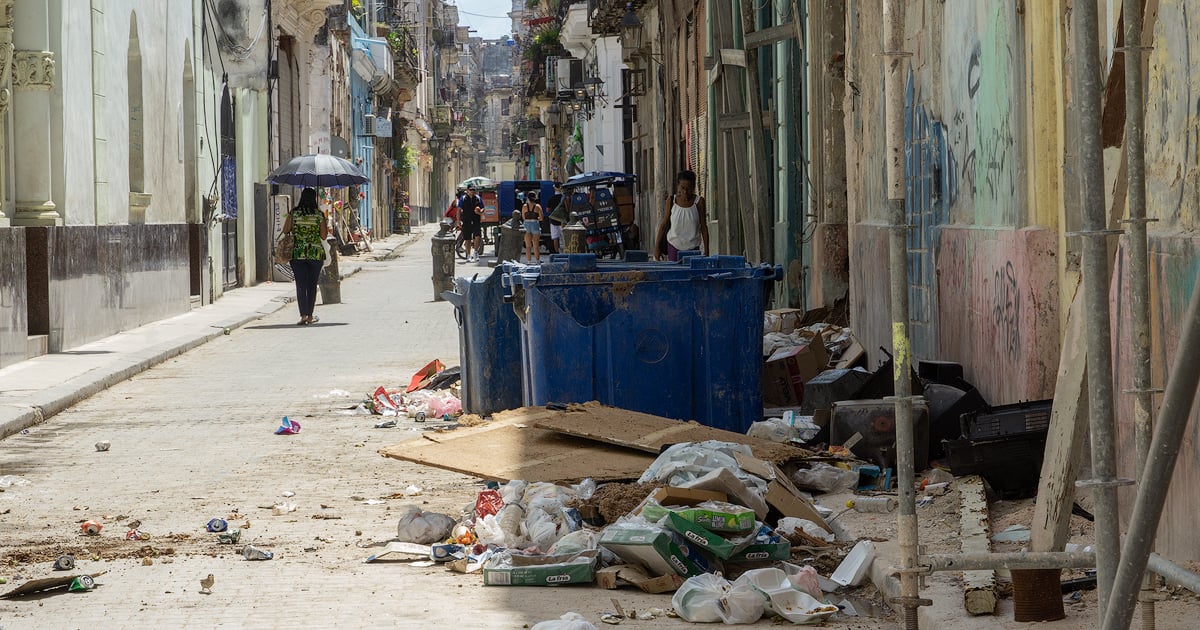
Dr. Niurka Elena Castellanos Ramos, a Cuban pediatrician, has publicly voiced her overwhelming physical and emotional exhaustion amidst the ongoing structural crisis in the country. Based in Camagüey, a province severely affected by blackouts that can last over 20 hours daily, Dr. Castellanos shared her experience in a Facebook comment responding to a post by comedian Ulises Toirac. "Such powerlessness, such sadness. My teeth hurt from clenching unconsciously due to so much stress. I work with children, and I feel so drained. I can't sleep thinking about the lack of water, electricity, everything going to waste. My family, my neighbors, my patients; everything feels worse by the second," she expressed. "At 54, I've never seen anything so depressing," she concluded.
Daily Struggles Amidst a Collapsing System
In the same forum, Dr. Castellanos expanded her testimony: "I try to give my best to my patients, but sometimes I can't. I get caught up in what's happening at home, the basic needs that must be met somehow. I'm not a businesswoman; I live on my salary because I don’t know how to make money. I studied to provide health, and every day is a mad rush." She also criticized the state's narrative in the media, highlighting "the misinformation that angers the public and the rosy picture painted on TV," concluding that her experiences result in "a discontent with depression that extinguishes the hope of living."
Voices of Despair Across Cuba
Dr. Castellanos' words resonated with many Cubans who commented in a similar tone of despair, sharing their struggles with water scarcity, power outages, and emotional fatigue. One person from another province lamented, "Here, blackouts last 20 hours or more. It's heartbreaking to see everything wither away slowly and inexorably. It seems like everything ended long ago, and now we just survive." Another questioned, "Who can perform at work the next day?" A user summed up the widespread helplessness by stating, "We're living through the worst in our country's history; it's unbearably sad. We can't take it anymore."
A Cry for Change
In another comment, Dr. Castellanos described the dire electricity situation: "We've been without consistent power for four years, and now it's extreme: only 3 hours a day—this is a slow death." The post, initially meant as a humorous remark, turned into a space for citizens to express their grievances. "Reporting from Matanzas, 20 hours of blackout and still no return—this is continuity," another person joked ironically.
This collective frustration is grounded in reality. Recent reports indicate that Cuba experienced one of its worst electrical outages of the year, with a generation deficit exceeding 2,000 megawatts, according to the Electric Union (UNE). On Tuesday alone, the maximum recorded shortfall was 2,010 MW at 9:10 PM, leading to widespread power cuts nationwide, including the capital.
Simultaneously, the government acknowledged the failure of emergency power plants in Santiago de Cuba's hospitals due to prolonged use, affecting critical services like intensive care, medication refrigeration, and water pumping. An electrical system spokesperson admitted that the generators installed in medical centers "are not meant for prolonged operation and are collapsing."
Official figures reveal that the country only had 1,680 MW available this week to meet a demand exceeding 3,000 MW, causing mass blackouts across all provinces. Five thermal units remain broken, three are under maintenance, and dozens of distributed generators are out of service due to fuel shortages.
As the national electrical system crumbles, the population bears the brunt of the consequences in silence, amidst darkness, heat, and despair. As Dr. Castellanos aptly puts it, "nothing is rational or easy; it's a discontent with depression that extinguishes the hope of living."
Understanding Cuba's Electrical Crisis
What is causing the prolonged blackouts in Cuba?
The prolonged blackouts in Cuba are primarily caused by a significant generation deficit, with demand far exceeding the available supply of electricity. This issue is exacerbated by broken thermal units, maintenance challenges, and a shortage of fuel for generators.
How are power outages affecting Cuban hospitals?
Power outages are severely affecting Cuban hospitals by disrupting essential services such as intensive care, medication refrigeration, and water pumping. Emergency power plants are failing due to prolonged use, compromising critical healthcare services.