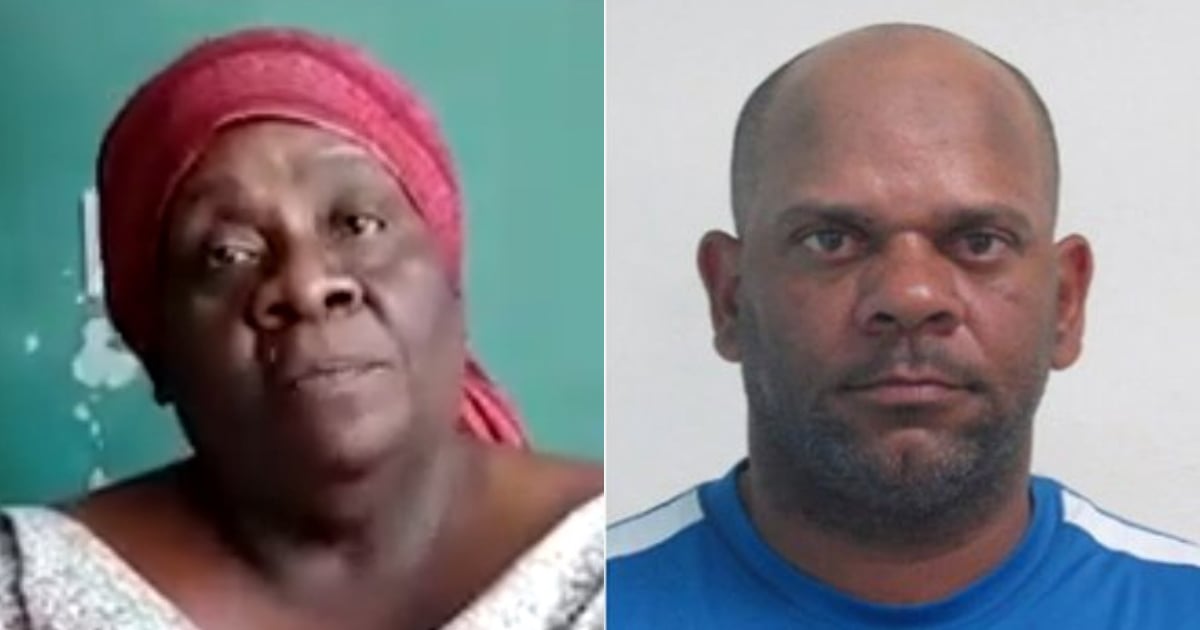
In yet another display of harshness and blatant disregard for human rights, the Cuban authorities have denied political prisoner Panter Rodríguez Baró, a member of the Clandestinos movement imprisoned in Santiago de Cuba, the opportunity to attend his mother's funeral in Havana, according to family reports. The family revealed that Esther Baró Carrillo, aged 70, passed away in the Cuban capital due to respiratory failure, as confirmed by her daughter Yaquelín Baró to Martí Noticias.
Yaquelín Baró disclosed that an officer from the National Directorate of Prisons informed them that Rodríguez would not be transported from the Boniato prison in the eastern province to the funeral home in Havana, where his mother was to be mourned, despite laws granting inmates the right to bid farewell to deceased family members. “We made arrangements for him to attend his mother's funeral, but we were told he couldn’t be transferred from Santiago de Cuba and that the only thing they could offer was a phone call,” Baró told the media outlet.
Rodríguez is currently serving a 15-year sentence—imposed in January 2021—due to his involvement in actions carried out in Havana by the Clandestinos group in early 2020. These actions included splattering pig's blood on busts of José Martí and billboards featuring the late dictator Fidel Castro, painting anti-regime slogans on walls, and posting messages on social media advocating for political change in the country. Fellow members Yoel Prieto Tamayo and Jorge Ernesto Pérez García were also sentenced to 9 years and 1 year respectively, on charges of “defamation of institutions and organizations, and of heroes and martyrs, on a continuous basis, and damage to cultural heritage.”
Previously detained at the Combinado del Este in Havana, Rodríguez was transferred last June to the Boniato prison, located nearly 900 kilometers from his family. His mother had reported that this relocation was punitive, imposed because her son “refused to attend roll call and to pay homage to prison officers.” Despite suffering from ailments that restricted her mobility, she never ceased to denounce the abuses inflicted on her son by Ministry of Interior officers and consistently called on the Provincial Prosecutor's Office and the Directorate of Prisons for better conditions for him, Martí Noticias emphasized.
This incident is not isolated; Cuban authorities have a history of barring political prisoners from saying their final goodbyes to close relatives, thus violating their rights and punishing their loved ones as well. In May, 84-year-old Zoila Esther Chávez, the mother of political prisoner José Gabriel Barrenechea, died without being able to bid farewell to her only son, after authorities prevented him from visiting her during her final moments.
Key Questions About the Treatment of Political Prisoners in Cuba
What rights do Cuban prisoners have regarding family funerals?
Cuban law provides prisoners the right to attend the funerals of immediate family members, although this right is not always upheld, as seen in the case of Panter Rodríguez Baró.
Who are the Clandestinos, and what actions led to their imprisonment?
The Clandestinos are a group known for their anti-regime activities in Cuba, including vandalizing state symbols and promoting political change, which led to the imprisonment of its members like Panter Rodríguez Baró.