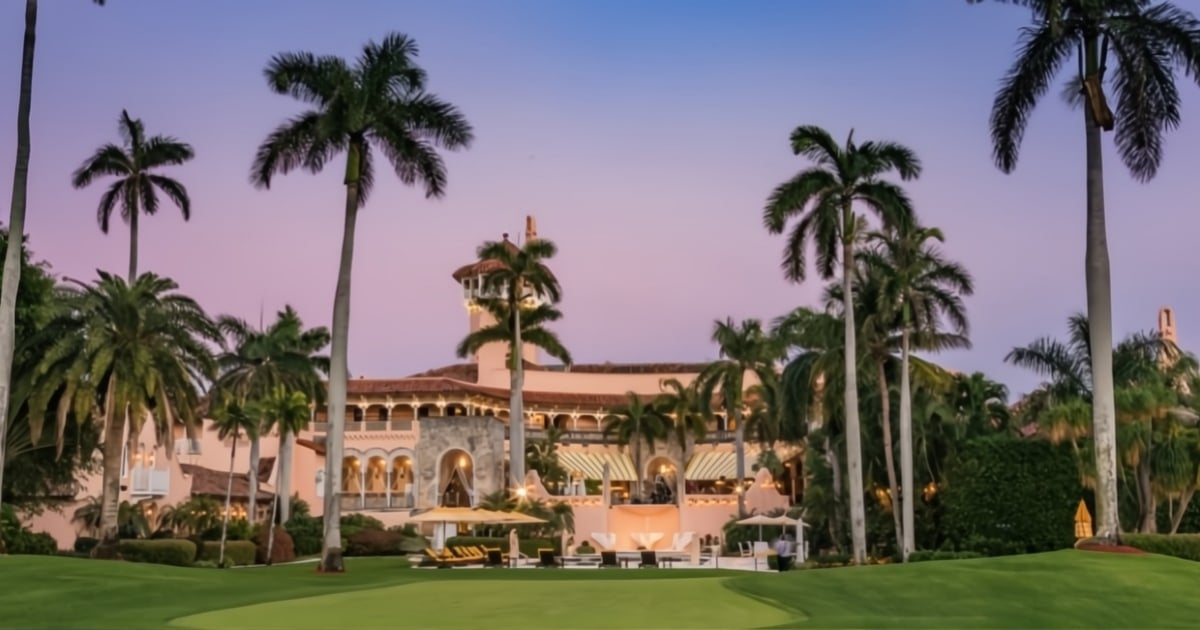
The Mar-a-Lago estate, an opulent Spanish-Moorish style mansion situated in Palm Beach, Florida, is more than just a luxurious property—it holds surprising connections to Cuba. Constructed between 1924 and 1927, the mansion's first owner was the American socialite and philanthropist Marjorie Merriweather Post (1887 – 1973). Post inherited her wealth from the Postum Cereal Company, which evolved into the General Foods Corporation.
This expansive villa, spanning over eight hectares, was envisioned as a winter retreat for the affluent, including presidents and dignitaries, symbolizing a blend of diplomacy and aesthetic grandeur. One of the wealthiest women of her era, Post collaborated with American architect Marion Sims Wyeth and Viennese designer Joseph Urban to craft a Mediterranean palace that fused elements from Spanish, Venetian, and Portuguese architecture, sparing no detail.
The mansion was constructed using imported limestone from Genoa and local cypress beams, showcasing sculptures carved by European artists. Intriguingly, some of the black and white marble flooring originated from an ancient Cuban castle. Although the specific Cuban building or quarry source remains undisclosed, it is known that high-quality Cuban materials were utilized. The roof, for instance, was adorned with 20,000 tiles imported from Cuba, enhancing the authentic colonial aesthetic.
Historical Significance of Mar-a-Lago in the U.S.
Crowned by a towering structure over 22 meters high, Mar-a-Lago was designated a National Historic Landmark in 1969. Following Post's death in 1973, she bequeathed the estate to the U.S. government, hoping it would serve as a winter presidential residence. However, the high maintenance costs and logistical challenges led to the plan's failure. In 1980, the estate reverted to the Post Foundation, awaiting a new owner to preserve its legacy.
This new chapter unfolded when Donald J. Trump acquired the property in 1985 for a price significantly below its value, exploiting the government's lack of interest and allegedly leveraging his influence in real estate. Initially serving as Trump's personal residence, the estate was transformed into the exclusive Mar-a-Lago Club in 1995. This transition was not merely a business maneuver but a symbolic act, with Trump establishing his brand in one of South Florida's most iconic locales.
Mar-a-Lago: A Symbol of Trump's Presidency
During Trump's first term as president, the mansion was dubbed the "Winter White House," hosting diplomatic meetings, state events, and gatherings with global leaders. In this way, Trump fulfilled Marjorie Merriweather Post's original vision for the estate. Beyond its real estate or architectural value, Mar-a-Lago embodies the current U.S. president's identity, characterized by wealth, opulence, and historical roots that convey ideas of colonial power, nobility, and exclusivity.
The mansion's aesthetics also serve a political role. With 15th-century tiles, Cuban marble dining areas, royal palm gardens, gilded ceilings, and lavish spaces, Mar-a-Lago not only tells a story of taste and influence but also projects a message of control, economic strength, and stability. Trump chose Mar-a-Lago not just for its beauty but for its history and symbolism. It is an aristocratic legacy transformed into a personal emblem of power. Today, with memberships exceeding a million dollars and a roster of members that includes celebrities and former political leaders, Mar-a-Lago stands as a hub of influence in the southern United States.
Exploring Mar-a-Lago's Cuban Connection
What is the significance of the Cuban materials used in Mar-a-Lago?
The use of Cuban materials, such as marble and tiles, in Mar-a-Lago adds a layer of historical and cultural significance, connecting the mansion to a broader narrative of colonial influence and architectural grandeur.
How did Donald Trump acquire Mar-a-Lago?
Donald Trump acquired Mar-a-Lago in 1985 at a price significantly below its market value, taking advantage of the federal government's lack of interest and leveraging his influence in the real estate sector.
What role did Mar-a-Lago play during Trump's presidency?
During Trump's presidency, Mar-a-Lago was known as the "Winter White House," where it hosted diplomatic meetings, state events, and gatherings with world leaders, aligning with Marjorie Merriweather Post's initial vision for the estate.