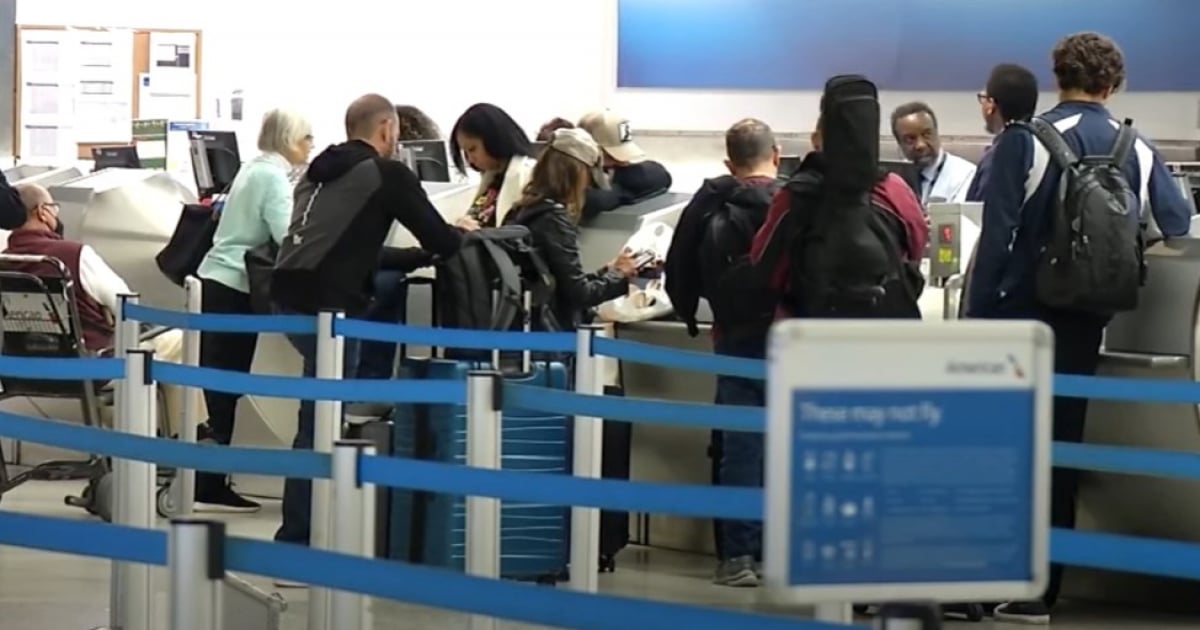
A woman originally from the Dominican Republic, who has been a permanent resident in the United States for eight years, received a stark warning upon her recent return to the country through Fort Lauderdale Airport. She was informed that her frequent and extended trips back to her homeland could jeopardize her Green Card status.
In an interview with Univision journalist Javier Díaz, the woman shared her distressing encounter with Customs and Border Protection (CBP) officers. Accompanied by her young daughter, she was taken to the notorious "little room" for questioning. "They took me to 'the little room.' They pressured me while my daughter cried. They asked what I was going to do, saying I needed to either surrender my residency or request a permit," she recounted.
The officers accused her of treating her residency like a visa, which they emphasized was improper. "They told me many things, and my daughter was crying and scared, asking, ‘Mommy, are we in jail?’" she added.
During the interrogation, one officer pointed out that she had spent two months in the Dominican Republic, questioning, "Do you live in Miami or Santo Domingo, because you can't live in both places?"
Understanding U.S. Immigration Law
According to U.S. immigration law, a permanent resident should not remain outside the country for more than six consecutive months, as it may suggest abandonment of their legal status. Immigration attorney José Guerrero, speaking to Univision, explained that beyond the specific duration, authorities assess each case based on factors like the purpose of travel, its length and frequency, and the individual's ties to the United States.
"A resident must live permanently within the U.S. They cannot use it as a visa," Guerrero emphasized. "If someone frequently stays away, for instance, five months abroad, returns for a week, then departs for another five months, they could face issues and risk losing their residency," he detailed.
Preventive Measures for Residents
Guerrero also reminded that permanent residents have the option to apply for a re-entry permit if they plan to be outside the U.S. for over six months. This permit helps prevent their frequent absences from being interpreted as abandonment of residency.
In the specific case of the Dominican resident cautioned by CBP, her travel pattern involves spending two months in the U.S. followed by two months in the Dominican Republic. This frequent travel schedule could raise red flags with immigration authorities.
FAQs on Maintaining U.S. Residency
What is the maximum time a permanent resident can stay outside the U.S.?
A permanent resident should not remain outside the U.S. for more than six consecutive months to avoid the presumption of abandoning their residency status.
What is a re-entry permit and why is it important?
A re-entry permit allows permanent residents to stay outside the U.S. for more than six months without risking their residency status. It serves as proof of their intention to return and maintain their residency.
Can frequent travel patterns affect a resident's status?
Yes, frequent and extended periods spent abroad can raise concerns with immigration authorities about the resident's intent to maintain their permanent residency.