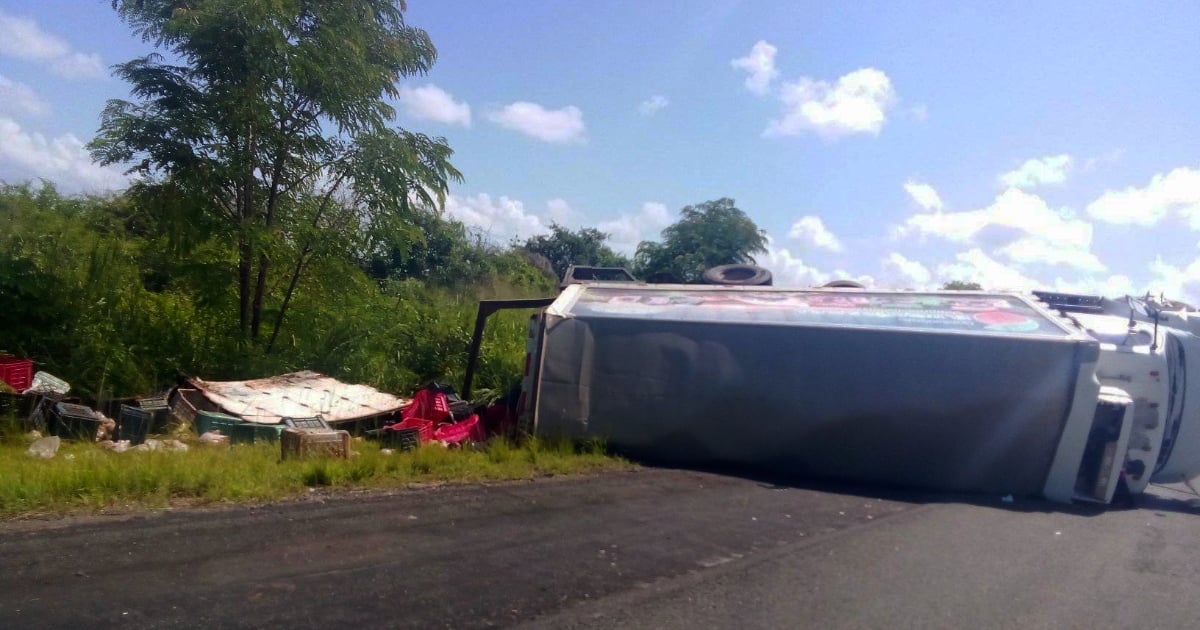
A Freightliner truck, manufactured in the United States, recently overturned on a section of Cuba's National Highway. This incident was highlighted by the social media group ‘Accidentes Buses & Camiones’ through shared images. The exact circumstances leading to the accident remain unclear, and there has been no report on any possible injuries. The photos reveal the vehicle completely flipped on its right side, with some of its load—comprised of plastic boxes—scattered along the roadside, and visible damage to both the cab and trailer.
This overturned truck is among the many modern freight vehicles imported primarily from the United States in recent years, as both state and private enterprises strive to update Cuba's outdated and worn-out vehicle fleet. However, these trucks, designed for smooth highways with proper technical conditions and signage, face challenging conditions on Cuba’s road network.
The poor condition of the pavement, lack of adequate signage, dangerous inclines, and the overall deteriorating infrastructure present significant challenges for these heavy vehicles. The mixture of high speeds, neglected roads, and adverse weather conditions increases the risk of accidents like this recent one.
This incident underscores the hazards that transporters face on Cuban roads, even with modern technology at their disposal. The lack of investment in road safety and maintenance remains an outstanding issue that directly affects the lives of drivers and passengers nationwide.
Rising Trend of Accidents with Modern Vehicles
In recent months, several similar accidents have been reported across the country, involving modern imported trucks. On January 21, a Freightliner loaded with chicken overturned in Guanabacoa. Although there were no injuries, the incident caused alarm, especially during a supply crisis. Poorly paved roads and a dangerous curve were cited as potential causes.
In November 2024, a modern truck, allegedly leased by the Tínima Brewery, overturned in Camagüey. Again, there were no injuries, but significant damage occurred, and questions arose about the suitability of these roads for large vehicles.
Other incidents have been reported in Sancti Spíritus, Las Tunas, and Ciego de Ávila, many involving trucks imported by state enterprises or small and medium-sized enterprises (SMEs). The usual culprits include poor visibility, poorly designed curves, loose animals, and generally inadequate road conditions for such transport.
Despite reports from authorities indicating an overall reduction in traffic accidents, the reality is that the coexistence of high-standard technology vehicles with an outdated, poorly marked, and poorly maintained road network is creating a new pattern of accidents, with severe economic and logistical consequences.
Challenges and Risks for Modern Trucks in Cuba
What are the main challenges faced by modern trucks on Cuban roads?
Modern trucks in Cuba face challenges such as poor road conditions, lack of proper signage, and deteriorating infrastructure, which are not suited for heavy vehicles designed for better-maintained roads.
Why are imported trucks involved in accidents in Cuba?
Imported trucks often encounter difficulties on Cuban roads due to factors like inadequate road maintenance, dangerous curves, and adverse weather, leading to increased accident risks.
How do road conditions affect transportation in Cuba?
Poor road conditions, including uneven pavements and lack of signage, significantly impact transportation in Cuba, making it challenging for both modern and older vehicles to navigate safely.
What measures could improve road safety for trucks in Cuba?
Improving road maintenance, enhancing signage, and investing in infrastructure are key measures that could enhance road safety for trucks operating in Cuba.