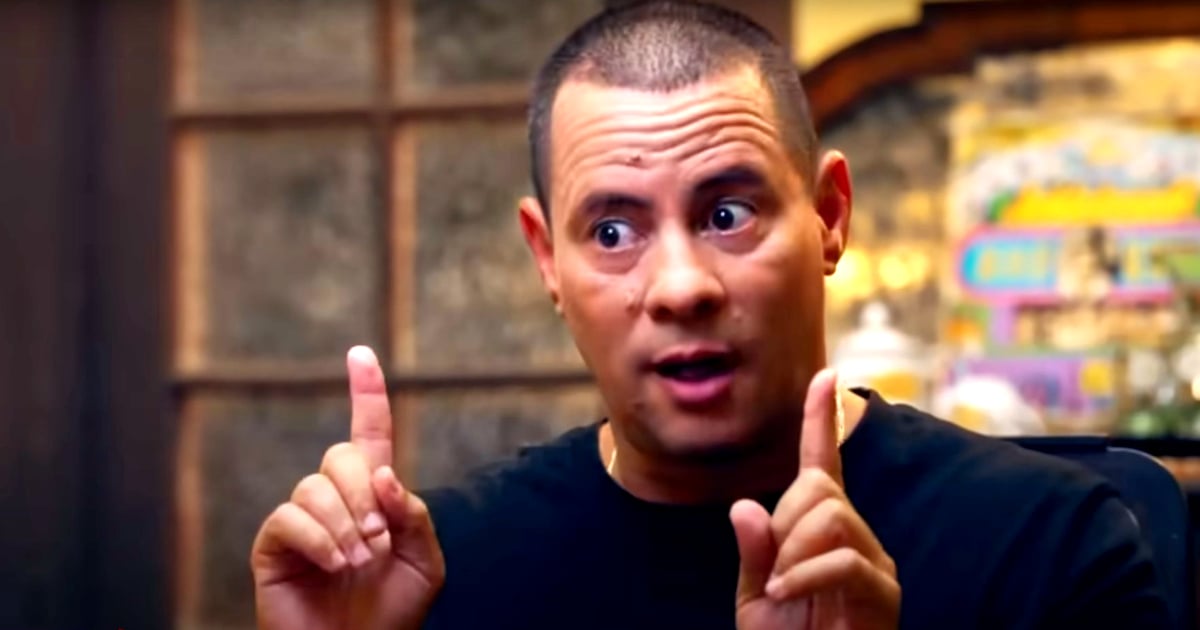
The recent remarks by Cuban musician Israel Rojas, the frontman of the group Buena Fe, during an interview on the podcast ‘La Sobremesa’ by La Joven Cuba, have sparked a firestorm on social media. These comments have reignited discussions about the responsibility of artists in the face of dictatorial repression and the lack of rights and freedoms under a totalitarian regime. While Rojas advocated for reconciliation among Cubans and suggested pardons for some prisoners involved in the July 11, 2021 protests (11J)—a stance reminiscent of that taken by singer-songwriter Silvio Rodríguez—his sudden moderate tone has been met with skepticism, rejection, and criticism. Such reactions are unsurprising, given his track record.
For years, Rojas has been a prominent figure within the official Cuban cultural sphere. He has actively participated in regime events, discredited those who protest or dissent, and used his platform to echo government rhetoric. When thousands of Cubans took to the streets on July 11, he dismissed them as "confused" or "manipulated," aligning himself with the regime's narrative that labeled them as criminals.
As recently as May 2023, nearly two years after the repressive wave of 11J that led to the imprisonment of thousands of protesters, the author of 'Catalejo' continued to deny the existence of political prisoners under the dictatorship. "As far as I know, no," he stated in an interview, avoiding a direct answer.
From Officialism to Ambiguity
Currently, in a period marked by a waning career and cancellations from civil society, with no recent successes or significant presence in the Cuban music scene, Rojas has adopted a more reflective stance. He spoke of reconciliation, dialogue, and consensus. However, his statements were dangerously ambiguous: he did not directly address repression, failed to acknowledge the existence of political prisoners, and continued to justify the system.
For many, this is not an act of political maturity but a survival strategy or a new service to the regime's counterintelligence efforts. His shift in discourse has been perceived as an attempt to rehabilitate his image. Some view him as a "trial balloon" for the regime, a useful figure to test the waters for a narrative change from within, without making genuine concessions. In this role, Rojas would function as an apparently critical voice, yet always within the boundaries of what is acceptable.
Moderation or Complicity?
The moderate tone Rojas adopted in the interview might seem constructive in a different context. However, in Cuba—where genuinely dissenting artists face censorship, persecution, imprisonment, or exile—such moderation is seen as complicity. The leader of Buena Fe acknowledged the existence of censorship but downplayed it: "Censorship today has many faces," he said. "Probably, if they made confrontational political art against the Cuban government, they would have more visibility." With this statement, the singer attempted to equate the regime's restrictions with market dynamics, sidestepping the political root of the problem.
When discussing the 11J prisoners, Rojas avoided mentioning repression or injustice. Instead, he proposed reconciliation that does not involve acknowledging the harm or taking responsibility for the regime's actions. "I said it in the wake of July 11, I posted it... it was time for a national call for reconciliation, to come to an agreement, to establish new consensus," he asserted. Yet, his words lacked a clear critique of unjust sentences or the Communist Party-controlled judicial system.
Questions of Timing and Motive
Many wonder why this call for reconciliation did not come in 2021, when over a thousand Cubans were jailed for peaceful protest. Where was his commitment then? Where was his "optimism" and "dialogue" when fellow musicians and artists were censored, persecuted, or forced to leave the country?
The answer is clear: at that time, Rojas sided with the power, justifying detentions, downplaying social outrage, and denying the political nature of the protests. Now, as the regime becomes increasingly isolated and discredited, and as his artistic career loses traction with much of his audience, Rojas presents himself as a moderate "brave" voice calling for "understanding the complexities of the country." But moderation without courage is simply another form of silence. And in Cuba, where repression is not abstract but a daily reality, where artists and journalists are imprisoned, where protest can mean 10 years in jail, there is no room for the ambiguous nuances of those who have remained silent—or applauded—at crucial moments.
A Repositioning, Not a Reconciliation
Rojas's discourse does not signify a break with the regime nor a genuine call for change. At best, it is an attempt to reposition within the system; at worst, a public relations move to buy time while maintaining the status quo. His music—sometimes seemingly critical but always within tolerated limits—has never posed a threat to the regime.
His own words confirm it: "I still believe that the only way out of this crisis... is together, through dialogue, in peace." A message that, on the surface, might seem generous. But without acknowledging the deep-seated causes of the national collapse—authoritarianism, centralism, censorship, and totalitarian repression—the dialogue he proposes is not dialogue: it is capitulation to the official narrative.
Israel Rojas speaks of reconciliation. But true reconciliation is not possible without justice, without memory, and without truth. It is not built from the margins of power, but from a break with impunity. And that is something he, so far, has not been willing to do.
Key Questions About Israel Rojas's Stance and Reconciliation
Why are Israel Rojas's recent statements considered controversial?
Rojas's statements are controversial because they advocate for reconciliation without directly addressing the repression and injustices committed by the regime. His past support for the government and denial of political prisoners also cast doubt on his sincerity.
What is the significance of Rojas's call for reconciliation in Cuba?
The call for reconciliation is significant because it suggests a shift in discourse. However, without acknowledging the root causes of repression and without genuine change, it is seen as an attempt to reposition rather than an honest call for unity.
How has the Cuban public reacted to Rojas's statements?
The reaction has largely been one of skepticism and criticism, as many view his statements as a strategic move rather than a genuine change of heart, especially considering his historical alignment with the regime.