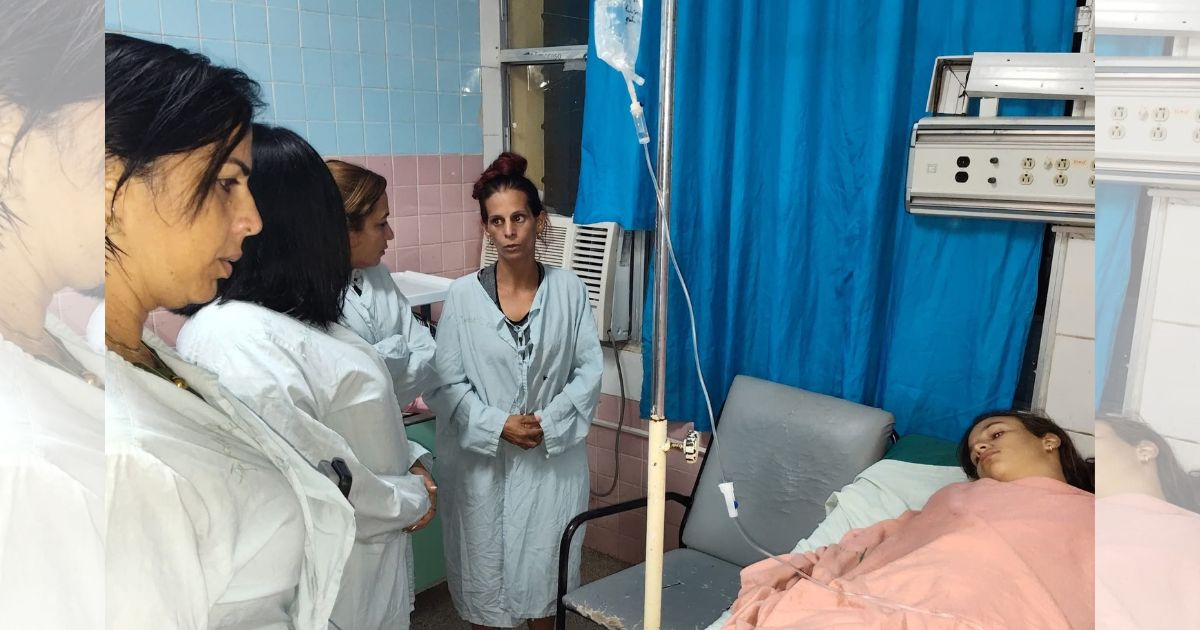
Diamelis Delgado Granados, a teen from Manicaragua in Villa Clara, is showing positive signs of recovery after being struck by lightning. She remains in the intermediate care unit at the José Luis Miranda Pediatric Hospital, where she has been receiving intensive monitoring since the incident on Sunday.
According to the Cuban News Agency, Delgado is fully conscious and responsive, while receiving round-the-clock care. Dr. Magaly Molina Díaz, an intensive care specialist, stated that all necessary protocols for such accidents have been followed, and noted the encouraging progress in Delgado's condition.
Medical authorities have assured that they will continue to closely observe the teen's condition to ensure a swift recovery.
The unfortunate event took place on Sunday in Manicaragua, Villa Clara, where three young individuals, aged between 13 and 14, tragically lost their lives due to an electrical storm. The deceased were identified as Jorge Alejandro de la Coba Monteagudo, a 14-year-old visiting from the United States, Andy Alberto Turiño González, aged 13, and Analía García Rodríguez, aged 14.
Delgado, aged 14, was among those affected and was urgently admitted to the hospital following the lightning strike.
Lightning Strikes: A Persistent Threat in Cuba
Earlier in June, a similar incident claimed the lives of two teenagers, aged 13 and 16, who were struck while playing soccer in an outdoor area in Pita, Bauta. The tragic event occurred around 5:30 p.m. on June 7, when a pre-storm lightning bolt fatally struck the teens, leading to their immediate deaths.
The day's tragedies in Bauta worsened with another heartbreaking incident, where a three-year-old girl drowned in Playa Baracoa.
A study conducted in 2022 by the Ministry of Science, Technology and Environment (CITMA) and the Institute of Meteorology (Insmet) highlighted that lightning strikes are the leading cause of natural disaster-related deaths in Cuba. From 1987 to 2017, lightning resulted in an average of 54 deaths annually, totaling 1,742 fatalities over three decades.
The provinces of Granma, Holguín, Camagüey, and Santiago de Cuba have reported the highest occurrences of such incidents, with peaks in mortality during the months of July, August, and June, coinciding with heightened electrical activity.
Understanding Lightning-Related Incidents in Cuba
What are the main causes of lightning-related deaths in Cuba?
Lightning strikes are the leading cause of natural disaster-related deaths in Cuba due to the high frequency of electrical storms, especially during the summer months.
How is the recovery of Diamelis Delgado Granados proceeding?
Diamelis is recovering well, remaining conscious and under intensive monitoring in the intermediate care unit at the José Luis Miranda Pediatric Hospital.
Which provinces in Cuba are most affected by lightning strikes?
The provinces most frequently affected by lightning strikes are Granma, Holguín, Camagüey, and Santiago de Cuba.