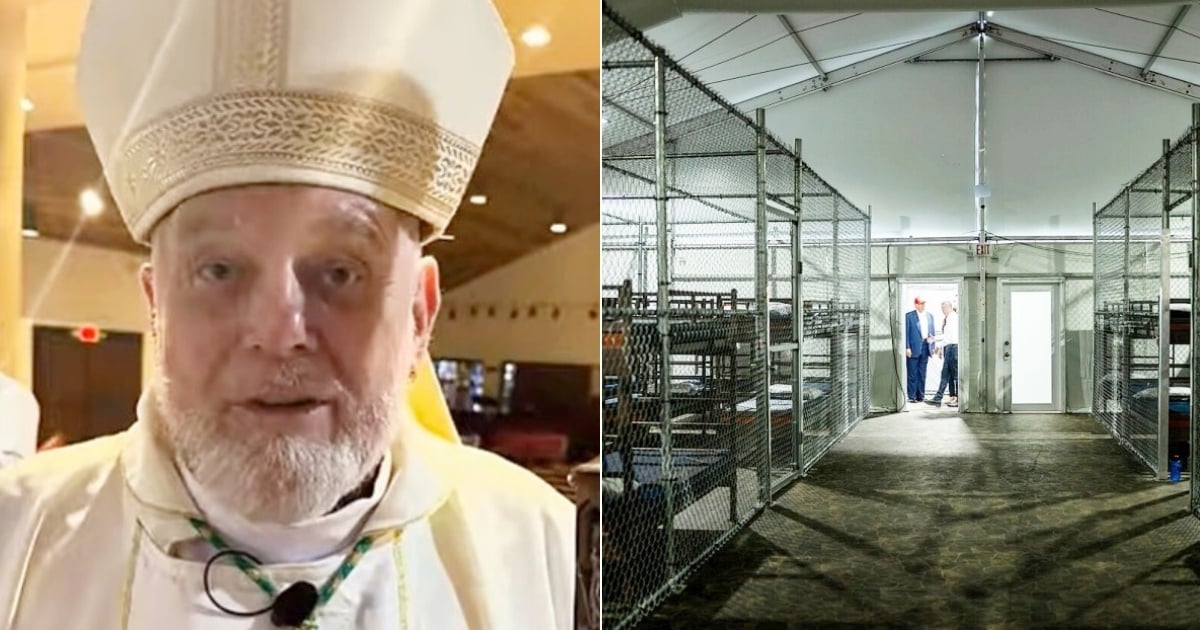
This past Saturday marked a significant milestone for the Catholic Church as the Archdiocese of Miami held its inaugural mass inside the contentious migrant detention facility known as "Alligator Alcatraz," located in the Everglades of Florida. This pivotal liturgical event not only symbolizes the Church's first official pastoral presence in a location previously devoid of spiritual care but also highlights the ongoing allegations of inhumane conditions within the center.
After months of negotiations, the mass represents more than a religious gathering—it stands as a humanitarian and pastoral triumph in one of the most scrutinized facets of the U.S. immigration system. Moving forward, the Catholic Church will conduct two regular liturgical services and provide pastoral care for both detainees and staff, owing to a formal agreement with state authorities, as reported by local media.
"I am pleased that our request to offer pastoral care to the detainees has been accepted," stated Archbishop Thomas Wenski of Miami. "We also responded to the call to provide this service to the personnel living within the facility. The Church knows no borders; we are all part of a single human family," he added.
Overcoming Barriers to Spiritual Access
Gaining entry to Alligator Alcatraz was not without its challenges. Archbishop Wenski's repeated requests for access were initially denied, clouded by uncertainty over whether the center's jurisdiction lay with state or federal authorities. The resistance was such that even religious leaders and lawyers were barred, prompting a federal lawsuit.
In a show of resilience, Wenski organized a prayer vigil outside the facility in July, joined by two dozen members of the "Knights on Bikes," part of the Knights of Columbus. Denied entry, the group prayed the rosary at the facility's entrance as a form of spiritual protest. "It almost seems like a deliberate attempt to dehumanize these people," Wenski remarked in an interview with Florida Catholic. "Providing the mass is an opportunity to humanize the detainees, elevate their dignity, and assure them that God has not forgotten them," he stated at the time.
Scrutiny Over Harsh Conditions
The South Florida Detention Center, widely known as Alligator Alcatraz, was erected in just eight days at the Dade-Collier airport. Designed to hold up to 3,000 individuals, with potential expansion to 5,000, the facility's nickname reflects both its remoteness and the hostile wildlife surrounding it, including alligators and pythons.
Religious leaders, human rights organizations, and Democratic lawmakers have harshly criticized the conditions inside. Reports of extreme temperatures, days without showers, makeshift tents, sanitation issues, and food allegedly contaminated with maggots have emerged. Some detainees have resorted to hunger strikes in protest of their treatment.
"The deterrent value of alligators and pythons mentioned is inappropriate for public officials and corrosive to the common good," Archbishop Wenski warned in previous statements.
Sustained Pastoral Presence Amidst Immigration Policy Challenges
With this new agreement, the Archdiocese of Miami, serving nearly 900,000 Catholics and ranking among the largest in the nation, aims to establish an ongoing and organized presence within the center. The initiative will coordinate efforts among dedicated clergy and volunteers to ensure a stable schedule of sacramental services and spiritual support.
This pastoral mission unfolds amid a broader immigration strategy by Governor Ron DeSantis, who opened the center as part of a mass deportation policy aligned with President Donald Trump. The operation's estimated cost exceeds $450 million annually, with deportation flights already underway from the facility.
Archbishop Wenski has been vocal in his criticism of these policies. "President Trump claims he wants to secure the borders, and he's done that; he wants to remove bad actors, and he's doing that," he commented. "But he also says he wants the best economy in the world, and that can't happen without immigrant labor. South Florida has shown that immigration ultimately benefits the community; immigrants are not a problem, they are an opportunity," he added.
Understanding the Impact of the Catholic Church's Involvement in Detention Centers
Why is the Catholic Church's mass at the detention center significant?
The mass signifies a breakthrough in providing spiritual care to a facility previously inaccessible to religious services, highlighting the Church's role in humanitarian efforts within contentious immigration settings.
What challenges did the Church face in gaining access to the detention center?
The Church faced repeated denials of access, complicated by jurisdictional uncertainties and resistance that led to a federal lawsuit, highlighting the complexities of providing pastoral care in such environments.
How are the conditions at the detention center being addressed?
Conditions within the center have faced criticism for extreme environments and inadequate facilities, with ongoing advocacy from religious and human rights groups aiming to improve the situation.