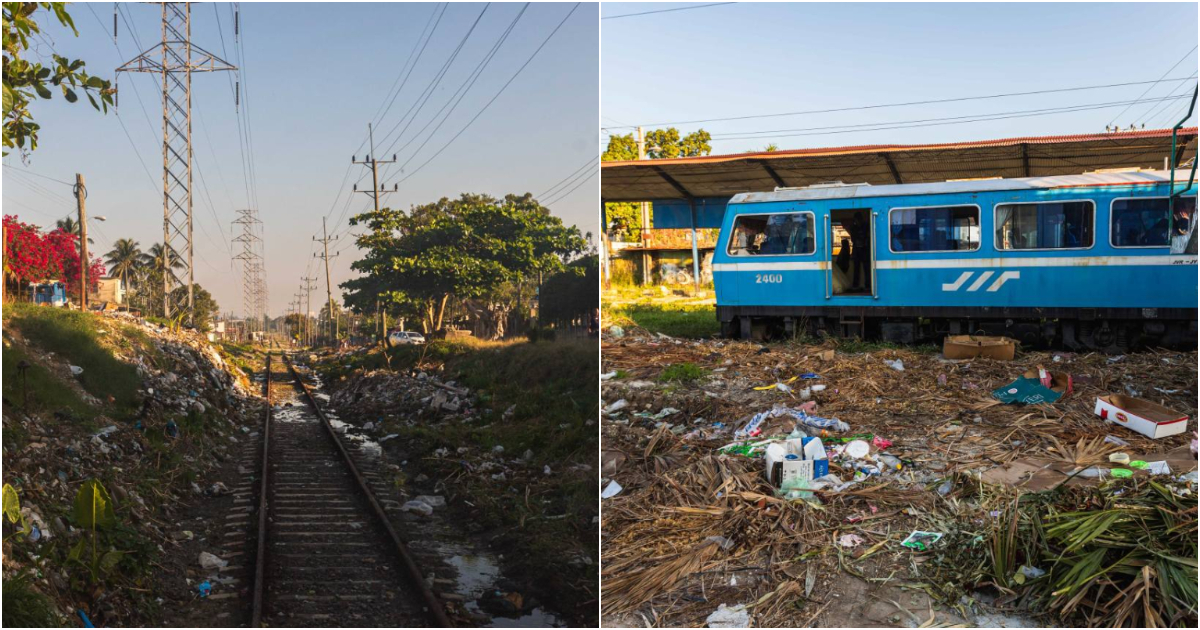
The "Comandante Tony Santiago" Railroad Construction Company has raised alarms over the rampant dumping of solid and liquid waste onto Cuba's railway infrastructure. This illegal practice poses severe risks to operational safety, public health, and the already fragile rail system. The warning, issued via the Cuban Railways Union's Facebook page, highlights that key components like ballast (the stone supporting the sleepers), fastenings, sleepers, and embankments are directly impacted. This dumping shortens their lifespan and necessitates emergency clean-ups that disrupt rail traffic.
In urban areas and throughout towns, heaps of garbage have become a common sight. This is more than just an aesthetic or environmental issue; drainage systems such as ditches, culverts, and canals are being clogged with waste, worsening train operating conditions and potentially causing accidents or prolonged service interruptions. The infrastructure, already weakened by years of underinvestment, suffers further from widespread negligence.
Railway authorities emphasize that maintenance crews bear the brunt of this problem, working amidst piles of trash in unsanitary conditions with high exposure to hazardous waste. They have urgently called on residents to refrain from discarding waste on railway tracks, report such activities, and educate communities about the serious implications of this issue.
However, like many challenges in Cuba, a mere Facebook post won't solve the problem. It demands shared responsibility, effective management, institutional action, and real oversight. The accumulation of trash and delays in timely waste collection have become a persistent issue in several Cuban cities, with serious public health consequences.
Despite calls from officials for citizens to comply with waste disposal guidelines, the government's response has been inadequate in curbing urban environmental deterioration. Facing worsening sanitation, constant stench, and the spread of rats, flies, mosquitoes, and cockroaches, some individuals resort to burning garbage dumps and collection bins. Although this reduces some waste and pests, it poses significant fire hazards to nearby homes and residents.
Recently, a young Cuban shared on social media her account of neglect and trash buildup along Matanzas' Vía Blanca, one of the city's busiest avenues and a tourist area due to its seaside proximity. "Little by little, the garbage is taking over the most beautiful places in our province," she lamented.
The situation on Vía Blanca mirrors other recent scenes, such as trash-strewn beaches along the Matanzas coastline, where plastic debris and even appliances clutter areas popular with beachgoers. In another instance, residents of a neighborhood organized a cleanup around a school, worried about the impact on children's health amid a lack of municipal services.
In Santiago de Cuba, the historic Hotel Venus has been turned into a garbage dump due to the absence of state management, highlighting the neglect of architectural heritage. Meanwhile, in Vedado, Havana, locals have reported unsanitary conditions even near the Institute of Hematology and Immunology, leading to rodent infestations and concerns about a potential major health crisis.
Addressing Cuba's Railway Waste Crisis
What are the main components affected by waste dumping on Cuba's railways?
The primary components affected include the ballast, fastenings, sleepers, and embankments, all of which are crucial for maintaining the railway's structural integrity and safe operation.
How does the waste issue impact public health in Cuba?
The accumulation of garbage contributes to unsanitary conditions, leading to the spread of pests such as rats and mosquitoes, and poses significant health risks to the public, including potential disease outbreaks.
What steps have been taken to address the waste crisis on Cuba's railways?
Railway authorities have called for public cooperation in avoiding waste dumping, reporting such activities, and raising awareness about the issue, although more effective management and institutional action are required to resolve the crisis.