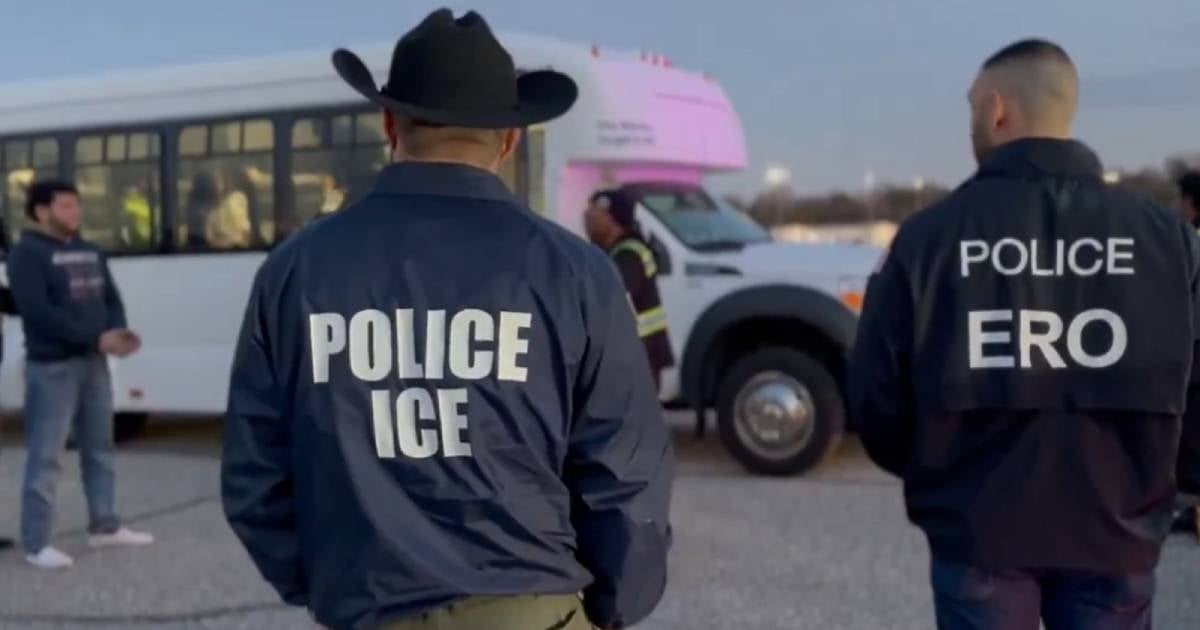
"I spent three days without any news of my husband. He called me from a county number, yet he was nowhere to be found in their system," recounted a distressed Mexican woman, terrified after her husband temporarily vanished. He was detained while being a passenger on his way to a construction site. Despite having a work permit, he was taken in a van to an undisclosed location and returned hours later to the same jail, but with a different inmate number. No one knew his whereabouts.
This kind of clandestine "shuffling" has become a common tactic to circumvent the federal rule that restricts local jails to holding immigrants without criminal charges for no more than 72 hours before they must be handed over to U.S. Immigration and Customs Enforcement (ICE). According to a report by The Detroit News, citing lawyers and activists, moving detainees from one jail to another, or even bringing them back with new identification, resets the clock and prolongs their detention in a shadowy and unconstitutional manner.
A particularly troubling case involves Cuban national Michael Borrego Fernández, who was arrested in June for violating probation terms after being accused of grand theft for allegedly defrauding homeowners into prepaying for unfinished pool construction. After serving 10 days in Seminole County Jail, he was placed under ICE custody in Orange County. His mother, Yaneisy Fernández Silva, has since been navigating a maze of transfers from Seminole to Orange, then Pinellas, and finally the dreaded Alligator Alcatraz, the new immigration detention center in the Everglades, where he has been held since July 5.
"I could only track my son through his phone calls," said his mother, who believes Michael was a victim of a job scam, now facing potential deportation. "It’s a tactic to confuse, exhaust, and break families," she added.
Immigration attorney Walker Smith described the ordeal of four Guatemalan brothers who, after being detained, were driven in circles for hours before ending up back at the same detention center with new identification numbers. Two of them had valid work permits. "This is manipulating the system to buy time. There's no other way to see it," Smith stated. "In this process, rights are lost, legal defense is obstructed, and families are deprived of knowing if their loved ones are safe."
Florida's Harsh Immigration Policies
These transfers, far from being isolated incidents, have been corroborated by officials in Orange and Pinellas counties, who cite "capacity issues" and "lack of beds in federal facilities" as reasons. However, each additional day of detention costs the county $145, while the federal government reimburses only $88—a costly and opaque equation.
Moreover, attorneys report that during these transfers, which can last hours or even days, migrants are shackled, with waist chains, and denied regular access to water and food. "When they're in a jail, at least there are rules: three meals, access to bathrooms. But during transit, that is lost," explained attorney Mich González.
Under a stringent policy against illegal immigration, the state of Florida has increased arrests, exacerbating the detention system's collapse. Civil rights organizations in Florida have raised their voices, demanding an end to the agreements between local jails and ICE. "This isn't bureaucracy, it's cruelty," said activists who helped locate the missing husband of the Mexican woman, hours after her family pleaded for help.
Understanding Migrant Detention Practices in Florida
What are the consequences of detainee transfers in Florida jails?
Transfers can reset the detention clock, leading to prolonged and illegal detentions. They also hinder legal defense and disconnect families from their detained loved ones.
Why are local jails transferring detainees instead of handing them over to ICE?
Officials claim "capacity issues" and "lack of beds in federal facilities" as reasons for these transfers, despite the financial and human costs involved.
How do transferred detainees endure the process?
During transfers, detainees are often shackled, lack access to regular meals and bathrooms, which can last for hours or days, compounding their distress and uncertainty.