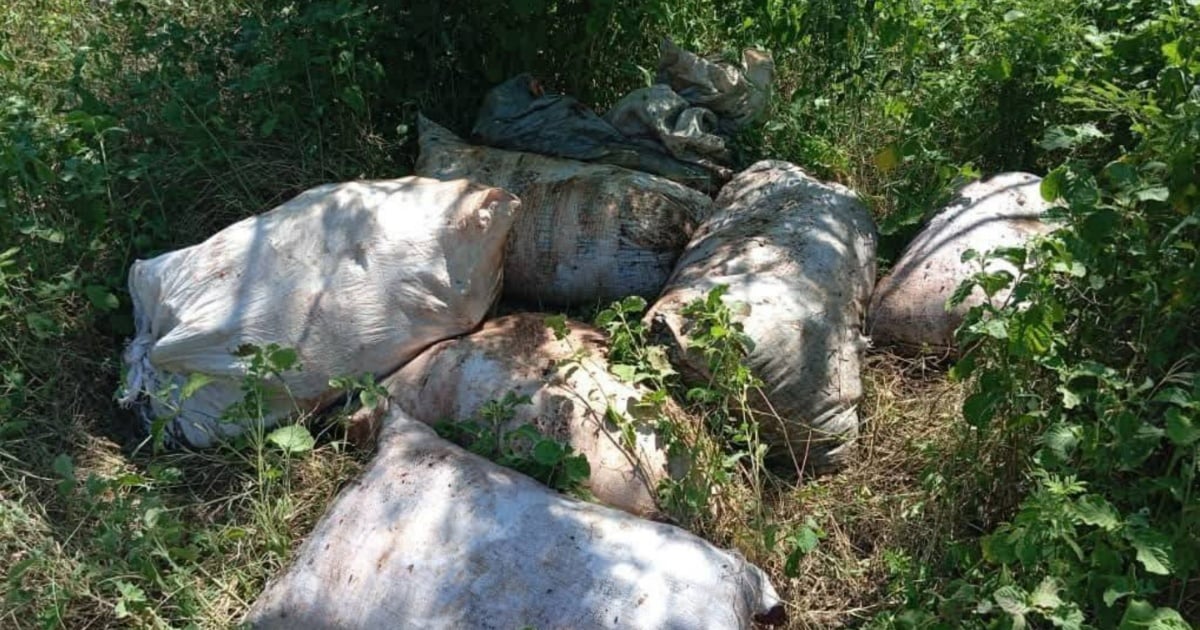
A group of butchers was apprehended in Río Cauto, Granma, as they attempted to transport stolen beef using state vehicles. According to a Facebook post by the official page, El Cubano Fiel, the police intercepted the individuals after they had slaughtered several cattle near the Cauto el Paso dam and were trying to move the meat to Río Cauto municipality.
The official page claimed, “Police alarms were triggered when information surfaced that two state-owned vehicles were headed to this remote location late at night to transport the meat.” However, details about which state enterprises the vehicles belonged to, or whether any officials were involved, remain undisclosed.
Upon reaching the residence of one of the butchers, police discovered what can only be described as a makeshift slaughterhouse, depriving local farmers of their cattle. According to police operation participants, this wasn’t the first instance of such criminal activity by the culprits.
The scene unveiled “over a thousand pounds of beef, remnants of slaughtered animals, tools used for the slaughter, and naturally, the butchers, who were taken into custody,” the source concluded.
The Ongoing Threat to Cuba's Livestock
Cuban farmers continue to report rampant cattle theft and slaughter, a situation that severely impacts the agricultural economy and food security across the island. Recently, in El Cristo, a village in Santiago de Cuba, a masked and gloved individual stole a horse in the early morning hours. Despite the incident being caught on surveillance and promptly reported, the police have yet to announce any investigation.
Despite government claims of increased efforts to combat this issue, farmers argue that cattle theft and the illegal sale of meat remain largely unchecked, particularly in livestock-heavy provinces like Camagüey, Sancti Spíritus, Villa Clara, and Ciego de Ávila, as reported by the official media outlet Cubadebate.
Recent Arrests and Convictions
In Manzanillo, police detained four individuals for slaughtering a stolen bull in Cayo Espino, as part of a series of Ministry of the Interior operations across several municipalities in Granma, reported by the official newspaper La Demajagua.
Weeks earlier, in Uñas, a locality in the municipality of Gibara, Holguín province, a butcher, after consuming large quantities of alcohol, stole a chestnut horse belonging to a neighbor. He transported the animal to his mother's house, where he slaughtered it. The effects of the alcohol were such that, after the violent act, he fell asleep on the animal's body, where authorities found and arrested him.
Additionally, another Cuban was jailed after being caught attempting to steal a horse, assaulting its owner in the process, in Colón, Matanzas.
In April, the Municipal Popular Court of San Antonio del Sur, Guantánamo, sentenced a man to three years in prison for stealing two horses at the beginning of the year from a farm in the Playa Sabanalamar neighborhood.
Addressing Livestock Theft in Cuba
What measures are being taken to combat livestock theft in Cuba?
The Cuban government has announced increased efforts to address cattle theft, but reports indicate that the practice remains largely unchecked, with low levels of enforcement, especially in regions with high livestock activity.
How does livestock theft affect Cuba's economy and food security?
Livestock theft severely impacts Cuba's agricultural economy and food security by depriving farmers of valuable resources and disrupting local meat supplies.
Are there any regions in Cuba more affected by livestock theft?
Provinces like Camagüey, Sancti Spíritus, Villa Clara, and Ciego de Ávila, known for their high livestock activity, are reportedly more affected by cattle theft and illegal meat sales.