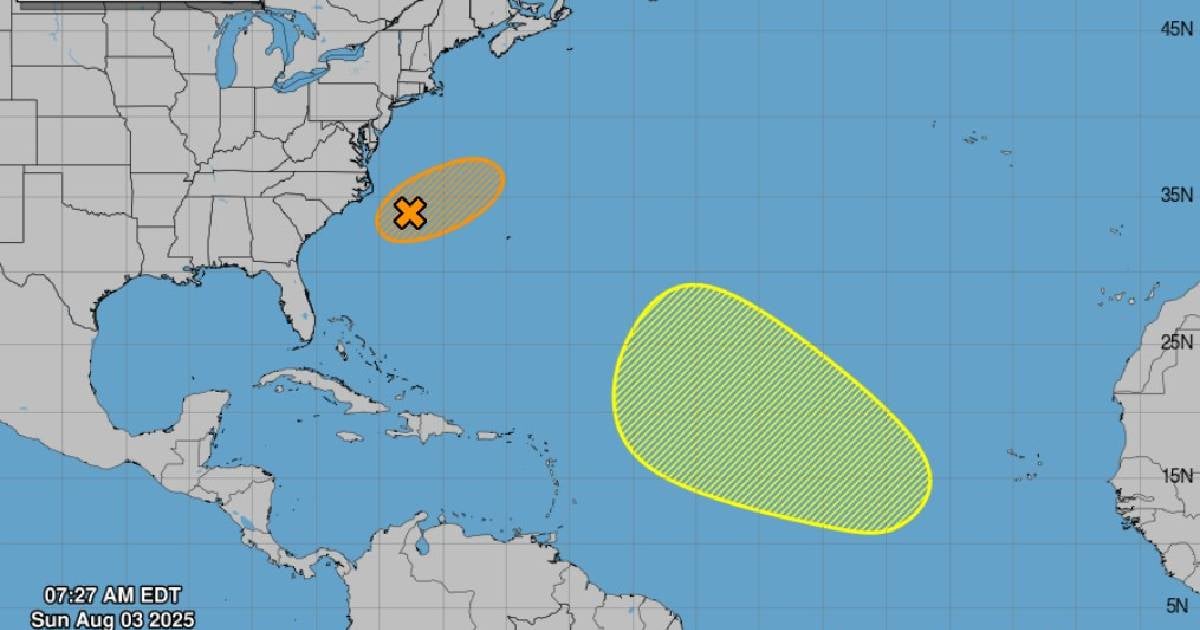
A new atmospheric disturbance, labeled as AL95, is currently situated approximately 180 miles off the coast of North Carolina. This system in the western Atlantic has the potential to develop into a tropical depression or storm within the next 48 hours. According to the latest advisory from the National Hurricane Center (NHC) in the United States, this extratropical system is lingering over a stationary front, characterized by disorganized showers and thunderstorms, and is slowly moving east-northeast, away from the U.S. coastline.
Although environmental conditions are only marginally conducive, they are sufficient for the NHC to assign a 50% probability of development in the coming hours. Despite moving away from the mainland, the unpredictable nature of weather systems and the structural vulnerabilities in parts of the Caribbean necessitate continuous monitoring, particularly if the system alters its path or indirectly influences other regional patterns.
Monitoring a Potential Threat from Africa
Meanwhile, a tropical wave just off the African coast could pose a threat next week. Although it currently shows no signs of development, models indicate it may gradually intensify as it traverses the central Atlantic heading west-northwest. This second system has a low likelihood of formation in the next 48 hours, with the NHC assigning a 30% chance of development over the next seven days. While immediate strengthening is not evident, attention is focused on its potential evolution, especially given its traditional trajectory towards the Caribbean.
Both of these weather phenomena highlight the ongoing activity of the hurricane season, which waits for no one. Current forecasts do not indicate a direct threat to Cuba, but the country's past experiences underscore the importance of remaining vigilant.
A Look at the Active Hurricane Season
This hurricane season has already seen several significant events in the Atlantic and the Caribbean, reflecting an active atmospheric system. One notable occurrence was the formation of Chantal, the third tropical storm of the year, which quickly developed, marking a significant early milestone in the season's progression.
In mid-July, Colorado State University (CSU) revised its forecast for the 2025 Atlantic hurricane season, slightly lowering the expected numbers but still cautioning about above-average activity. The updated report forecasts a total of 16 named storms, 8 hurricanes, and 3 major hurricanes (Category 3 or higher). This represents a minor adjustment from the June forecast, which anticipated 17 storms, nine hurricanes, and four intense hurricanes.
This July revision comes amid persistently high Atlantic Ocean temperatures, which are conducive to cyclone formation, and the expected absence of the El Niño phenomenon, which typically helps to weaken or disrupt these formations.
Understanding Tropical Weather Systems
What is AL95?
AL95 is a designated area of atmospheric instability in the western Atlantic, currently being monitored for potential development into a tropical depression or storm.
How likely is it for the system near North Carolina to develop into a storm?
The National Hurricane Center has given a 50% chance of development for the system near North Carolina in the next 48 hours.
Why is the absence of El Niño significant for hurricane formation?
The absence of El Niño is significant because El Niño typically weakens or disrupts the formation of tropical cyclones by increasing wind shear across the Atlantic.