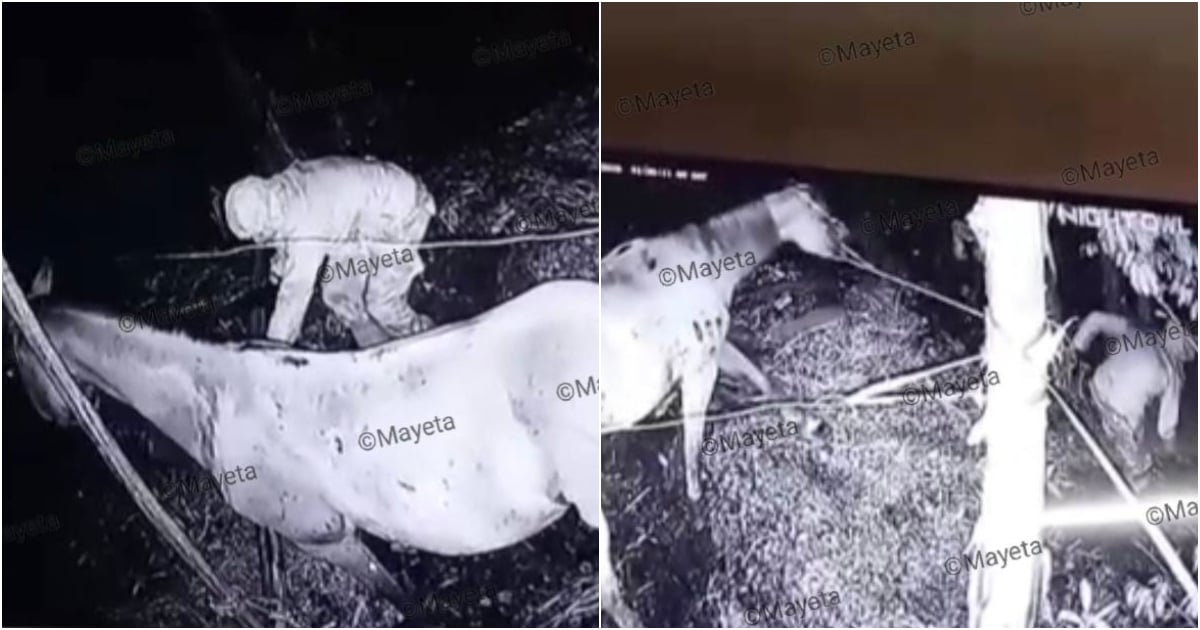
In the town of El Cristo, located in Santiago de Cuba, an unidentified man wearing a hood and gloves stole a horse in the early hours of Saturday morning. Despite the incident being captured on security camera and promptly reported by the victims, the police have yet to announce any investigation into the theft.
The robbery took place in the Habana neighborhood and appeared to be meticulously planned. The thief concealed his face to avoid recognition, leading locals to suspect he is familiar with the area and possibly a resident. The horse's owners, deeply affected by the sentimental value the animal holds for their family, have offered a reward of 50,000 Cuban pesos for any reliable information about the horse's whereabouts or the thief's identity. This information was shared by independent journalist Yosmany Mayeta Labrada on his Facebook profile.
In response to the lack of official action, the owners have also shared a WhatsApp number to receive anonymous tips. As the community circulates the footage and organizes on social media to recover the horse, the lack of response from authorities highlights a growing reality in Cuba: individuals are left to fend for themselves when faced with criminal acts.
"Today it was a horse; tomorrow it could be something of yours," warns the message accompanying the public complaint. Comments on social media reveal a mix of anger, helplessness, and resignation. "Authorities only pay attention to protesters, not to social security," one user remarked.
Others pointed out that similar cases often result in the animals being slaughtered and sold, while the thieves remain at large, and the police demand witnesses that no one can provide in the dead of night. The sense of impunity not only leaves people vulnerable but also drives many to despair. The frustration from thefts targeting farmers, the lack of official response, and increasing insecurity have led some citizens to publicly express their discontent with a legal system they claim protects criminals over victims.
Rising Crime and Community Concerns
Cuban farmers report that the theft and slaughter of livestock continue to spiral out of control in the island's countryside, severely impacting the agricultural economy and food security. Despite the government's announced efforts, ranchers and farmers argue that cattle theft and the subsequent illegal meat trade have become nearly unchecked, particularly in livestock-heavy provinces such as Camagüey, Sancti Spíritus, Villa Clara, and Ciego de Ávila, as per the state-run media Cubadebate.
In Manzanillo, police recently arrested four individuals after they slaughtered a stolen bull in the Cayo Espino area, following a series of Ministry of the Interior operations across various municipalities in Granma, reported the official newspaper La Demajagua on Saturday.
A few weeks ago, in the village of Uñas in Gibara, Holguín province, a butcher, under the influence of large amounts of alcohol, stole a neighbor's horse, took it to his mother's house, and slaughtered it. However, the effects of the alcohol were so severe that he fell asleep on the animal's body, which is how authorities found and detained him.
Similarly, another Cuban was jailed after being caught attempting to steal a horse and assaulting its owner in the Colón municipality, Matanzas. In April, the Municipal People's Court of San Antonio del Sur in Guantánamo sentenced a man to three years in prison for stealing two horses earlier in the year from a farm in the Playa Sabanalamar neighborhood.
These incidents occur amid growing public concern over the rise in common crime throughout the country, especially violent robberies, assaults, and daytime thefts. Such episodes have reignited discussions about public safety in Cuba, where many citizens feel increasingly vulnerable to criminals' impunity.
The Cuban regime has acknowledged a troubling increase in criminal violence on the island, including the use of firearms. In response, they have promised to conduct exemplary trials for those committing serious offenses, particularly those occurring within state institutions.
Addressing Security Concerns in Cuba
What measures are being taken to combat livestock theft in Cuba?
Despite government efforts, farmers report that livestock theft and illegal meat trade continue to occur with little consequence, especially in major livestock provinces.
How are communities responding to the lack of police action regarding thefts?
Communities are organizing via social media, offering rewards, and sharing information anonymously to recover stolen property and identify perpetrators.
What is the Cuban government's stance on increasing crime rates?
The Cuban government has acknowledged the rise in criminal violence and promised to enforce strict penalties for serious crimes, particularly in state institutions.