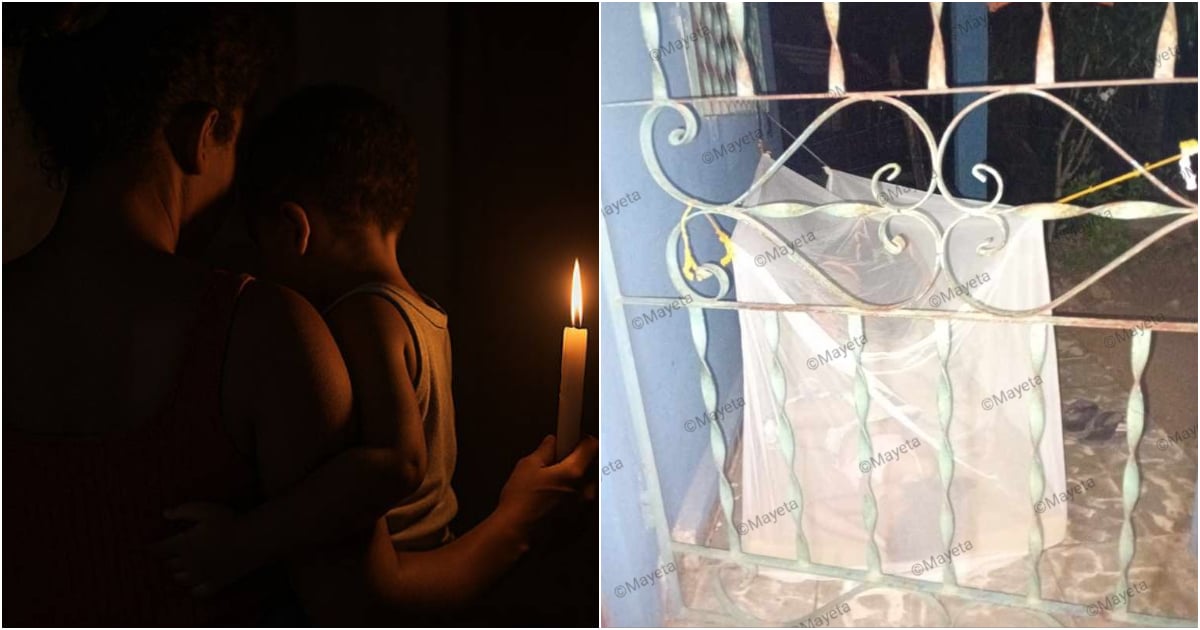
The persistent power outages in Santiago de Cuba, during an intense heatwave, have forced children to sleep outside on porches and patios as the only escape from the stifling heat. This harsh reality is increasingly affecting the most vulnerable and impoverished segments of the population. Independent journalist Yosmany Mayeta Labrada shared a poignant image on Facebook that many fear to reveal: children sleeping outdoors without electricity or ventilation, in conditions that verge on inhumane and highlight the collapse of basic living standards.
Voices of distress quickly followed. "What's happening in Cuba is criminal," remarked one user. A mother expressed her anguish: "I live with two small children, and it breaks my heart… this is inhumane." These are the cries of despair from people who see the power cuts as a daily form of torture.
The outages don't just halt fans and refrigerators; they disrupt sleep, mental health, safety, and dignity. Entire families spend nights on rooftops, balconies, or in the streets because their homes are uninhabitable. "There's no water, no food, no electricity… there's nothing," summarized another user, echoing a sentiment shared by many.
Beyond the physical discomfort lies emotional trauma. "These situations leave psychological scars, especially on children," warned an internet user. Other comments mention mental exhaustion, suppressed anger, fear of speaking out, and the absurdity of attending political rallies while the people suffer in silence.
Frustration mounts, yet institutional responses remain absent. There are no explanations, solutions, or even acknowledgment of what many describe as a collective punishment. Meanwhile, the youngest continue to sleep outdoors, under the shadow of a worsening crisis.
Images have resurfaced of entire Cuban families sleeping on makeshift mattresses in the street, under the oppressive summer heat. A mother in Santiago de Cuba showed her children sleeping outside at dawn because the heat and mosquitoes made it unbearable indoors. "They can't sleep or go to school. They have to rest on the floor," she said.
Similarly, journalist Mario J Pentón shared a photograph taken in the Vista Alegre neighborhood in Holguín, depicting a man sleeping in the street, as neighbors reported over 20 hours without electricity. Cuban actor Andy Vázquez, famous for his role as Facundo Correcto on the comedy show "Vivir del Cuento," also posted an image of a Cuban family, including at least one child, sleeping on their balcony due to prolonged nighttime blackouts.
A mother from Camagüey staged a solitary protest on July 31 in front of the Provincial Government headquarters, highlighting the ongoing state neglect and frequent blackouts. She reported that her area had been without power since 3:00 p.m. the previous day, a dire situation for her family with a small child and another with Down syndrome.
This is not the first time Cuban mothers have protested; many have done so repeatedly but have been silenced and threatened by the regime, receiving no answers to their pleas. A young Cuban recently shared his frustration on TikTok after discovering that a whole package of sausages spoiled due to the extensive blackouts affecting the country. "These are the things that hurt me about Cuba; no one cares about the sacrifices you make to put food on the table, it's tough," he said, visibly upset in the video.
Impact of Power Outages on Cuban Families
How are the power outages affecting Cuban families?
The outages are causing significant discomfort by cutting off electricity needed for fans and refrigerators, thus affecting sleep, mental health, safety, and dignity. Families are forced to sleep outside due to unbearable indoor conditions.
What are the emotional impacts of these blackouts?
The blackouts lead to psychological distress, particularly in children. Many suffer from mental exhaustion and suppressed anger, compounded by fear of speaking out against the regime.
Are there any protests against the blackouts?
Yes, there have been protests, particularly by mothers, who are frustrated by the ongoing power cuts and lack of government response. However, these protests are often silenced by the regime.