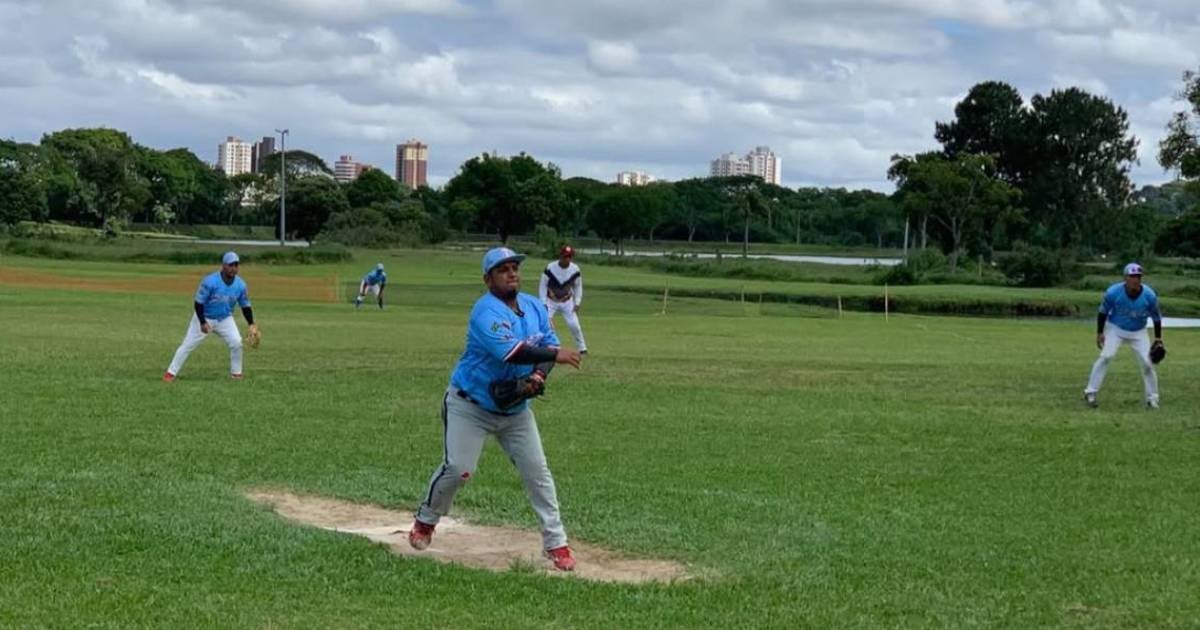
Over 6,000 kilometers away from Cuba and far from the elusive "American dream," a group of Cuban migrants is carving out a new life in southern Brazil with bats, gloves, and caps. In Curitiba, the capital of Paraná state, where baseball was once an exotic sport, the encouraging shout of "¡buen batazo, asere!" now echoes across makeshift softball fields.
This city, rapidly becoming a favored destination for the growing Cuban diaspora, witnesses a unique social and cultural phenomenon—the establishment of a softball league where Cuban and Venezuelan teams compete. These are two of the migrant communities experiencing significant growth in Brazil. A recent report by the British newspaper The Guardian notes that around 350 players are divided into 16 teams. Although Venezuelans are the majority, a determined group of Cubans has successfully formed their own "Team Cuba," complete with full uniforms.
Ernesto Alberto Keiser Limonta, a 30-year-old catcher, is clear about both his love for the sport and his migration choice. "I chose Curitiba because it's safe and offers work. We're pushing forward here," he says.
For these migrants, the sport is not only a release from the stress of starting anew but also an emotional refuge. "Our north is the south," some players jokingly say, embracing a popular phrase among migrants.
Curitiba: A New Home with Challenges
Curitiba, a city with 1.8 million people, is renowned for its efficient public services and economic stability, making it increasingly attractive to Cubans who have crossed jungles, borders, and seas from Guyana or Suriname. However, the journey doesn't end upon reaching Brazilian soil.
The process of legalizing their immigration status can take months, even years. Appointments are backlogged, and many Cubans find themselves stuck in informal jobs without labor rights or access to healthcare. The NGO Cáritas warns that this situation leaves them vulnerable to exploitation and even modern-day slavery.
Language barriers, discrimination, and the recognition of university degrees are additional hurdles. Yarismeli Nardo, a 36-year-old psychologist, shared with The Guardian her struggle to validate her credentials. "I started as a sales assistant, but now I work in a clinic. It was hard, but I made it," she proudly recounts.
"At Least Here I Can Live as a Human"
A previous Bloomberg report highlights how Brazil has become a prime destination for Cuban migrants, especially after the Trump administration's restrictive immigration policies. In front of a well-stocked supermarket, more than one Cuban migrant has been moved to tears—a difficult emotional clash for those from a country where even the basics are often scarce.
"I can't live without electricity, without food, without a future. Here, at least, I can live as a human," a young man from Las Tunas, now washing dishes while waiting to reunite with his family, tells Bloomberg.
Social media has played a crucial role in community building. Groups like "Cubans in Curitiba," with over 45,000 members, act as a guide for newcomers: where to rent, what documents to process, how to find work, or where to play softball on Sundays.
As long as the sounds of encouragement and Caribbean claps resonate in the parks of São José dos Pinhais, it is evident that even far from home, the spirit of Cuba remains alive both in the heart and on the field.
Understanding the Cuban Migrant Experience in Brazil
Why are Cuban migrants choosing Curitiba as their new home?
Cuban migrants are choosing Curitiba for its reputation of safety and economic stability, which offers better job opportunities and a quality of life compared to their home country.
What challenges do Cuban migrants face in Curitiba?
Cuban migrants encounter several challenges, including lengthy immigration processes, language barriers, discrimination, and difficulties in getting their professional qualifications recognized.
How does playing softball help Cuban migrants in Curitiba?
Playing softball provides Cuban migrants with emotional relief, a sense of community, and an opportunity to celebrate their cultural identity while adapting to a new environment.