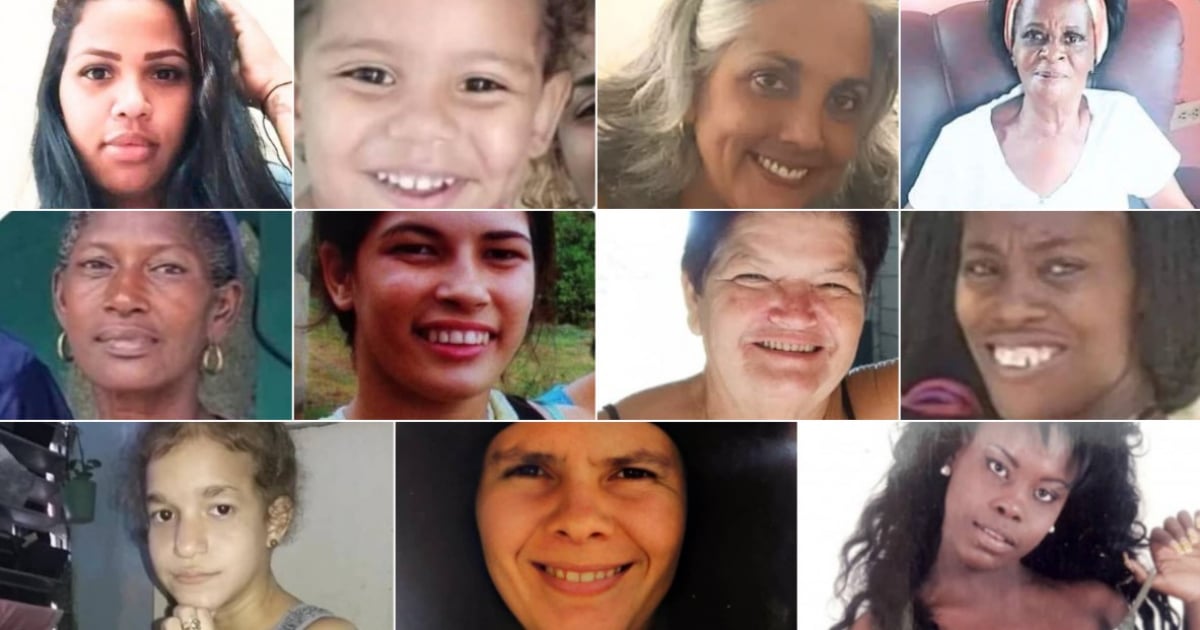
Activists in Cuba have voiced their frustration over the ineffective protocols in place for alerting the public about missing women, following several unresolved cases. One such case is that of Doraiky Águila Vázquez, a 48-year-old woman from Havana who disappeared on March 15th. Her case was only recently mentioned on state television, prompting activist Laura Vargas to criticize the lack of “public mechanisms, clear and swift steps that should be activated as soon as a woman goes missing.”
"Where are the alert protocols?" Vargas questioned. "Why isn't there a transparent institutional pathway to address these urgent situations?" She emphasized that the country desperately needs a genuine early warning system that includes immediate media dissemination, mobilization of authorities, family support, and case monitoring.
“We can't rely solely on social media posts or collective solidarity to find a missing person,” Vargas asserted. The creative director of the media outlet Subalternas also criticized the state-run Federation of Cuban Women (FMC) for not demanding such mechanisms. “The FMC should be advocating for this instead of celebrating its 65th anniversary with a ‘feminist crusade’—Pause, what the hell is that, really?—as if there were so many accomplishments. It’s not thanks to the FMC or state media that Doraiky's case was covered by an official outlet. It’s due to civic pressure, activism, and collective effort,” she said.
Vargas also highlighted other cases, such as Maydeleisis Rosales Rodríguez, a young girl who disappeared over four years ago in Central Havana, and Damaris Ricardo Frómeta, who vanished in October 2009 in Wajay, a municipality in Boyeros, Havana. Additionally, she mentioned Beysi Moraima Pedroso Ramírez, who disappeared in Havana in May 2017, with her family continuing their search to this day, holding onto hope for her return.
The call for effective protocols in cases of women’s disappearances in Cuba has been a longstanding demand from the country’s feminist activists. In January, an editorial from the Alas Tensas Gender Observatory (OGAT) argued that the lack of effective protocols, limited legal resources, and the inability to turn to independent organizations—often criminalized within the country—to aid in searches, have left families vulnerable and unsupported.
“Investigations frequently stall without clear explanations, and families lack the legal tools to demand their resumption. In a context where gender-based violence may lead to voluntary, involuntary, or forced disappearances, the absence of an adequate response leaves victims and their families exposed to a system that offers neither protection nor justice,” the editorial noted.
Understanding Cuba's Missing Women Crisis
What are the main criticisms of Cuba’s response to missing women cases?
Critics argue that Cuba lacks effective public mechanisms and clear protocols for addressing missing women cases, resulting in delays and inadequate support for families.
Who are some of the missing women highlighted by activists?
Activists have brought attention to cases like Doraiky Águila Vázquez, Maydeleisis Rosales Rodríguez, Damaris Ricardo Frómeta, and Beysi Moraima Pedroso Ramírez, among others.
What role does the Federation of Cuban Women play in this issue?
The Federation of Cuban Women has been criticized for not demanding effective alert mechanisms, focusing instead on its own celebratory activities.