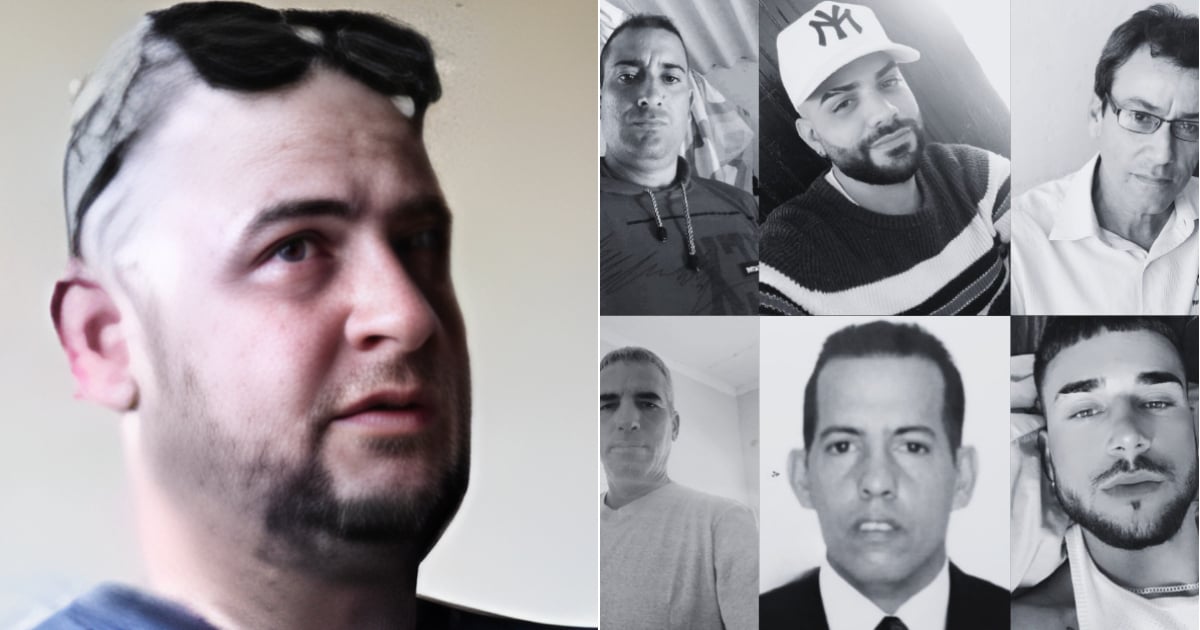
The organization Represores Cubanos has added prosecutor Ayrebi Miranda Pérez to its list of officials involved in human rights violations due to his role in the persecution of peaceful protesters who demonstrated against power outages in Encrucijada, Villa Clara. As a member of the Provincial Prosecutor’s Office's Penal Processes Department, Miranda Pérez has been accused of lacking procedural guarantees, engaging in judicial misconduct, and politically motivated persecution.
According to documents shared by the civic platform on their website, the prosecutor demanded severe prison sentences—ranging from 4 to 9 years—for six individuals involved in a cacerolazo protest on November 7, 2024. This demonstration took place in front of local government and Communist Party headquarters, with participants demanding the restoration of electricity after over 48 hours without power. The prosecution's sole evidence was that the protesters banged pots and shouted slogans like "We want power!" Miranda Pérez charged them with causing public disorder without presenting evidence of violence or damage, an action that human rights organizations have condemned as political repression.
The convicted individuals include Yandry Torres Quintana and Rafael Javier Camacho Herrera, both of whom faced the harshest nine-year sentences. Others prosecuted were José Gabriel Barrenechea Chávez, Rodel Rodríguez Espinosa, Marcos Daniel Díaz Rodríguez, and Yuniesky Lorences Domínguez, all residents of the municipality.
This incident unfolded amid a severe energy crisis that has sparked protests across various provinces in Cuba. Authorities have responded with internet shutdowns, arbitrary arrests, and excessive force, according to reports from organizations like Cubalex and Justicia 11J. In Encrucijada, at least eight people were detained following the protests.
One detainee, Alejandro Morales Pereira, was later accused of inciting demonstrations on social media. He is currently held at La Pendiente prison, where Cubalex reports he has suffered mistreatment and abuse, and recently attempted suicide due to the lack of medical care and inhumane detention conditions.
Ayrebi Miranda Pérez's inclusion in the database of repressors aims to highlight and document cases of officials who, through their roles, support political repression in Cuba, protected by judicial systems lacking safeguards.
The Case of José Gabriel Barrenechea: Family Tragedy and Injustice
One of the most poignant cases among those convicted for the Encrucijada protests is that of independent writer and journalist José Gabriel Barrenechea Chávez, detained since November 2024 for participating in the peaceful cacerolazo suppressed by Miranda Pérez acting as a prosecutor for the dictatorship.
Not only was Barrenechea Chávez deprived of his freedom without fair trial guarantees, but he was also separated from his 84-year-old mother, Zoila Esther Chávez Pérez, who was battling cancer and relied entirely on him for survival. Zoila passed away in May 2025 without a final farewell to her son, after months of institutional neglect and emotional decline due to his absence.
Despite repeated requests from family and activists, the regime did not allow Barrenechea Chávez to see his mother alive. Only after her death was he briefly escorted, under tight surveillance, to bid her a final goodbye. The meeting lasted less than an hour and was described by witnesses as an act of "institutional cruelty."
In a letter penned from prison and published by independent media, Barrenechea Chávez expressed regret at not being able to ask for forgiveness or receive his mother's blessing: "Everything I am, I owe to the home where I was born, and in that home, my mother was the heart and soul."
Barrenechea's case exemplifies the devastating impact of the regime’s political repression on Cuban families, extending beyond the prison bars to affect the most essential human bonds. Those responsible for executing the regime's systematic repression, such as prosecutor Ayrebi Miranda Pérez, share responsibility for these consequences.
Understanding the Impact of Political Repression in Cuba
What role did Ayrebi Miranda Pérez play in the Encrucijada protests?
Ayrebi Miranda Pérez, as a prosecutor, played a key role in criminalizing peaceful protesters by requesting harsh prison sentences based on accusations of public disorder, without presenting evidence of violence or damage.
How did the Cuban authorities respond to the energy crisis and subsequent protests?
In response to the energy crisis and protests, Cuban authorities implemented internet shutdowns, conducted arbitrary arrests, and used excessive force to suppress dissent, as reported by organizations like Cubalex and Justicia 11J.
What were the consequences for José Gabriel Barrenechea Chávez and his family?
José Gabriel Barrenechea Chávez suffered imprisonment without fair trial, and his detention resulted in his separation from his ailing mother, who passed away without a final farewell. This highlights the broader impact of political repression on Cuban families.