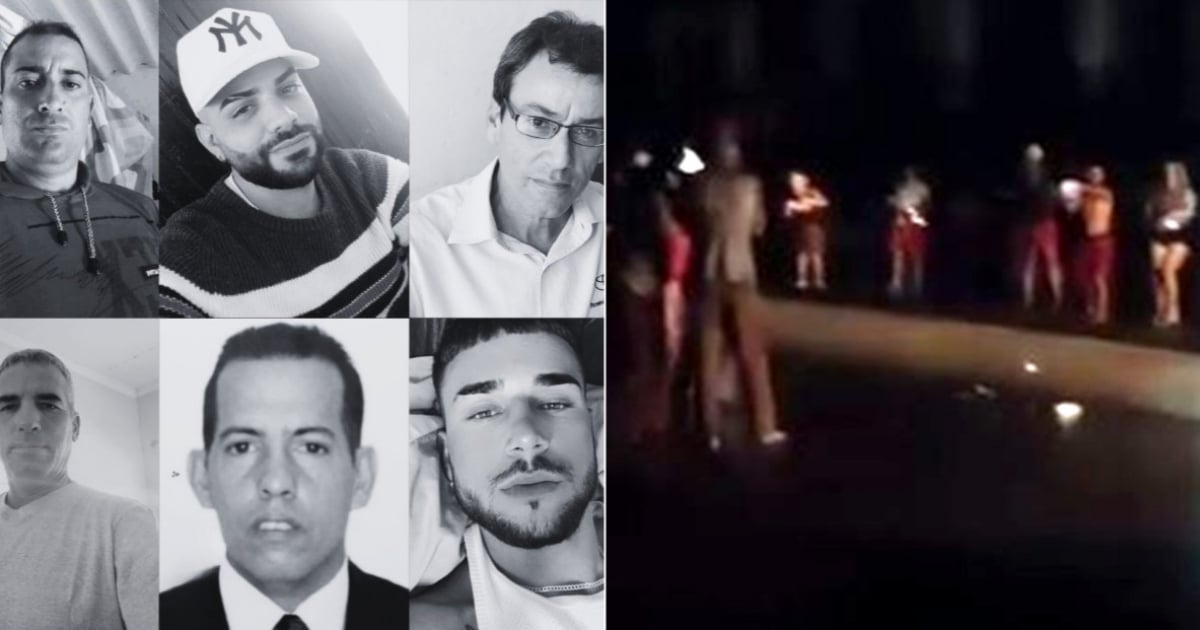
The Cuban government is seeking prison sentences of up to nine years for several individuals who participated in peaceful demonstrations last November against power outages in the municipality of Encrucijada, Villa Clara. This development was reported on Friday by the human rights organization Cubalex.
According to Cubalex, the provisional conclusions from the Prosecutor's Office, signed by prosecutor Ayrebi Miranda Pérez, accuse the demonstrators of "taking advantage of the electricity shortage caused by the energy crisis to disturb public peace" through the use of pots and chants. The six individuals charged with "public disorder" joined a peaceful protest on November 7, 2024, against the ongoing blackouts.
The prosecution is demanding nine-year prison terms for Yandri Torres Quintana and Rafael Javier Camacho Herrera. Meanwhile, José Gabriel Barrenechea Chávez faces a six-year sentence, Rodel Bárbaro Rodríguez Espinosa could receive five years, Yuniesky Lorences Domínguez four years, and Marcos Daniel Díaz Rodríguez faces five years of restricted freedom.
Impact of the Protests
During the demonstrations, participants banged on pots and shouted slogans such as "Turn on the power!" and "We want electricity!" to demand the restoration of electrical services. Despite the absence of vandalism, physical violence, or property damage, authorities are portraying these actions as a widespread attempt to disrupt public order.
Particularly concerning is the case of Cuban writer José Grabiel Barrenechea Chávez, who is accused of encouraging people to remain at the protest site. The charges against him include personal assessments of his "associations with individuals of questionable morality," "social media behavior," and "complete disregard for social norms."
Ongoing Detentions
Other notable instances involve Andy Pérez Medero and Rasiel Cárdenas Pérez, who were detained in the community of El Purio following similar protests. Both remain imprisoned without any formal charges from the prosecution. Additionally, activist Alejandro Morales Pereira was arrested months after the events for demanding the release of protesters. His condition is reportedly dire, and his life is at risk in prison.
"Where is the crime? Demanding a dignified life is not a crime," Cubalex stated in their public denunciation. The organization maintains that the alleged evidence fails to demonstrate violence, but rather the legitimate exercise of the right to protest.
Call for Immediate Action
In its statement, Cubalex warns that the Prosecutor's document represents a deliberate attempt to criminalize social dissent with excessive penalties. "It is a blatant violation of human rights," the organization emphasizes. Cubalex demands the immediate release of all individuals detained for exercising their fundamental rights and highlights the growing pattern of judicial repression against peaceful protests in Cuba.
The sentences requested by the Prosecutor's Office add to a lengthy list of cases where civic protests are punished as if they were common crimes, amid a severe energy and social crisis on the island.
Understanding the Legal Repercussions in Cuba
What are the charges against the Encrucijada protesters?
The protesters are charged with "public disorder" for their participation in peaceful demonstrations against power outages.
Who is José Grabiel Barrenechea Chávez and why is he accused?
José Grabiel Barrenechea Chávez is a Cuban writer accused of encouraging people to stay at the protest. The charges against him include his associations, social media behavior, and perceived disregard for social norms.
Why are the sentences for peaceful protest so severe in Cuba?
The harsh sentences for peaceful protest in Cuba are seen as an attempt to criminalize social dissent and suppress public expression of discontent.