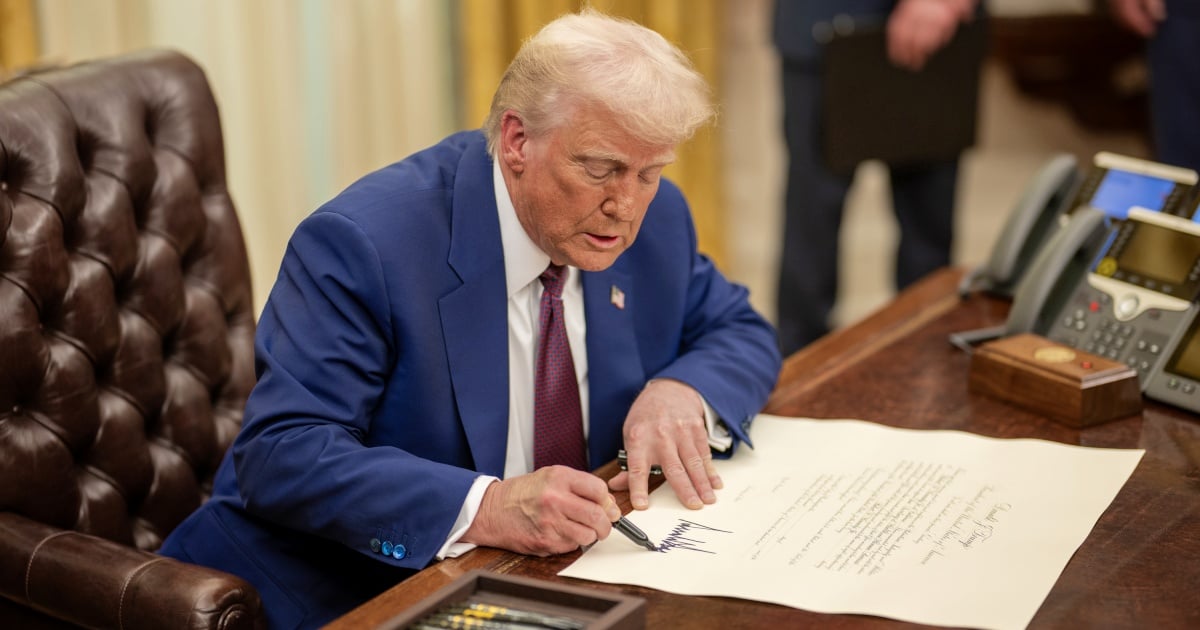
President Donald Trump has initiated a fresh wave of tariffs impacting over 90 countries and territories globally. On July 31, the White House unveiled a series of executive orders imposing import duties ranging from 10% to 41%. Trump labeled this initiative as a move to "restore America's economic sovereignty." The plan is set to commence on August 7, with an exception for Canada, where new tariffs took effect on August 1.
This new tariff structure partly modifies the "Day of Liberation" package announced on April 2, reducing some initial tariffs while increasing others due to political or commercial reasons.
Canada: The Most Affected Nation
One of the countries experiencing the most significant impact from this trade policy is Canada. Trump signed a separate executive order raising tariffs on Canadian goods not covered under the USMCA (United States-Mexico-Canada Agreement) from 25% to 35%. This measure was justified as a response to Ottawa's insufficient cooperation in curbing fentanyl and other drug trafficking.
"Canada has not cooperated to halt the steady flow of fentanyl and other illicit drugs and has retaliated against the United States for the President's actions to address this unusual and extraordinary threat," declared the White House.
Additionally, a 40% levy has been imposed on products rerouted through third countries to bypass the new tariffs. Canadian Prime Minister Mark Carney responded firmly, expressing disappointment and highlighting the sectors most affected: lumber, steel, aluminum, and automotive. While Canada plans to protect its national industries, specific countermeasures have yet to be detailed.
Details of the Revised Tariff Plan
The new system is organized as follows:
- 10% Tariffs: Applied to countries with which the U.S. maintains a trade surplus, serving as a "universal" tariff for partners like the United Kingdom and Australia.
- 15% Tariffs: The minimum applicable to approximately 40 countries with a trade deficit with the U.S.
- Over 15% Tariffs: Targeted at nations without agreements, with significant deficits, or those subject to political retaliation.
White House spokesperson Karoline Leavitt stated, "Trump is restoring America's economic sovereignty by reducing our dependence on foreign countries."
The President justified the actions as a response to decades of trade imbalances. "The only price that's gone up is the hundreds of billions of dollars coming in," Trump remarked in an interview.
Brazil's Unique Situation: Support for Bolsonaro and 50% Tariffs
Brazil faces particularly harsh measures: in addition to the 10% universal tariff, an extra 40% levy is imposed, totaling 50%. This decision is linked to the trial of former President Jair Bolsonaro. "He doesn't have to do business with the United States, and that's fine with me," commented Trump on Brazilian President Lula da Silva's stance.
China, Mexico, and the European Union: Exceptions and Agreements
China reached a temporary agreement reducing tariffs from 145% to 30%, while Beijing lowered theirs from 125% to 10%. Negotiations will continue until August 12.
Mexico received a 90-day extension to negotiate before 30% tariffs are applied, maintaining a 25% rate on products outside the USMCA.
The European Union, along with Japan and South Korea, agreed to 15% tariffs following direct negotiations.
Adjustments to the April Tariff Plan
The new orders partially replace the tariff package announced on April 2, generally reducing tariffs.
- Angola: 32% → 15%
- Bangladesh: 37% → 20%
- Bosnia-Herzegovina: 35% → 30%
- Botswana: 37% → 15%
- Brunei: 24% → 25%
- Cambodia: 49% → 19%
- Cameroon: 11% → 15%
- Chad: 13% → 15%
- South Korea: 25% → 15%
- Ivory Coast: 21% → 15%
- Equatorial Guinea: 13% → 15%
- Philippines: 17% → 19%
- Fiji: 32% → 15%
- Guyana: 38% → 15%
- India: 26% → 25%
- Indonesia: 32% → 19%
- Iraq: 39% → 35%
- Falkland Islands: 41% → 10%
- Israel: 17% → 15%
- Japan: 24% → 15%
- Jordan: 20% → 15%
- Kazakhstan: 27% → 25%
- Laos: 48% → 40%
- Lesotho: 50% → 15%
- Libya: 31% → 30%
- Liechtenstein: 37% → 15%
- Madagascar: 47% → 15%
- Malawi: 17% → 15%
- Malaysia: 24% → 19%
- Mauritius: 40% → 15%
- Moldova: 31% → 25%
- Mozambique: 16% → 15%
- Myanmar (Burma): 44% → 40%
- Namibia: 21% → 15%
- Nauru: 30% → 15%
- Nigeria: 14% → 15%
- North Macedonia: 33% → 15%
- Pakistan: 29% → 19%
- Democratic Republic of the Congo: 11% → 15%
- Serbia: 37% → 35%
- Sri Lanka: 44% → 20%
- Switzerland: 31% → 39%
- Taiwan: 32% → 20%
- Thailand: 36% → 19%
- Tunisia: 28% → 25%
- European Union: 20% → 15%
- Vanuatu: 22% → 15%
- Vietnam: 46% → 20%
- Zambia: 17% → 15%
- Zimbabwe: 18% → 15%
Global Reactions and Economic Impact
The announcement triggered widespread declines in stock markets:
- Europe: Frankfurt, Paris, and Ibex 35 fell between 2% and 3%.
- Wall Street: Opened negatively.
- Asia: Drops in Hong Kong and Tokyo.
The euro weakened, dropping to $1.14 per unit, marking its worst week since 2022. With this latest round of measures, Donald Trump intensifies his protectionist stance, blending commercial and geopolitical motives. While some countries strive to finalize agreements before August 7, others brace for countermeasures.
The medium-term impact, both economically and diplomatically, will be determined in the coming months. However, for now, the global trade landscape grows increasingly uncertain. "Trump's tariffs will usher in a new era of global trade next week, and no one can predict exactly how these barriers will function," warned Jochen Stanzl, an analyst at CMC Markets.
Key Questions About Trump's Tariff Strategy
What is the purpose of Trump's new tariff plan?
The purpose is to restore America's economic sovereignty by reducing dependency on foreign countries and addressing trade imbalances.
How does the new tariff structure affect Canada?
Canada faces increased tariffs on products not covered under the USMCA, rising from 25% to 35%, and a 40% levy on goods rerouted through third countries.
Which countries benefit from reduced tariffs under the new plan?
Countries like Angola, Bangladesh, and Bosnia-Herzegovina, among others, see a reduction in tariffs compared to the previous plan.