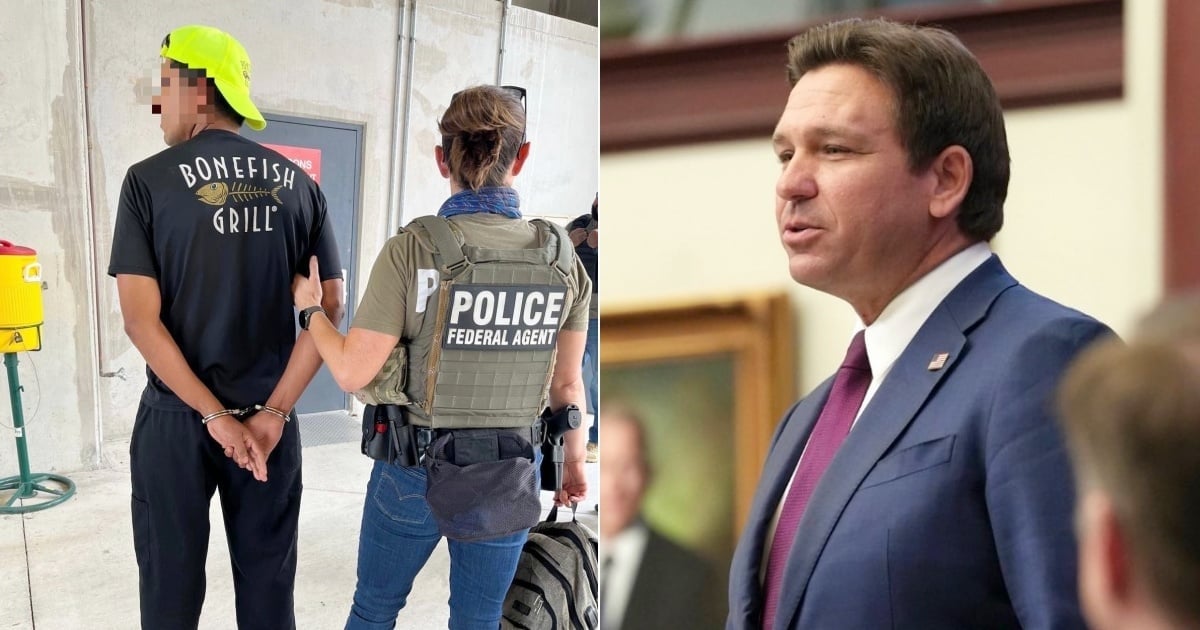
Since the start of Donald Trump’s second term, Florida has emerged as a focal point for immigration enforcement in the United States. From January this year, the state has seen more than 10,800 arrests carried out by Immigration and Customs Enforcement (ICE), marking an over 200% increase from the previous year, according to the Deportation Data Project.
Top Cities in Florida for ICE Operations
In 2025, seven cities have become prominent for ICE operations in Florida:
Miami (Miami-Dade County) serves as a pivotal hub for ICE activities, largely due to its proximity to the Krome Detention Center and other federal facilities. Local law enforcement collaborates closely with ICE through 287(g) agreements, allowing state officers to function as federal agents during arrests.
Tallahassee (Leon), the state capital, has seen targeted workplace raids, especially in the construction sector. In May, over 100 individuals were detained, including those suspected of gang affiliations.
Orlando (Orange) played a significant role in April’s “Operation Tidal Wave,” with coordinated raids taking place in both residential and work areas.
Jacksonville (Duval) has experienced a notable rise in arrests following the implementation of state laws penalizing illegal residency, though the Supreme Court halted one such law in July.
Fort Myers (Lee) was directly targeted in April raids, focusing on neighborhoods with high migrant populations.
Stuart (Martin) was also part of "Operation Tidal Wave," where ICE conducted arrests in areas densely populated by immigrants.
Tampa (Hillsborough) has been another key location for April’s operations, with active participation from local agencies in coordination with ICE.
Florida’s Leading Role in ICE Cooperation
A major factor driving the high number of detentions is the extensive network of 287(g) agreements, enabling state authorities to operate as immigration officers. Florida leads the nation with 295 such agreements, accounting for 43% of the national total.
The raids are predominantly concentrated in urban areas with dense immigrant populations and robust cooperation between local and federal agencies.
Human Impact: Arrests of Non-Criminals and Questionable Conditions
Data from the Deportation Data Project shows that in June 2025, 36% of those arrested had no prior criminal record, reflecting a 457% increase from the previous year. This shift has sparked allegations of unjust detentions, family separations, and inadequate conditions in detention centers, notably at the new facility nicknamed Alligator Alcatraz in the Everglades.
National Overview: Mass Arrests and a Strategic Shift
In the first five months of Trump’s new term, ICE has conducted 109,000 arrests nationwide, a 120% rise compared to the same period in 2024. The states with the highest figures include:
- Texas: 23.2% of the total
- Florida: 11%
- California: 7%
- Georgia: 4%
- Arizona: 3%
Conversely, states with minimal immigration activity, like Vermont, Alaska, and Montana, have recorded barely 100 arrests combined.
The concentration of activity in the South can be attributed to the high immigrant population and the degree of cooperation between local forces and ICE. In contrast, states like California, despite having a large number of immigrants, implement policies that limit such collaboration, thereby reducing the intensity of raids.
Profile of the Detainees
Arrested individuals hail from almost 180 countries, though the majority are from Latin America and the Caribbean. According to the latest data:
- Mexico: nearly 40,000 arrests
- Guatemala: 15,000
- Honduras: 12,000
- Venezuela: 8,000
- El Salvador: 5,000
These figures underscore the significant impact of immigration policies on Hispanic communities, many of whom have long-established ties and families in the United States.
Federal Goal: One Million Deportations in 2025
ICE has reported 150,000 deportations so far this year, a significant number but still far from the Trump administration’s target of one million deportations in 2025. Current projections suggest approximately 300,000 expulsions by December, potentially making this the most active year since the Obama era.
ICE’s Acting Director, Todd Lyons, recently stated that "anyone found in the country violating federal immigration law will be detained," reinforcing a zero-tolerance strategy that disregards previous priorities based on the detainee’s criminal history.
Frequently Asked Questions About ICE Arrests in Florida
What are 287(g) agreements?
287(g) agreements allow state and local law enforcement agencies to collaborate with ICE, authorizing them to perform immigration enforcement functions.
Why is Florida a focal point for ICE operations?
Florida is a focal point for ICE operations due to its large immigrant population, strategic location, and extensive network of 287(g) agreements facilitating cooperation between local and federal agencies.
What impact do ICE operations have on communities?
ICE operations can lead to family separations, increased fear within immigrant communities, and challenges related to detention conditions, particularly for those without a criminal record.