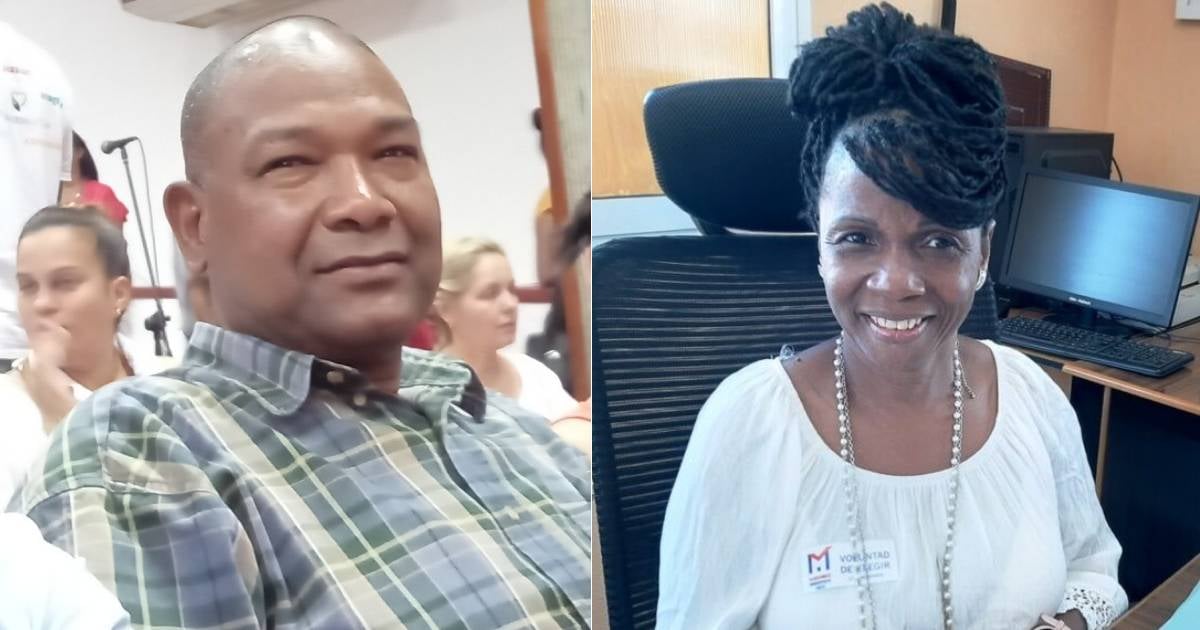
Two senior officials from Cuba's Electoral Council have stepped down, according to decrees released on Tuesday in the Extraordinary Official Gazette No. 41. This development seems to be part of an ongoing internal reshuffle affecting several institutions across the nation, during what is arguably the most severe crisis in decades.
Eulieser Naranjo Carrillo, who served as the President of the Provincial Electoral Council in Holguín, and Amada Zequeira Angarica, the head of the Provincial Electoral Council in Cienfuegos, requested to be relieved from their positions. Their requests were accepted by the Council of State of the Republic and endorsed by Juan Esteban Lazo Hernández, the President of the National Assembly.
No further explanations were provided regarding the personal or institutional reasons behind their resignations. Mirna Viñales Viñales has been appointed to replace Zequeira, while a successor for Naranjo in Holguín has not been publicly announced yet. Nevertheless, it appears that Naranjo Carrillo may remain active within the electoral framework. A recent social media post by the National Electoral Council (CEN) congratulates him on his birthday, identifying him as the Director of the Support and Assurance Unit, suggesting he still holds an influential role.
This pattern of personnel changes reinforces the notion that many of these "resignations" could be related to internal rearrangements or strategic relocations rather than absolute departures. Such actions are consistent with the discretionary and loyalty-based governance style that characterizes Cuba's power structure.
These adjustments come just two months after the Official Gazette documented the dismissal of Rubén Ramos Rojas as President of the Provincial Electoral Council of Villa Clara, citing a "loss of the necessary qualifications for the position." Similarly, María Luisa Zamora Rodríguez was removed from her role as a member of the National Electoral Council for "instability in fulfilling her duties" and transferred to the Ministry of Science, Technology, and Environment.
The ongoing wave of dismissals, resignations, and internal shifts within the state apparatus—often without public explanation—has fueled growing speculation about internal power struggles and a political strategy by the regime to maintain control amid widespread social discontent, both on the streets and online.
Prime Minister Manuel Marrero Cruz has recently emphasized the importance of strengthening political and ideological work as a response to the economic downturn and the increasing public scrutiny.
Understanding the Turmoil in Cuba's Electoral Council
Why did the senior officials of Cuba's Electoral Council resign?
The resignations of the senior officials were accepted without further explanation, though they appear to be part of a larger internal restructuring within the country's institutions.
Who is replacing the resigned officials?
Mirna Viñales Viñales has been appointed to take over the role in Cienfuegos. However, a replacement for Eulieser Naranjo Carrillo in Holguín has not been named yet.
What does the reshuffling imply about Cuba's political climate?
The series of resignations and reassignments suggest potential internal power struggles and a strategy by the regime to maintain control amid growing public unrest.