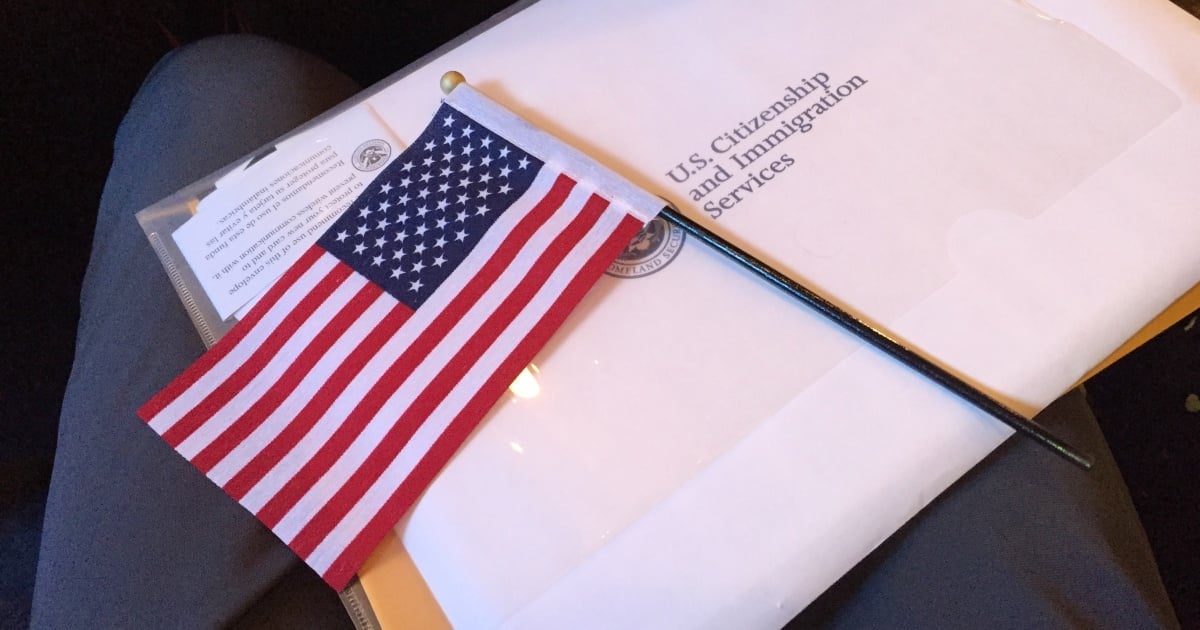
The U.S. Citizenship and Immigration Services (USCIS) is gearing up to introduce substantial changes to both the naturalization process and the H-1B visa program, which caters to skilled foreign workers. In a recent interview with The New York Times, Joseph Edlow, the new director of the agency, outlined the Trump administration's vision for the future of the country's immigration policies, signaling a shift towards a stricter approach.
Reassessing the Citizenship Test
One of the main focal points discussed by Edlow was the naturalization exam, which he believes has become too lenient. "The test, as it stands, isn't challenging enough," he stated. "It's easy to memorize the answers. I don't think we're genuinely upholding the spirit of the law," he added.
Currently, citizenship applicants must study a list of 100 civic questions, of which they are asked 10 and must answer at least six correctly. This version was adopted following President Joe Biden's decision in 2021 to replace the more rigorous version introduced by Trump in 2020, where 12 out of 20 questions needed to be answered correctly. Edlow explained that the administration aims to revert to that stricter format, requiring immigrants to demonstrate a deeper understanding of American history, political structure, and civic values.
More Stringent Immigration Policies
This reform of the citizenship test is part of a broader and more restrictive immigration policy that has been a hallmark of the Trump administration. Edlow, who was confirmed by the Senate to lead the USCIS, has clearly aligned himself with this stance. Under his leadership, the agency also plans to reinforce other elements of the immigration system, such as tightening the selection process for work visas and managing asylum cases.
During his brief interim leadership in 2020, Edlow was involved in decisions that made it harder for migrants relying on public benefits to obtain legal residency. Although he clarified that he doesn't intend to reinstate that measure, he emphasized that the current approach remains restrictive, yet selective. "I believe it should be a positive balance," he said. "And if we look at the people who come, especially those who come to boost specific economic programs we have and benefit the national interest in other ways, that's absolutely what we need to focus on."
Reforming the H-1B Visa System
Beyond the citizenship test, the USCIS plans to alter the H-1B visa allocation system. This key program allows U.S. companies to temporarily hire highly skilled foreign workers, particularly in the tech sector. Historically, the program has operated on a lottery basis, issuing up to 85,000 visas annually without prioritizing economic criteria.
However, Edlow suggests that the USCIS should prioritize employers offering higher salaries, as a strategy to prevent companies from using the program to cut labor costs. "I truly believe that the H-1B should be used, along with many other parts of immigration, to complement, not replace, the U.S. economy and American companies and workers," he told the Times.
This proposal addresses criticism from the more conservative wing of the Republican Party, which argues that the program, in its current form, displaces local workers. In fact, Vice President JD Vance has spoken out against companies that "lay off their own employees and then hire foreign workers."
Opposing Views on H-1B Visa Changes
Edlow's plan has not escaped criticism. Doug Rand, a former Biden administration official and immigration policy expert, warned that prioritizing salaries could have adverse effects. "Like it or not, the H-1B program is the primary way U.S. companies hire the best and brightest foreign graduates from U.S. universities, and Congress never allowed the DHS to skew the balance based on salary," he stated.
Even tech companies, some of which are close to Trump, have defended the program as an essential tool to address the national talent shortage in specialized areas. Although the H-1B visa isn't a direct path to permanent residency, it often serves as the initial entry point for many skilled migrants. With the resumption of a second Trump term, U.S. immigration policy is entering a new phase of systematic tightening. Edlow confirmed that his agency is prepared to implement this vision, which includes greater rigor in naturalizations, increased control over asylum programs, and stricter criteria for granting immigration benefits.
Understanding USCIS Policy Changes
What changes are being proposed for the U.S. citizenship test?
The proposed changes include reverting to a more rigorous version of the test, requiring a deeper understanding of U.S. history, political structure, and civic values.
How will the H-1B visa allocation process change?
The USCIS plans to prioritize companies offering higher salaries as part of the H-1B visa allocation process, moving away from the current lottery system.
Why are these changes being implemented?
The changes reflect a shift towards a stricter immigration policy under the Trump administration, aiming to ensure that immigrants contribute positively to the national interest and economy.
What are the criticisms of the proposed H-1B visa changes?
Critics argue that prioritizing salaries could have negative effects, potentially hindering U.S. companies from hiring top foreign graduates, as the system was not designed to favor salary-based allocations.