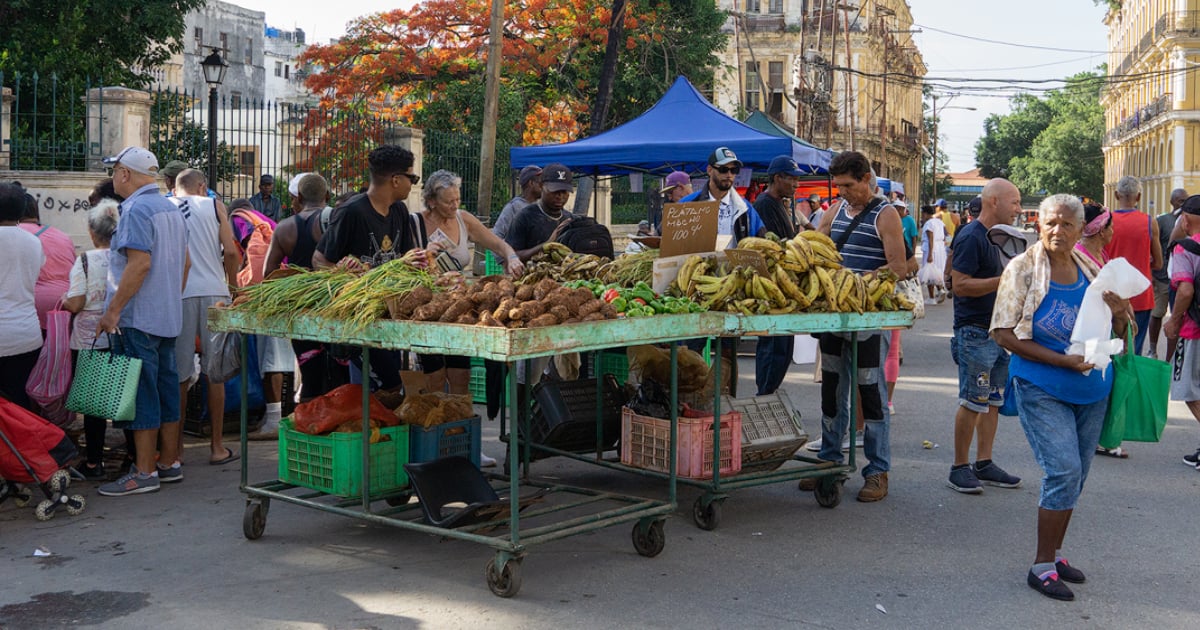
According to a recent survey by the Cuban Citizen Audit Observatory (OCAC), a minimum of 30,000 Cuban pesos per month is required to secure basic nutrition. However, the minimum wage in Cuba stands at merely 2,100 CUP, and even with the announced pension increase in September, it will only rise to 3,056 CUP. The math simply doesn't add up.
The OCAC report, titled "Without the Countryside, There's No Country and With GAESA, There's No Future," bluntly states that the root cause of hunger in Cuba is primarily political. It is not merely a consequence of inflation or natural disasters but a result of a failed, centralized economic model that suffocates independent agriculture while prioritizing the military-business conglomerate GAESA over the people's needs.
Meanwhile, over 80% of the food consumed in Cuba is imported, much of it from the United States. The state budget continues to allocate 13 times more resources to tourism than to agriculture.
The Growing Gap Between Income and Living Costs
OCAC's calculations align with estimates from independent economist Omar Everleny Pérez, who reported that by late 2024, the cost of a basic food basket for two people in Havana reached 24,351 CUP. When factoring in expenses such as transportation, clothing, internet, and hygiene, the cost of living soars to over 45,000 pesos per month for a couple.
Adding to the problem is the deteriorating rationing system. Since May 2024, eggs are no longer distributed via the ration book, and essential products are either incomplete or delayed by months. "Today, a carton of eggs can cost up to 3,900 pesos, more than a full minimum pension," the report states.
The Cuban Human Rights Observatory warned in 2024 that 89% of Cuban families live in extreme poverty, with 70% of individuals skipping meals due to lack of money or shortages.
First-Hand Accounts of Economic Hardship
Personal stories back up these statistics. A doctor on maternity leave in Sancti Spíritus explained months ago that it took two months' salary to purchase a can of powdered milk for her child. An engineer displayed her monthly groceries: onions, green tomatoes, and garlic for nearly 3,000 pesos. No meat, beans, or rice.
Even the government has acknowledged the dire situation. "You can't live on an average salary of 6,000 pesos," admitted Vice President Salvador Valdés Mesa in February, though he offered no solutions.
Starting in September, over 1.3 million retirees will receive a pension increase. Those receiving the minimum will see their pensions rise from 1,528 to 3,056 pesos. Yet, this amount will only suffice to purchase food for three days at best, instead of a day and a half.
Proposed Solutions to Cuba's Economic Struggles
The gap between income and living costs leaves little room for hope. With 70% of family income devoted to food, and still falling short, food insecurity has become the norm rather than the exception.
What solutions do experts propose? OCAC suggests structural measures that include dismantling GAESA's monopoly, ensuring private property rights for farmers, allowing free trade of agricultural products, opening the economy to investment from the Cuban diaspora, and promoting agricultural development banking. However, they argue that without profound political changes, there will be no food on the table—something many are already whispering quietly.
How does a Cuban survive on wages that are insufficient even for basic sustenance? The answer remains the same: they survive as best they can, relying on help from abroad, resorting to the black market, standing in endless lines, or simply going without food.
Understanding Cuba's Economic Challenges
Why is the cost of living in Cuba so high?
The high cost of living in Cuba is attributed to a centralized economic model that limits independent agriculture and prioritizes state-owned enterprises like GAESA. Additionally, over 80% of food is imported, further driving up costs.
What are the proposed solutions to Cuba's food insecurity?
Experts propose structural changes such as dismantling GAESA's monopoly, ensuring property rights for farmers, allowing free agricultural trade, encouraging investment from the diaspora, and promoting agricultural banking.