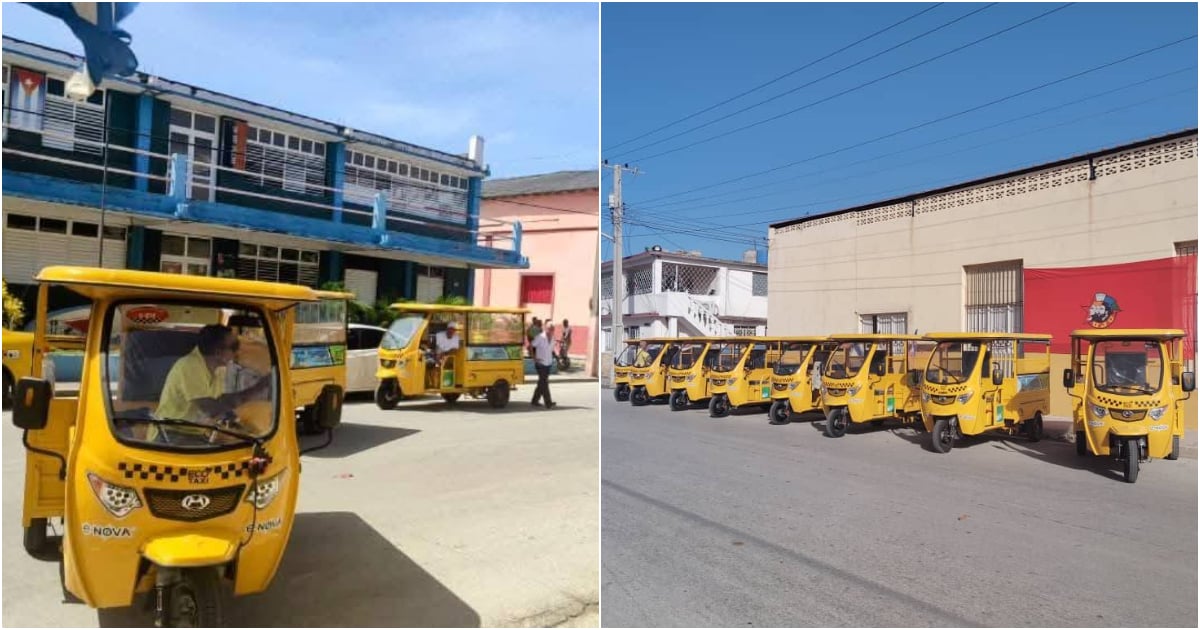
The introduction of 15 electric tricycles in the city of Manzanillo was hailed by Transport Minister Eduardo Rodríguez Dávila as a progressive step in urban mobility. However, this initiative only impacts two routes and falls short of addressing the significant connectivity issues that the municipality faces. Rodríguez, in a Facebook post, mentioned that until charging stations powered by renewable energy are established, the base will rely on increased availability of electricity from the connected circuit during peak recharge times.
The service is set to operate at a fare of 10 Cuban pesos. Alongside, 15 combustion tricycles will be deployed to serve routes leading to areas farther from Manzanillo's center, where geographical challenges are greater, the minister added. This clearly indicates that the "green" model still depends on fossil fuels in less accessible regions, precisely where stable transport is most needed.
Although the minister lauded the "popular acceptance" of these vehicles in other provinces, he also acknowledged that they do not address the overall transport deficit. Consequently, the measure appears more like an attempt to superficially address the scarcity with symbolic gestures rather than a substantive change with real impact. These tricycles, besides not meeting a massive demand, remain ensnared in a collapsed energy system, lacking the support needed for consistent charging. This situation jeopardizes the sustainability of any electric transport in Cuba, making their operation seem doomed to inconsistency and improvisation.
In Havana, the fleet of electric tricycles for public passenger transportation exceeds 150, distributed across various routes. Since August 15, 2024, the cost of transportation in electric tricycles in the capital increased to 10.00 CUP per passenger. This decision, announced by the Havana General Transport Directorate, marked a significant hike from the initial price of 4.00 CUP set when the service began in 2020. The new price aimed to align Havana’s tariff with that of other provinces, where the rate was already 10.00 CUP, according to a note from the state-run Granma newspaper.
However, the energy crisis negatively affects this service as well, as frequent power outages prevent the optimal charging regime for the vehicles. Under these conditions, keeping electric transport operational becomes increasingly unfeasible, and tricycles are no exception. The Transport Minister mentioned last year on Facebook that in the various provinces where the tricycles operate, they have been warmly received by the population. Although their presence does not resolve transportation deficits, they provide a service that garners high acceptance and simultaneously creates employment, often for women.
Understanding the Challenges of Electric Tricycles in Cuba
What is the current fare for electric tricycles in Havana?
As of August 15, 2024, the fare for electric tricycles in Havana is 10.00 CUP per passenger.
How do energy shortages affect electric tricycles in Cuba?
Energy shortages lead to frequent power outages, which prevent the optimal charging of electric tricycles, making their operation inconsistent and challenging.
Are electric tricycles a sustainable solution for transportation in Cuba?
While electric tricycles are a step towards sustainable transport, their dependence on an unstable energy system and limited impact on transportation deficits make them less viable as a comprehensive solution.