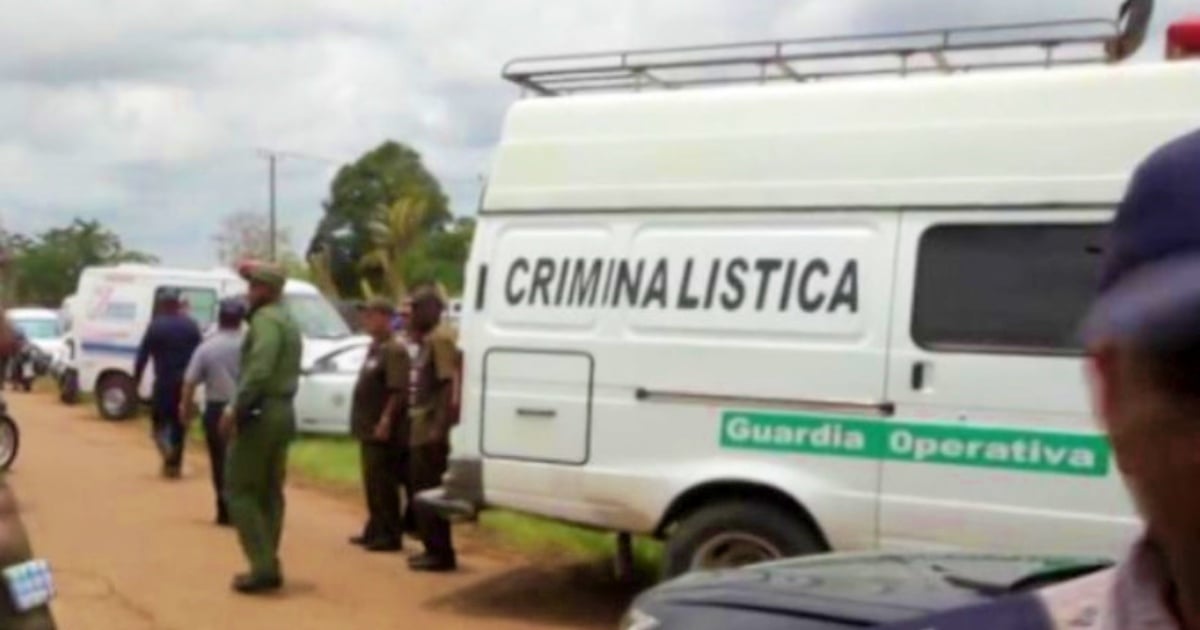
On July 25, independent platforms Yo Sí Te Creo en Cuba and the Observatorio de Género Alas Tensas (OGAT) confirmed two additional femicides in Cuba, along with an attempted femicide that left a minor seriously injured. With these tragic events, the number of recorded cases in 2025 rises to 21, according to data collected by both organizations. The victims were identified as Yailín Requejo Miranda, 41, killed in Holguín, and Yailín Carrasco Pérez, 29, in Cienfuegos. In both instances, the assailants were their partners, and at least three minors were affected: one was severely injured, and two others witnessed the violence.
Brutal Crimes Witnessed by Children
Yailín Requejo Miranda was murdered by her husband in public view in the Cruce del Coco neighborhood. The perpetrator stabbed her and, amidst the chaos, attacked her teenage daughter, causing serious injuries that required hospitalization. Another young son of Requejo also witnessed the horrifying event. The attacker initially escaped but was apprehended days later through a coordinated police operation.
In a groundbreaking move, the state-run media outlet Cubadebate labeled the crime a "femicide," marking the first instance of the Cuban state press using this term to describe gender-based violence on the island.
The second femicide occurred on July 22, when Yailín Carrasco Pérez was brutally killed by her partner in the Pastorita neighborhood of Cienfuegos. This tragedy unfolded around 6:30 a.m. while she was with one of her daughters. The six-year-old child’s cries for help—"They killed my mom!"—alerted neighbors, as reported by the official profile Las Cosas de Fernanda. The perpetrator was detained, yet the case sparked outrage due to a serious allegation: activist Saúl Manuel claimed the assailant was an escaped convict. If verified, this not only points to a gender-based crime but also highlights a severe institutional failure allowing a dangerous criminal to roam free.
Recognition of "Femicide" Is Insufficient
Despite the acknowledgment of the term "femicide," activists argue this does not signify a genuine shift in Cuban state policy but rather an attempt to improve its image under increasing international and civil society pressure. The Cuban regime continues to deny the existence of femicides within its borders. In March, during the Congress of the Federation of Cuban Women (FMC), Miguel Díaz-Canel stated, "We can categorically assure here that this is a media construction completely foreign to Cuban reality."
These statements starkly contrast with the reality documented by feminist groups, which have verified over 50 gender-based murders in recent years. The official denial not only perpetuates silence but also impedes the development of effective public policies to combat this violence. The use of euphemisms like "passionate crime" or "domestic violence" by official media reveals a political intent to downplay the issue, diluting its structural nature and absolving the state of responsibility.
Children Caught in the Crossfire
One of the most distressing aspects of these cases is the impact on minors involved. Children who either witnessed their mothers' murders or suffered serious injuries, such as the teenager attacked in Holguín, are also victims. According to Alas Tensas, children are indirect victims of femicides, yet there are no government programs to offer them specific attention and support.
So far, there has been no state support for the victims' families or surviving minors. Neither psychological nor legal aid mechanisms have been activated, highlighting a complete lack of gender-sensitive public policies.
Independent Feminism: The Only Real Support
The documentation and denunciation of these crimes have been made possible solely through the efforts of independent feminist platforms like OGAT and Yo Sí Te Creo en Cuba. These organizations have taken on the crucial role of documenting, verifying, and bringing attention to femicides amid the state's complicit silence.
Both groups have indicated they are investigating potential new cases in Santiago de Cuba, Havana, and Camagüey, suggesting that the number of murders could continue to rise in the coming weeks. Meanwhile, the Cuban regime prefers denial over action. Instead of implementing structural measures, protecting victims, or establishing prevention and response protocols, it criminalizes feminist activism and censors citizen efforts demanding justice.
The grief over the deaths of Yailín Carrasco and Yailín Requejo cannot and should not be buried by institutional silence. The Cuban state has an unavoidable responsibility: to recognize femicide as a specific crime, enact clear legislation, and allocate resources to prevent, punish, and eradicate it. Otherwise, it remains part of the problem.
FAQs on Femicide in Cuba
What is the current number of confirmed femicides in Cuba for 2025?
As of now, there are 21 confirmed femicide cases in Cuba for the year 2025, according to independent platforms Yo Sí Te Creo en Cuba and OGAT.
How has the Cuban government responded to the issue of femicides?
The Cuban government has largely denied the existence of femicides, labeling them as media constructions, and has not implemented effective public policies to address gender-based violence.
What role do independent feminist platforms play in addressing femicides in Cuba?
Independent feminist platforms like OGAT and Yo Sí Te Creo en Cuba are crucial in documenting, verifying, and raising awareness of femicides, providing a voice amid the state's silence.