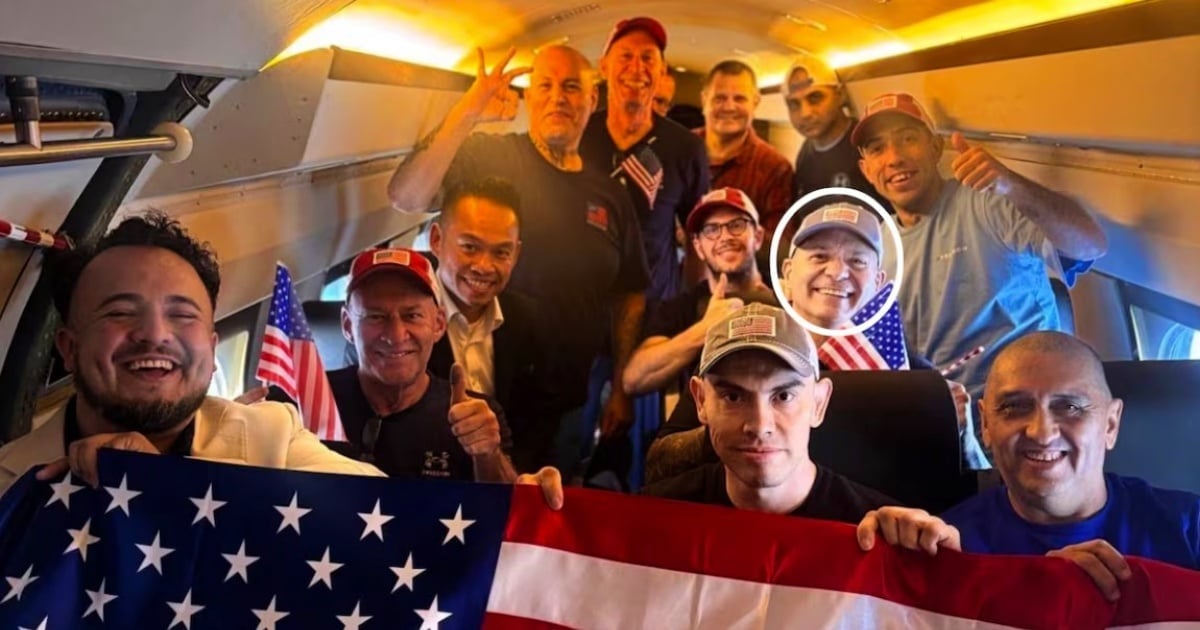
The Venezuelan government has alleged that the United States persistently sought the inclusion of former Marine Dahud Hanid Ortiz, convicted of a triple murder in Madrid in 2016, in the recent prisoner exchange between the two nations. The claim was made by Diosdado Cabello, the Minister of Interior and Justice, on his television program "Con el mazo dando."
Cabello stated, "We knew what was involved; I even mentioned at the airport that they were asking for a murderer. They are taking a convicted killer," referring to Ortiz, who holds both American citizenship and Venezuelan roots. He emphasized that Washington was well aware of Ortiz's crimes—killing two Cuban women and an Ecuadorian man employed at a Madrid law firm—yet still advocated for his inclusion in the deal.
Last Friday, the Trump administration proudly announced the release of the last 10 American citizens detained in Venezuela as part of a swap involving 252 Venezuelan migrants, who were sent to the Center for Terrorism Confinement (Cecot) in El Salvador. Secretary of State Marco Rubio praised President Trump's "leadership" in the operation, omitting details about the individuals released.
The addition of Hanid Ortiz in the exchange has sparked controversy due to his criminal background and the apparent lack of public acknowledgment from Washington. Born in Caracas in 1970 and later becoming a U.S. citizen, Ortiz was sentenced to 30 years in a Venezuelan prison for a triple homicide at a Madrid law firm in December 2016.
Ortiz traveled to Madrid after learning of his wife's affair with a Peruvian lawyer, intending to kill him. In his rampage, he fatally shot three innocent people: Cuban nationals Elisa Consuegra and Maritza Osorio, and Ecuadorian Pepe Castillo Vega, all employees of the firm. After committing the murders, Ortiz set the premises on fire and fled to Venezuela, where he was apprehended in 2018 in Puerto Ordaz.
Spain's extradition requests were denied by Caracas, citing Ortiz's Venezuelan citizenship. He remained imprisoned on charges of aggravated homicide, with two appeals dismissed by the courts. Cabello reiterated that the U.S. actively supported Ortiz's inclusion in the agreement, despite his criminal history. "Jorge Rodríguez told them: he is a murderer. And they insisted," Cabello said, referring to the chief Venezuelan negotiator.
To date, the U.S. State Department has not provided specific comments on Ortiz's case. Washington has only stated that "many" of the freed Americans reported being tortured, a justification some analysts link to the controversial release of the convict. While the U.S. claims there are no longer any wrongfully detained American citizens or residents in Venezuela, the NGO Foro Penal lists Cuban Aidel Suárez Medina, a 37-year-old Florida resident, as still detained.
Suárez was arrested in December 2024 in Güiria, Sucre state, after entering the country by sea. He had returned to formalize his relationship with a Venezuelan woman but was detained without explanation, held incommunicado for months, and is currently imprisoned at El Rodeo.
Key Questions on the U.S.-Venezuela Prisoner Exchange
Who is Dahud Hanid Ortiz?
Dahud Hanid Ortiz is a former Marine with dual American and Venezuelan citizenship, convicted of committing a triple murder in Madrid in 2016, which included the killing of two Cuban women.
Why was the inclusion of Ortiz in the prisoner swap controversial?
The inclusion of Ortiz was controversial due to his criminal record involving a triple homicide and the lack of open acknowledgment from the U.S. government regarding his involvement in the swap.
What was the outcome of the U.S.-Venezuela prisoner exchange?
The exchange resulted in the release of the last 10 American citizens detained in Venezuela, in exchange for 252 Venezuelan migrants sent to a facility in El Salvador.