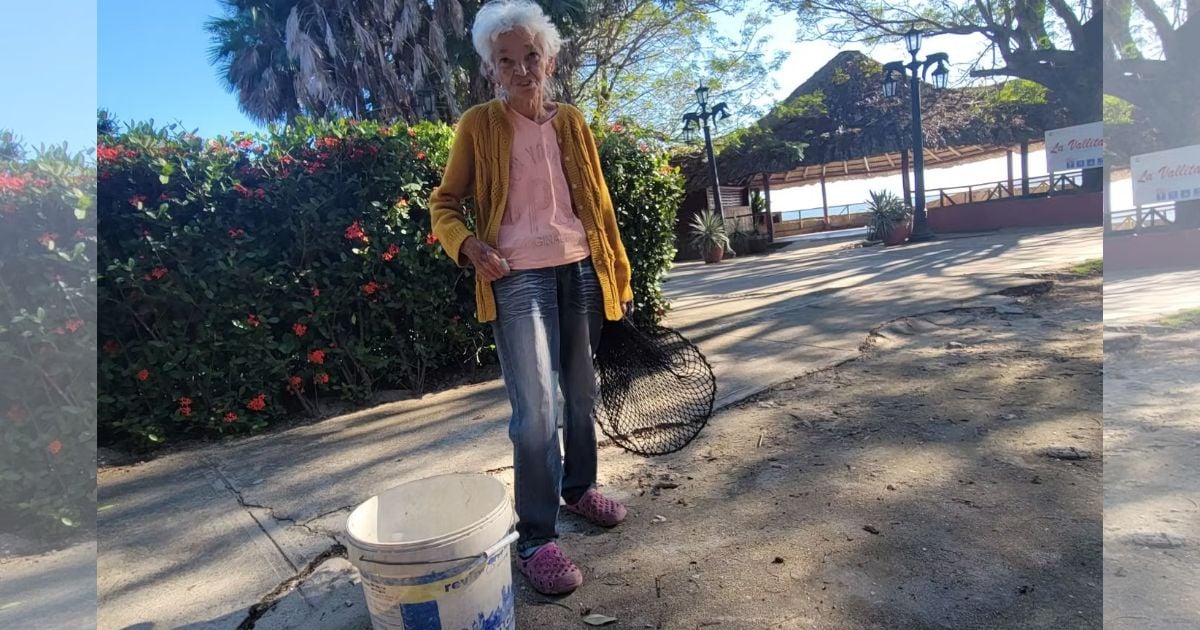
Each evening, as the sun sets over the Cuban coast, a woman in her seventies named María ventures alone into the muddy waters to catch crabs. Without any assistance, she carries a large bucket, hoping against hope to fill it. Her small and aged body faces daily physical pain, insecurity, and institutional neglect. Instead of enjoying the serenity her age should afford her, each day becomes a battle for survival in Cuba.
This story is highlighted by the Food Monitor Program (FMP), which reports a rise in extreme survival practices among Cuba's most vulnerable, particularly elderly citizens without family support or income. María, who lives about 800 meters from the coast, starts her day searching for fish or shellfish scraps to use as bait. She then casts her lure into the sea, waiting patiently for crabs to appear, and catches them with a net, often returning empty-handed and anxious, knowing her life depends on this luck.
The process demands awkward physical positions, slippery surfaces, and the constant risk of falling or injury. If her day extends into the night, María must return through deserted areas, risking assault, yet she persists because she has no other choice. Without family support, María relies solely on her Christian faith. She told FMP, "I am my own help," echoing the sentiment of many women who have defied age, gender, and physical limitations to find ways to survive amidst the island's severe economic crisis.
Artisanal crab fishing, while exhausting, provides unstable income: a kilo of meat can sell for between 400 and 800 pesos, but achieving that amount is not always possible. When she does manage to sell, it barely covers a portion of the skyrocketing cost of basic goods. According to FMP, María's situation is not unique but rather indicative of a growing trend.
The Cuban government has promoted initiatives like the National System for the Comprehensive Care of Life, but these are limited in implementation and lack structural solutions to ensure food security and dignity for the elderly. In many communities, especially coastal ones, nature has become the last refuge. However, this option becomes increasingly impractical with age, illness, and a lack of basic resources.
María's life serves as a living testament to the hardships faced by thousands of Cubans today. Amid one of the most severe economic crises Cuba has endured, the elderly survive as best they can, confronting state neglect and daily hardship. An example of this struggle is a retired university professor who now sells cigarettes and coffee in his neighborhood to afford food because his state pension barely covers the essentials. Despite his academic career, he now relies on neighbors' charity and street vending for sustenance.
Meanwhile, authorities attempt to justify the situation with rhetoric that doesn't hold up in reality. An independent economist recently debunked government claims of increased pensions, revealing that the alleged raises amount to trivial sums that fail to offset inflation or rising costs of basic goods.
The situation is particularly severe in the provinces. In Santiago de Cuba, a grandmother shows remarkable resilience facing blackouts and shortages: she cares for her grandchildren in unsanitary conditions, without stable electricity or sufficient food, resorting to candles, wood, and bartering to keep her family afloat. These stories portray a widespread reality for older adults in Cuba, where retirement no longer signifies rest but a new beginning marked by daily survival struggles.
Aging in Cuba has become synonymous with exclusion and neglect, in a country where public institutions have failed to provide an effective safety net for its most vulnerable citizens.
Challenges Faced by Elderly in Cuba
What challenges do elderly people like María face in Cuba?
Elderly individuals like María face numerous challenges, including physical pain, insecurity, institutional neglect, and financial instability, as they often lack family support and sufficient income.
How does María manage to survive?
María survives by catching crabs, despite the physical and safety risks involved. She relies on her Christian faith and the small income from selling crab meat to cover basic necessities.
What are the limitations of government initiatives for the elderly in Cuba?
Government initiatives like the National System for the Comprehensive Care of Life are limited in their implementation and lack comprehensive solutions to provide food security and dignity for the elderly.