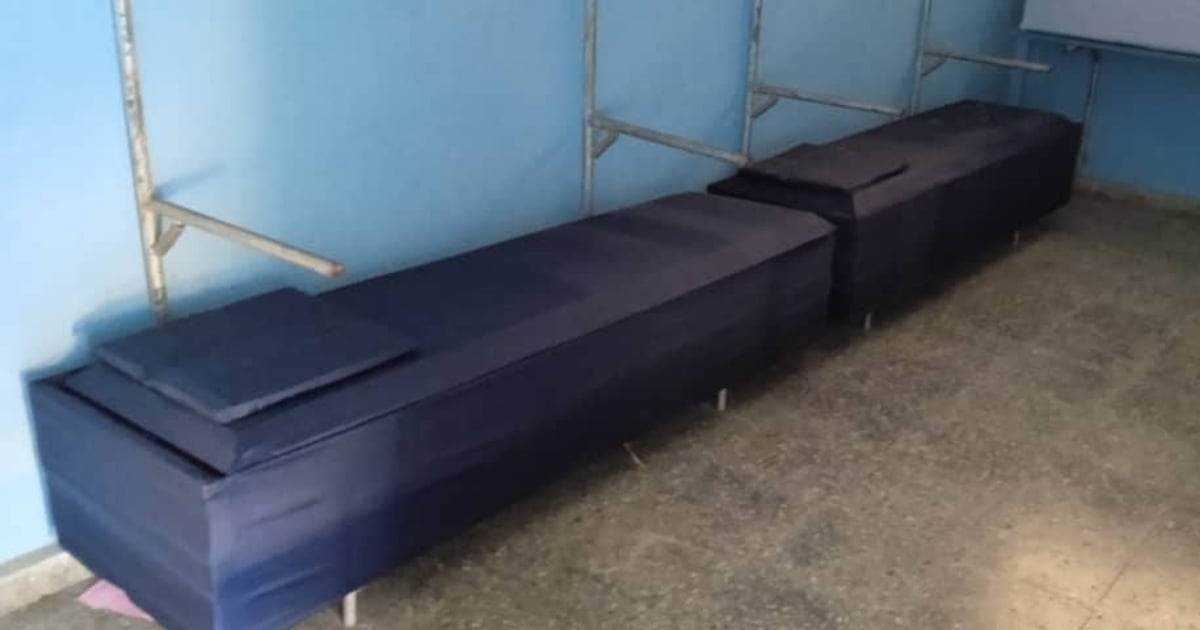
In a rare admission, a state-run media outlet in Cuba has candidly depicted the collapse of funeral services across the island. Radio Mayabeque recently broadcasted a report acknowledging that saying goodbye to a loved one in Cuba has become an agonizing ordeal, compounded by deficiencies, negligence, and a lack of empathy that families endure during their most challenging times.
The report focuses on the San José funeral home in Mayabeque's capital, highlighting the systemic inefficiencies that have left a basic service—accompanying the deceased with dignity—in a state of disarray due to improvisation, shortages, and neglect.
The Journey Begins: A Grueling Process
From the moment of death, families embark on what the report describes as a "series of obstacles." Transporting the body is a daunting task. With only two vehicles available for the province's eleven municipalities, families often wait for hours, sometimes even over a day, for the hearse to arrive. Anxiety mounts as the body begins to decompose, and uncertainty looms over when transportation will be available.
The situation is exacerbated by incredible details: the provincial command post coordinating these transfers operates from an administrator's home due to the original facility being in ruins. Meanwhile, a Volga vehicle that could assist remains idle due to a lack of funds for a repair conducted by a private enterprise. Essentially, the state lacks the resources to settle a minor debt that could alleviate the funeral woes.
Chaos at the Funeral Home
In September, some residents had to carry a coffin on foot for two kilometers to the local cemetery due to insufficient transport. "Walking two kilometers to the cemetery in San Antonio, Mayabeque, because there's no vehicle. Walking, while it decays and ferments there. The grieving is ours," lamented a woman in a video.
The ordeal doesn't end with transportation. The body is prepared in a rundown, dimly lit morgue. Witnesses describe the coffins as poorly assembled wooden patches of incorrect sizes and lacking proper finishes. Workers must pry open sealed lids with makeshift tools before families, inserting removable glass for a final farewell, and then hammer the lid back down in a haphazard manner, devoid of any solemnity.
Grim Realities of Funeral Services
Funeral services lack basic amenities like fans, seating, or flowers from state florists. The chapels are neglected, dirty, and falling apart. The only option is to purchase flowers and food from private vendors, that is, if one can afford them. The previously operational cafeteria is now abandoned.
More distressing than the material shortages is the dehumanization. According to the report, a coordinator treated mourners like passengers at a terminal, casually eating a guava while saying, "Have you said your goodbyes? When you’re done, the family exits first, then the vehicle; you know we need to protect the clutch." A driver admitted the vehicles are ill-equipped for funeral processions, lacking even basic lubricants and tires.
A National Crisis
San José's funeral home situation mirrors a nationwide degradation previously documented. Cubans frequently resort to improvisations when hearses are unavailable: transporting the dead in trucks, wheelbarrows, buses, or even hammocks.
In February, a heartbreaking incident in Imías, Guantánamo, saw a family carrying a deceased child in a makeshift hammock due to the absence of a hearse. Some families wait over 12 hours for a vehicle, forcing them to keep the body in undignified and unhygienic conditions.
Such was the case in July last year in La Estrella, Granma, where a young woman turned to the internet, pleading for help as her uncle's body lay decomposing at home without a coffin or transport to the cemetery.
Gravediggers, lacking resources, must seal vaults with cement purchased by the families themselves. This occurs in a nation where the official narrative insists "no Cuban is left unprotected."
Yet, the reality tells another story. Death, meant to be a time of reflection, respect, and farewell, becomes an experience marred by frustration, anger, and humiliation. Instead of mourning their loved ones, families are left grappling with chaos, solving logistical issues, and confronting state neglect.
This dire situation raises a crucial question: how can one trust a government that fails to ensure the bare minimum of respect for the deceased and their grieving families? The country is plunging into a crisis where even a dignified final rest is uncertain, and every day, as the report reminds us, "hope dies" alongside bodies that vanish without justice, memory, or peace.
Understanding the Funeral Crisis in Cuba
What is causing the collapse of funeral services in Cuba?
The breakdown of funeral services in Cuba is attributed to systemic inefficiencies, shortages, and neglect, leaving crucial services to improvisation and inadequate resources.
How are families dealing with the lack of funeral transportation?
Families often resort to improvisations such as using trucks, wheelbarrows, or even hammocks to transport their deceased due to the unavailability of hearses.
What are the conditions like at funeral homes in Cuba?
Funeral homes are poorly maintained, lacking basic amenities like fans and seating, with coffins often being inadequately assembled and morgues in disrepair.
Why is the state unable to address these funeral service issues?
The state struggles with a lack of resources and funding, leading to an inability to address even minor debts that could alleviate some of the challenges in funeral services.