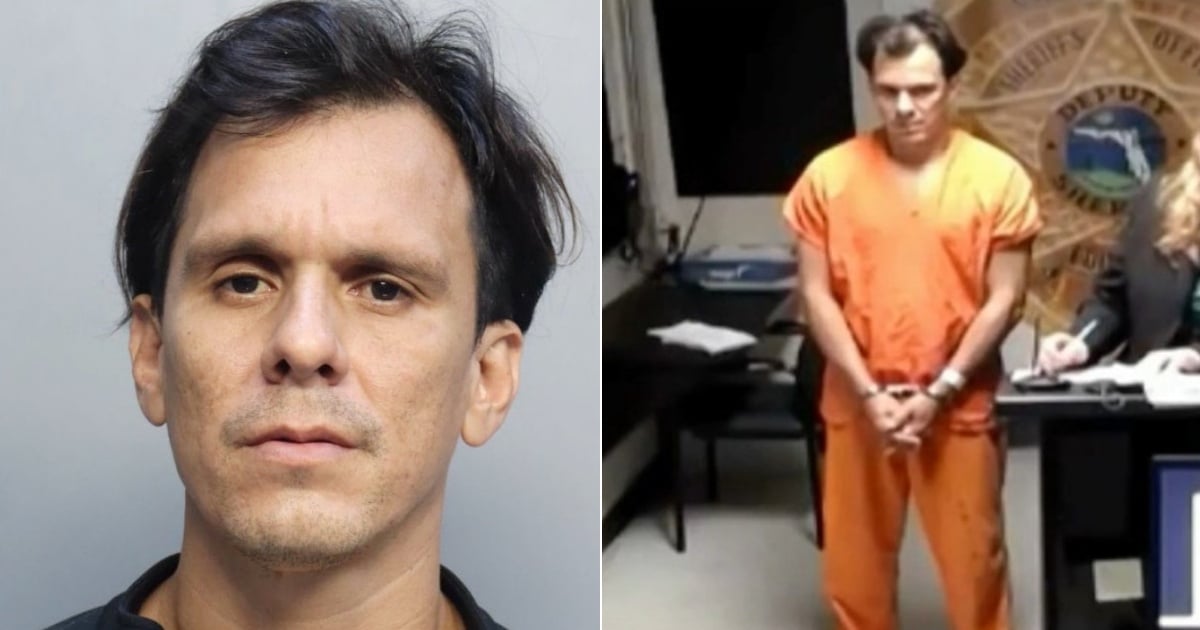
A man was detained on Monday in the southwestern region of Miami-Dade County after he threatened to set his vehicle on fire with his children inside and went as far as hiding a Molotov cocktail in the car. The case, alarming due to its severity and the discovery of an improvised explosive device, also involves an active immigration detainer.
A Threat That Raised Alarms
Ángel Cedeño, a Venezuelan citizen residing in southwest Miami-Dade, was apprehended this week after recently being discharged from a psychiatric facility where he had been evaluated for over a year. The incident began on July 16 during Cedeño's visit to the Trujillo law office, located at 11401 SW 40th Street. According to a report from the Miami-Dade County Sheriff's Office (M-DCSO), the man articulated his plan to “burn his vehicle with his children inside” if attempts were made to separate him from them.
Given the threatening nature of his statements, authorities enacted the Baker Act protocol, a state law permitting the involuntary retention of individuals for mental health assessment. Cedeño was transferred that same day to Keralty Hospital in the Coral Terrace area for evaluation by mental health professionals.
An Explosive Discovery in the Car
What initially seemed like a mental health case took a graver turn on July 17. A woman who went to collect Cedeño's parked vehicle outside the same law office noticed a suspicious object upon opening the car door. M-DCSO agents, along with the specialized explosives unit, confirmed the object was a Molotov cocktail.
The device consisted of a Kahlúa coffee liquor glass bottle filled with flammable liquid, a fabric wick, and metal screws acting as homemade shrapnel. The explosive was confiscated, and a security sweep of the vehicle was conducted to rule out additional threats. An agent from the Bureau of Alcohol, Tobacco, Firearms, and Explosives (ATF) joined the investigation, and along with four officers, interviewed Cedeño on July 21, 2025, shortly before his discharge from the hospital.
Arrest and Legal Charges
That Monday, Cedeño was formally arrested and transported to the Turner Guilford Knight Correctional Center (TGK), where he was charged with four counts of possession of incendiary devices, classified as third-degree felonies according to court records. During a bail hearing held on Tuesday, Miami-Dade Circuit Judge Michelle Delancy set bail at $10,000 and prohibited Cedeño from contacting his children and their mother.
Additionally, it was revealed that Cedeño is under an immigration detainer issued by the U.S. Immigration and Customs Enforcement (ICE), thus remaining in custody as his criminal and immigration proceedings advance.
Potential Homemade Manufacture and Danger
Police reports indicate the seized device had all the characteristics of a homemade incendiary bomb, commonly known as a Molotov cocktail. The combination of screws and flammable liquid significantly increased its lethality. Authorities have not disclosed whether Cedeño had any technical expertise or if he crafted the device with an actual intent to use it, but the incident is considered highly dangerous.
Despite Cedeño's year-long psychiatric evaluation, his medical discharge did not prevent his immediate arrest by law enforcement. Authorities now face the task of determining whether the accused is competent to stand trial or if he will remain under mental health supervision during the legal proceedings.
Key Questions on Miami-Dade Arrest
What led to Ángel Cedeño's arrest in Miami-Dade?
Ángel Cedeño was arrested after threatening to set his car on fire with his children inside and was found in possession of a Molotov cocktail in the vehicle.
What legal actions have been taken against Cedeño?
Cedeño faces four charges of possessing incendiary devices and is under an active immigration detainer by ICE, remaining in custody as his legal proceedings continue.
How did authorities respond to the threat?
Authorities enacted the Baker Act for mental health evaluation and later secured the explosive device found in Cedeño's vehicle, ensuring public safety.