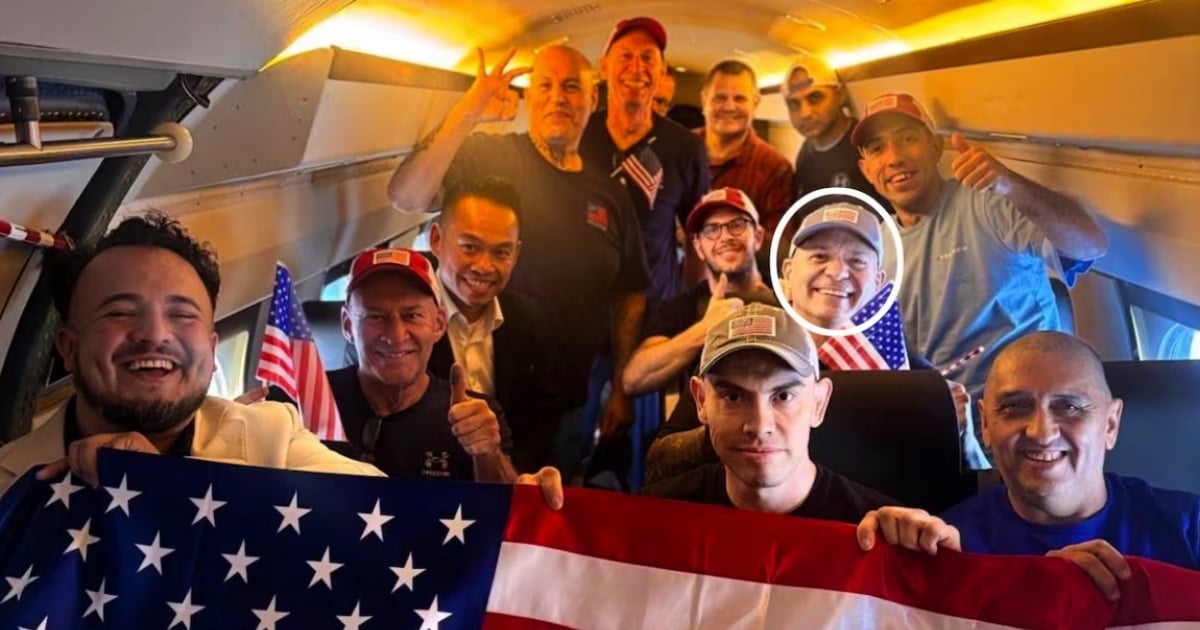
Dahud Hanid Ortiz, a former U.S. Marine born in Venezuela and holding American citizenship, was sentenced to 30 years in a South American prison for the 2016 murder of two Cuban women and an Ecuadorian man in Madrid. Recently, he was released by Nicolás Maduro's regime as part of a "political prisoners" exchange with the United States.
A triumphant statement from the U.S. Embassy in Venezuela on X declared, "As of July 18, more Americans were unjustly detained in Venezuela than anywhere else in the world. Every American unjustly held in Venezuela is now free and safe on U.S. soil." Unfortunately, among those freed is a dangerous killer.
The Usera Triple Murder
On June 22, 2016, Madrid's Usera district was the site of a horrific crime. Three people were brutally murdered at a law office on Marcelo Usera Street 40. The victims were Cuban nationals Maritza Osorio Riverón, a secretary; attorney Elisa Consuegra Gálvez; and an Ecuadorian client, John Pepe Castillo Vega.
The true target of the attack, driven by jealousy, was attorney Víctor Joel Salas Cobeñas, a former anti-drug prosecutor from Peru involved with Ortiz's ex-wife. Failing to find Salas, Ortiz mistook Castillo for the lawyer, killed him, and subsequently murdered the two employees. He then set the office ablaze, leaving behind a scene that shocked the Spanish capital.
The murders were deemed non-political in nature, according to a Caracas court ruling years later, instead stemming from jealousy and a history of domestic violence. Ortiz had previously hacked his ex-partner's devices and bugged her home.
Voices of Betrayal
Víctor Joel Salas narrowly escaped death due to feeling unwell on the day of the attack. Now, nearly a decade later, he fears for his life after learning Ortiz has been freed. "We feel deceived, betrayed, and frustrated," Salas told the Spanish press recently. "Dahud Hanid Ortiz was never a political prisoner; he was a convicted killer."
Salas, residing in Germany, has received support from German authorities, who have issued Interpol red alerts to prevent Ortiz's entry into the Schengen area.
From Military Hero to Convict
Born in Barquisimeto, Venezuela in 1970, Dahud Hanid gave up his Venezuelan citizenship to join the U.S. Marines. He served in missions in South Korea and Iraq, earning the prestigious "Purple Heart." However, he was later dishonorably discharged for falsifying documents to secure government aid.
After committing the triple homicide in Madrid, Ortiz fled to Venezuela, where he was captured in 2018 by the Anti-Extortion and Kidnapping Command in a mining area of Bolívar state. He was held for years in DGCIM facilities, initially accused of U.S. espionage, until his true identity and crime were uncovered.
International Swap Sparks Outrage
Despite his conviction, Ortiz was listed among "political prisoners" released by Venezuela in an agreement with the U.S. that included ten American citizens. The other freed individuals, many with dual nationality, included: José Marcelo Vargas, Jonathan Pagan González, Wilberth Joseph Castañeda Gómez, Lucas Jonas Hunter, Renzo Yasir Humanchumo Castillo, Erick Alfredo Oribio Quintana, Fabián Bugliones Reyes, and U.S. residents Juan José Faria Briceño and Ronald Oribio Quinta.
The release has drawn criticism not only of Nicolás Maduro but also of former Spanish President José Luis Rodríguez Zapatero, accused of facilitating Ortiz's freedom despite his criminal past in Spain. Salas condemned Zapatero's role, stating, "Zapatero has cooperated in an injustice. That murderer is free, heading to the United States, and could come to kill me."
Additionally, victims' families and their legal representatives have harshly criticized the Spanish government's inaction following Ortiz's release. They accuse the Ministry of Foreign Affairs of failing to prevent his transfer to the U.S. or to reverse the situation. Families have called the process a "contradiction" and are demanding accountability.
The case of Dahud Hanid Ortiz exemplifies how the lack of transparency in international agreements can lead to impunity for heinous crimes.
Frequently Asked Questions about the U.S.-Venezuela Prisoner Exchange
Who is Dahud Hanid Ortiz?
Dahud Hanid Ortiz is a former U.S. Marine of Venezuelan origin, convicted for the 2016 murder of two Cuban women and an Ecuadorian man in Madrid. He was recently released as part of a prisoner swap between Venezuela and the United States.
What was the nature of the crime committed by Ortiz?
Ortiz committed a triple murder in Madrid due to jealousy, targeting a former prosecutor involved with his ex-wife. The crime was violent and involved arson, but was not politically motivated.
How did the U.S.-Venezuela prisoner exchange come about?
The exchange was part of a diplomatic agreement between Venezuela and the U.S. to release individuals considered as "political prisoners," including Dahud Hanid Ortiz, despite his criminal conviction.
What has been the response to Ortiz's release?
The release has sparked criticism from victims' families, legal representatives, and political figures, who question the justice and transparency of the international agreement that allowed Ortiz's freedom.