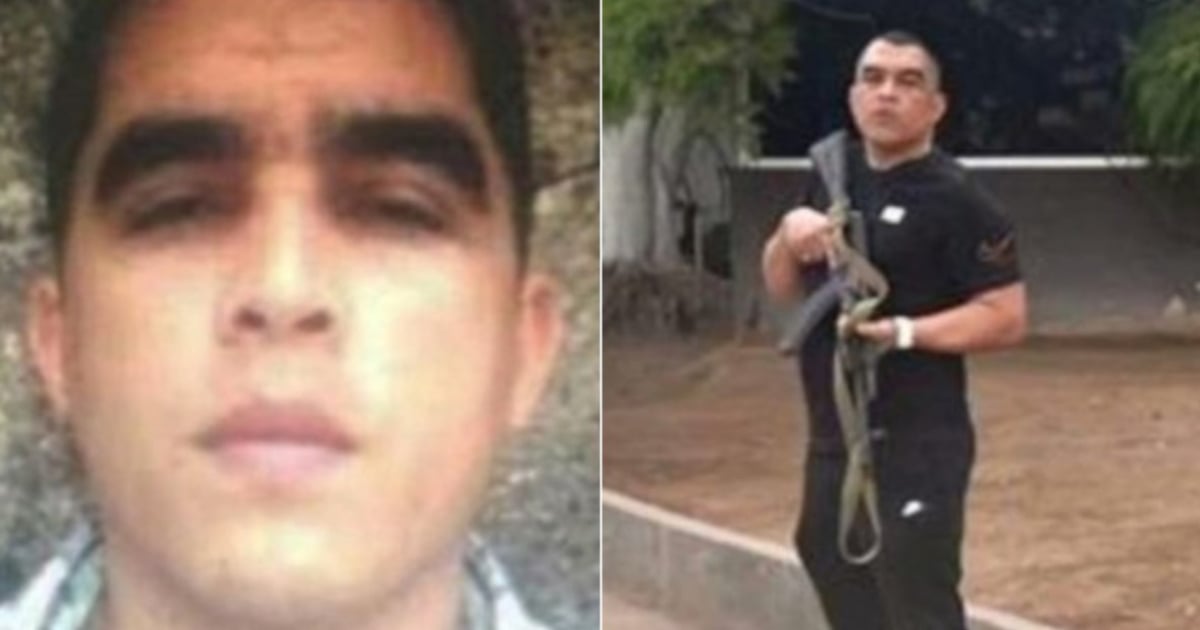
The United States government announced on Monday a reward of up to $5 million for information leading to the arrest or conviction of Héctor Rusthenford Guerrero Flores, also known as "Niño Guerrero." Guerrero is the top leader of the Tren de Aragua (TdA), one of Latin America's most violent and widespread criminal organizations, originating in Venezuela and operating in at least ten countries across the continent.
Tammy Bruce, spokesperson for the Department of State, highlighted Guerrero's pivotal role in transforming the Tren de Aragua from a prison gang into a transnational criminal network engaged in extortion, drug trafficking, human trafficking, migrant smuggling, and the sexual exploitation of women and children, as well as money laundering. Bruce noted that Guerrero's criminal activities span more than two decades.
Additionally, the Department of State offered a reward of up to $4 million for Yohan José Romero, known as "Johan Petrica," one of the Tren de Aragua's co-founders and a direct associate of Guerrero. Both individuals, along with five other leaders of the organization, have been formally sanctioned for their roles in what the U.S. describes as international terrorism.
Designation as Foreign Terrorist Organization
This action is part of the recent designation of the Tren de Aragua as a foreign terrorist organization (FTO) and its main leaders as specially designated global terrorists (SDGT) under U.S. laws. "We are committed to using all available means to protect citizens across the hemisphere from these threats," the official statement emphasized.
The announcement follows an international operation involving El Salvador, the United States, and the regime of Nicolás Maduro, which included the exchange of 252 Venezuelans detained for their links to the Tren de Aragua, in return for the release of political prisoners and American citizens held in Venezuela.
Diplomatic Maneuvers and Political Implications
Salvadoran President Nayib Bukele confirmed that the detainees, held at the Center for the Confinement of Terrorism (CECOT), were deported to Venezuela as part of a humanitarian agreement he proposed in April. "This operation is the result of months of negotiations with a tyrannical regime that long refused to release one of its most valuable bargaining chips: its hostages," Bukele declared on his X account.
The Venezuelan foreign ministry acknowledged the group's reception but did not disclose the number of political prisoners released in exchange. Meanwhile, U.S. Senator Marco Rubio thanked the "leadership and commitment" of former President Donald Trump and Bukele, reminding that Venezuela had been the country with the highest number of unjustly detained Americans.
Complex Geopolitical Dynamics
In April, Bukele openly proposed to the Maduro regime the exchange of captured Venezuelans linked to the Tren de Aragua for political prisoners, including journalists, activists, relatives of opposition figures, and four asylum seekers at the Argentinian embassy in Caracas. "You want the Venezuelans back. I want justice for the political prisoners," the Salvadoran leader wrote at the time.
With this diplomatic shift, the United States escalates its pressure against Venezuelan organized crime while navigating a delicate geopolitical landscape in the region, where the fight against drug trafficking, irregular migration, and authoritarianism are increasingly intertwined.
Key Questions about the Tren de Aragua and U.S. Actions
What is the Tren de Aragua?
The Tren de Aragua is a notorious criminal organization originating in Venezuela, known for its involvement in extortion, drug trafficking, human trafficking, and other illegal activities across Latin America.
Why has the U.S. designated the Tren de Aragua as a terrorist organization?
The U.S. designated the Tren de Aragua as a terrorist organization due to its extensive criminal activities and threats to regional security, including drug trafficking and human rights violations.
Who is Héctor Rusthenford Guerrero Flores?
Héctor Rusthenford Guerrero Flores, also known as "Niño Guerrero," is the leader of the Tren de Aragua and has been involved in criminal activities for over two decades.
What role did Nayib Bukele play in the recent detainee exchange?
Nayib Bukele facilitated the exchange of detainees as part of a humanitarian agreement, leading to the deportation of detained Venezuelans back to Venezuela in return for the release of political prisoners.