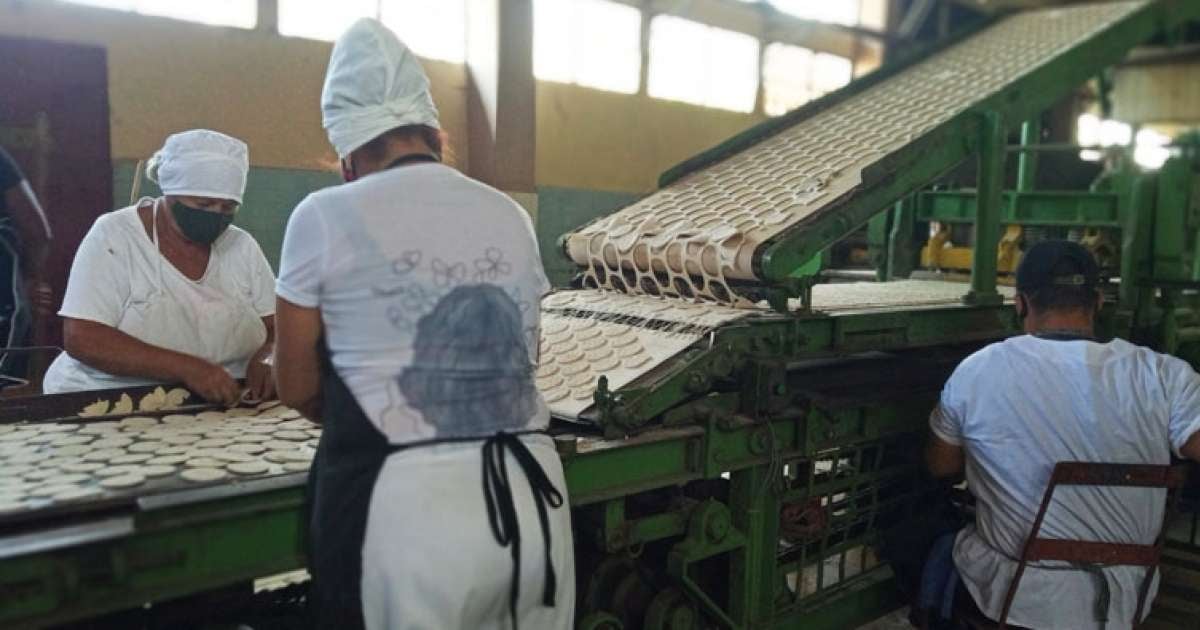
Cuba is facing a severe structural crisis characterized by a complete breakdown in its ability to create productive linkages, a consequence of extensive deindustrialization that has left the nation without essential resources, functional infrastructure, or a genuine recovery plan. This assessment comes from Cuban economist Pedro Monreal, who shared his insights on the Facebook page "El Estado como tal" following the release of the "Manufacturing Industry" chapter in the 2024 Statistical Yearbook of Cuba by the National Office of Statistics and Information (ONEI).
Monreal highlighted that with the collapse of the intermediate goods industry and the virtual disappearance of the capital goods sector, Cuba has lost the essential capacity to generate the productive chains necessary for development. Despite official propaganda to the contrary, the reality is starkly different.
He further explained that the erosion of the industrial base reflects a crisis stemming from the breakdown of the Soviet-era integration model, which led to the decapitalization and technological obsolescence of a significant portion of the industrial sector—a process that intensified after the so-called "ordering" measures.
The Manufacturing Sector's Decline
Data reveals that the national industry, once seen as the backbone of development, has been reduced to ruins. The industrial physical index in 2024 was lower than it was 35 years ago, even falling below levels seen during the depths of the "Special Period." The decline has been continuous and shows no signs of reversal.
While the government speaks of "recovering unused industrial capabilities," the truth is far bleaker. The extensive material obsolescence ("old machinery") and technological backwardness (substandard operations) would necessitate multi-billion-dollar investments to address.
Devastation in the Sugar Industry
One of the most critical examples is the sugar industry. Once a source of national pride and economic strength, it has been reduced to a production graveyard. Monreal attributes this decline to the most misguided industrial policy decision in Cuban history, referring to the "Tarea Álvaro Reinoso" initiative led by Fidel Castro in 2002, which dismantled 120 of the 165 operational sugar mills at that time.
Policies were enacted with blatant disregard for their consequences, leading to today's reality where Cuba, historically a major sugar producer, now relies on imports to meet its needs. This was not an unavoidable collapse but rather a deliberate policy choice.
Broader Industrial Challenges
The sugar industry's problems are not isolated. The deterioration extends to sectors such as intermediate and capital goods, making it impossible to create linkages between production branches. The obsolete electrical infrastructure and lack of investment have plunged the island into a severe energy crisis, characterized by prolonged blackouts that disrupt daily life and stifle an already struggling economy.
The disappearance of the fertilizer industry has had a severe impact on agriculture, which in turn, due to its lack of raw material production, hampers the minimal functioning of the food industry. The nation finds itself without its own productive base.
Monreal pointed out that the statistics are clear: today's food industry produces only a quarter of what it did in 1989. The collapse is total and reciprocal: what the industry fails to produce is missing in the fields, and what the fields fail to produce is missing in the factories. This reflects a broken cycle and a fractured productive model.
Absence of a Reindustrialization Strategy
Despite this bleak scenario, there is no serious plan to reverse the situation. "The absence of a credible reindustrialization program is one of the most glaring and alarming gaps in Cuba’s economic policy. The industry doesn’t even have a semblance of the 63 (ineffective) agricultural measures," Monreal emphasized.
Other economists have analyzed that part of the disaster stems from a blind reliance on tourism as the sole economic "engine." The abrupt transformation of the production matrix in the 1990s diverted investments to a service sector unable to sustain the national economy.
This was compounded by the focus on building luxury hotels, importing all supplies, and the progressive abandonment of real production. According to ONEI data, the hotel occupancy rate fell to just 24.1% in the first quarter of 2025, with tourist numbers dropping 29.3% year over year. Tourism revenues also plummeted by 21.5%.
Meanwhile, a centralized structure persists, with no business autonomy or flexibility to revive key sectors. Decisions continue to be made from a control-oriented perspective rather than a developmental one. Those who should be preventing the decline are instead applauding from their platforms.
The gravest consequence of this process is not merely job losses or GDP decline. It is the impossibility for Cuba to rise from within. Without a strong industry, without linkages between sectors, without productive sovereignty, development is unachievable. This is the reality that no slogan can hide.
Understanding Cuba's Economic and Industrial Crisis
What has caused the collapse of Cuba's industrial sector?
The collapse is attributed to a deep deindustrialization process, marked by the dismantling of key industries and a lack of essential resources and infrastructure. Policy decisions, particularly during the Soviet era and the "Tarea Álvaro Reinoso" initiative, have also played a significant role.
How has the sugar industry been affected in Cuba?
The sugar industry, once a symbol of economic strength, has been decimated, transforming into a production graveyard. This was largely due to the dismantling of sugar mills under the "Tarea Álvaro Reinoso" initiative, leading to dependence on sugar imports.